

Losar, Tibetan New Year: dates, traditions and tips for travelers
When the holiday is celebrated, which traditions are observed and why winter is a good time to visit Tibet. The itinerary for February 2027; the guide is Sergey Sotnikov, co-founder of Elbrus Expert.
When Losar is celebrated and why the dates change
Losar and Chinese New Year: similarities and differences
How Tibetan New Year is celebrated
Why Losar is the best reason to visit Tibet in winter
Program "Chinese New Year and Losar in Tibet"
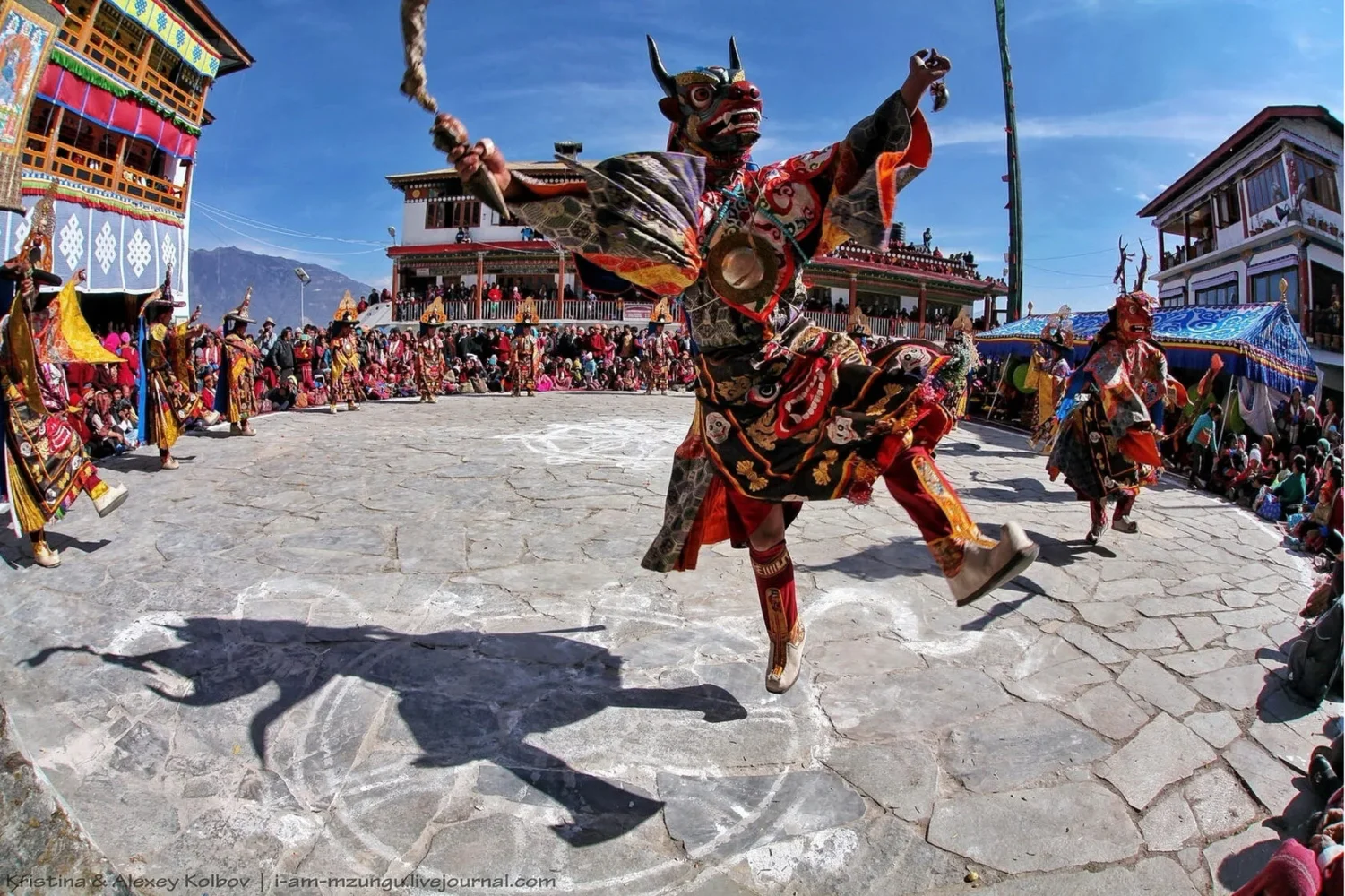
Tibetan New Year, or Losar, is the biggest and best-loved holiday among Tibetans. Its roots go back to ancient times, before Buddhism had spread across the region. Back then, local people gathered in winter and performed rituals to appease the deities and ask for their protection and well-being. The traditions changed later, but the main meaning stayed the same: it is a kind of reset, a chance to begin a new life cycle with a clean slate.
When Losar is celebrated and why the dates change
Like Chinese New Year (Chunjie, literally the "Spring Festival"), Losar follows the lunisolar calendar, so its dates shift every year. Tibetans usually celebrate the new year in February or early March, and less often in late January.
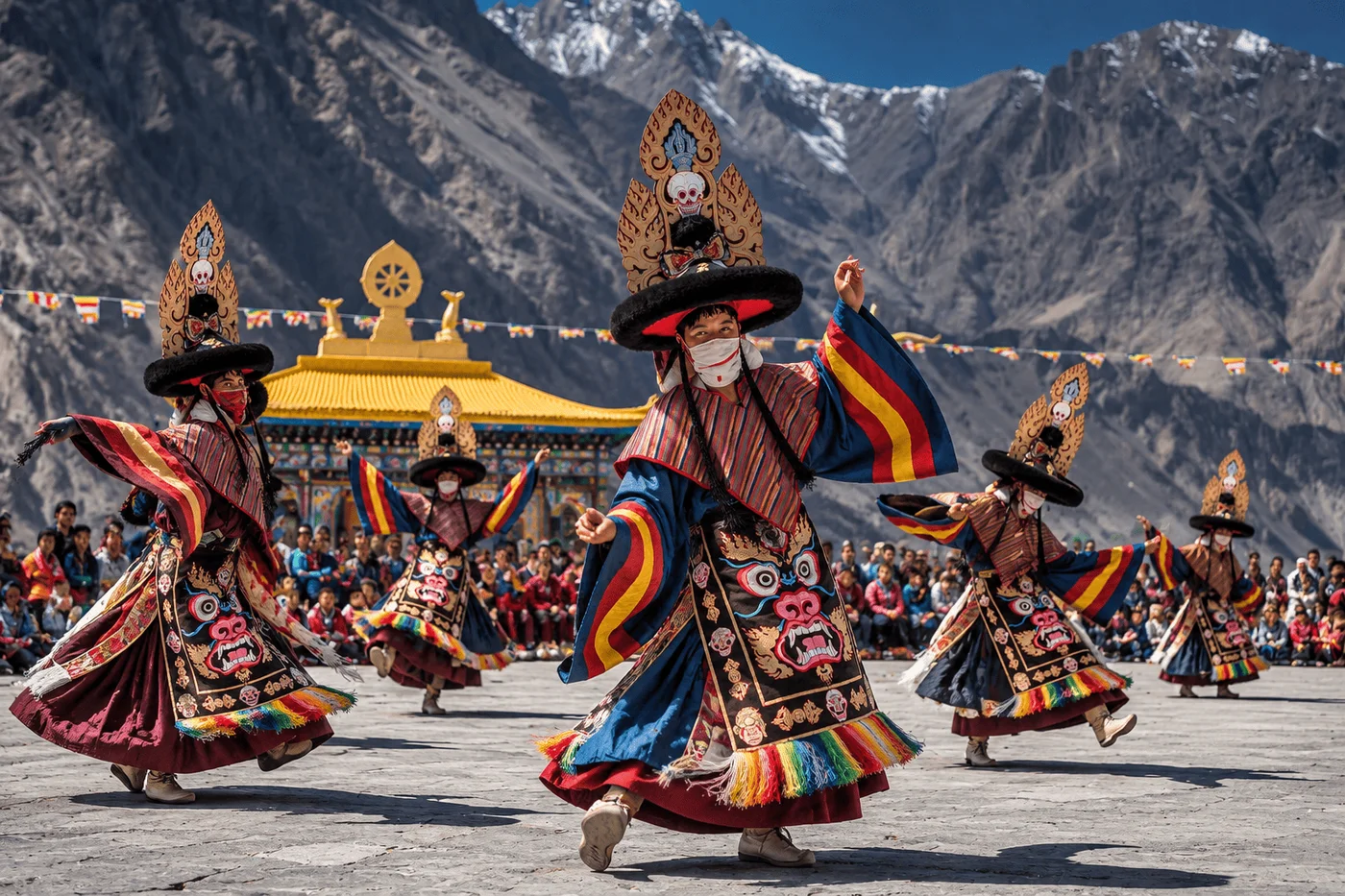
Both holidays depend on the lunar cycle, but their dates in Tibet and China are calculated differently. That is why they can coincide, or fall a day or even a whole month apart. For example, in 2025 Chinese New Year fell on January 29 and the Tibetan one on February 28. In 2026 they came one after the other: Chunjie on February 17 and Losar on the 18th. They will be celebrated with the same one-day gap in 2027: on February 6 and 7.
Losar and Chinese New Year: similarities and differences
The holidays have a lot in common: both come with feasts and fireworks, and both symbolize cleansing from negativity, renewal and hope for the better. Another shared feature is the zodiac system of 12 guardian animals, tied to five elements (fire, water, earth, wood and iron), which came from China. The coming year, 2027, will be the year of the Fire Goat (Sheep).
As for the differences, they are felt in the atmosphere and in the inner meanings. Chinese New Year is, as a rule, brighter and more secular, while the Tibetan version has far more religiosity and more Buddhist and family traditions.
How Tibetan New Year is celebrated
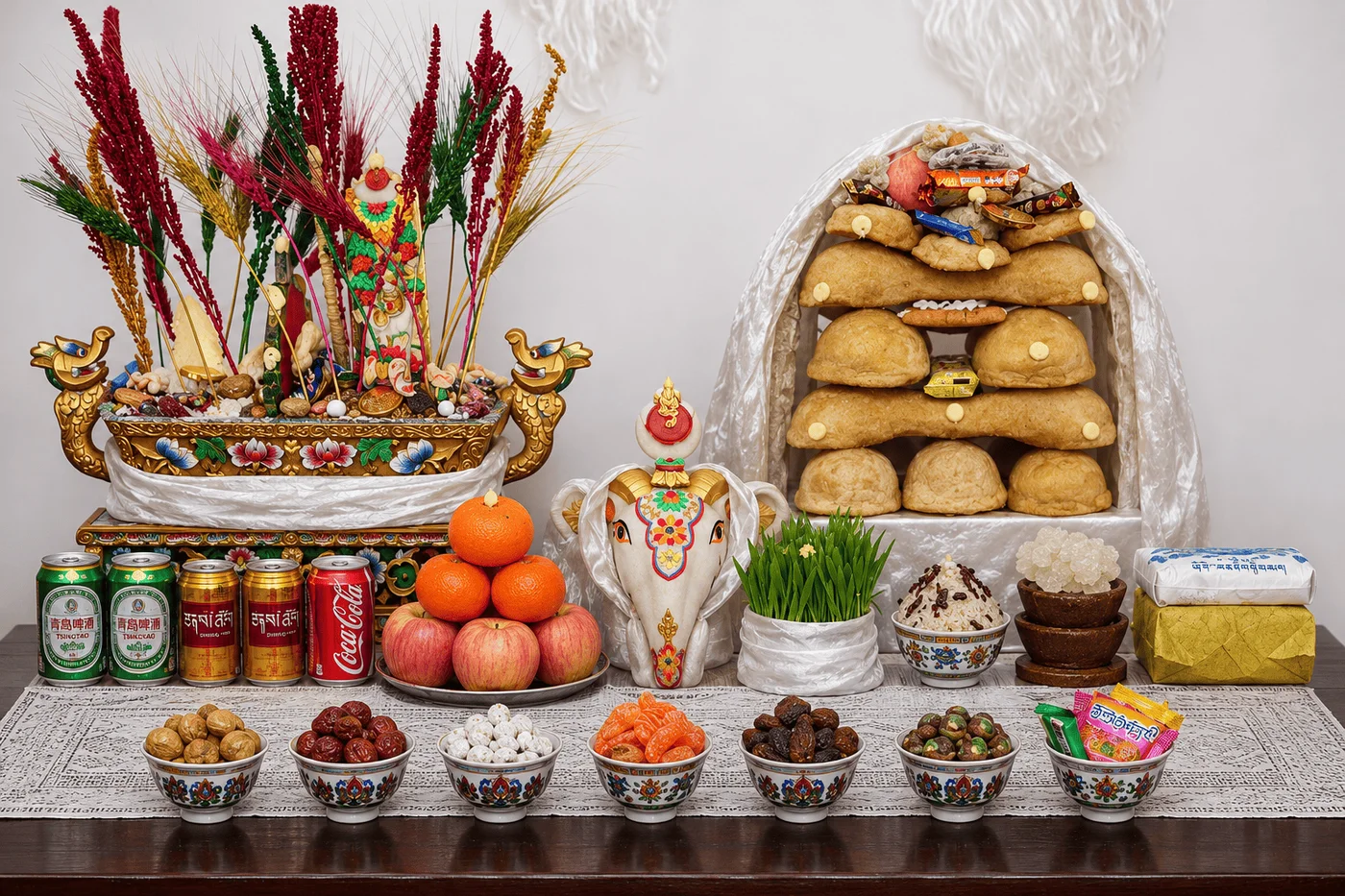
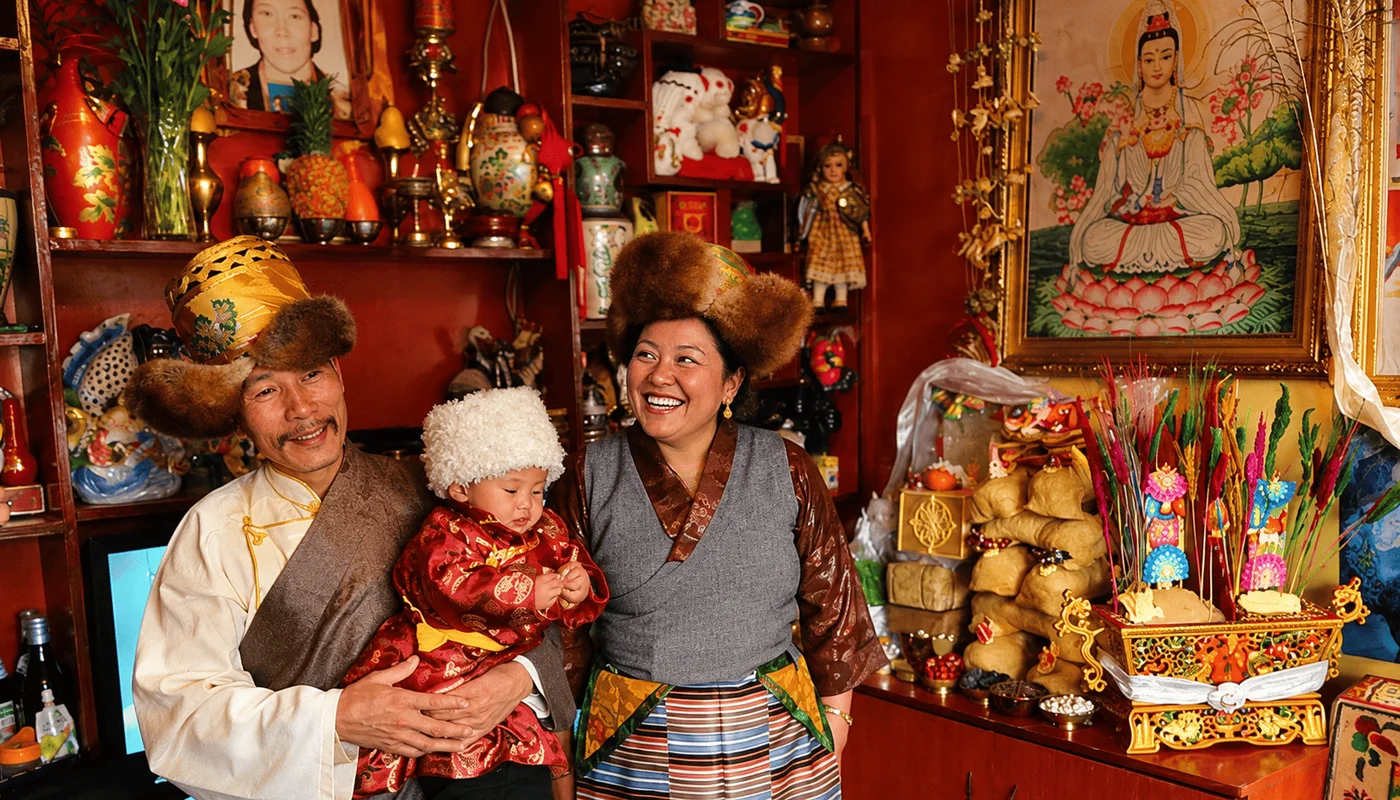
Preparations for Losar begin well in advance. Families stock up on food, clean their homes and the area around them, make festive dishes and sew new clothes. Home altars are decorated with figures made of barley flour and butter and with sculptures in the shape of a sheep's head. In Tibet the sheep is traditionally associated with well-being and prosperity. The custom of putting up this decoration took hold because the phrases "sheep's head" and "beginning of the year" sound similar in Tibetan.
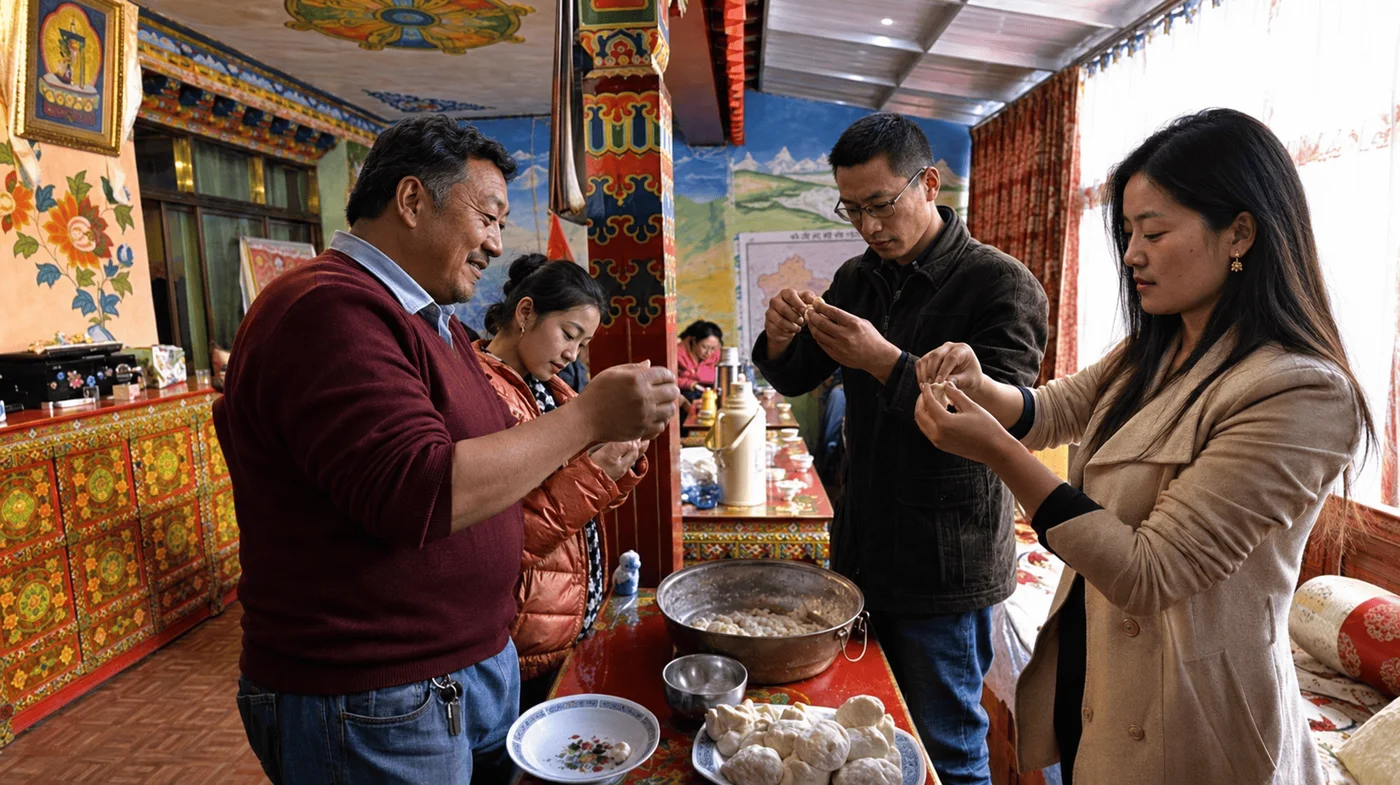
The celebrations last two weeks, but the first three days are considered the most important. One of the main traditions is for the family to gather around the table on the evening before Losar. At dinner they eat guthuk (gutuk), a noodle soup with dumplings that hide a "secret". The things found inside (small objects or notes naming them) are interpreted jokingly as a hint about one's character or a prediction for the coming year. For example, a piece of coal means a hidden agenda, chili means a sharp tongue, and white wool or thread is a sign of a kind heart and long life.
The festive table also has sweet rice with roots, reminiscent of kutya, pastries fried in ghee and, of course, chang, the barley beer. After dinner, evil spirits and everything bad are symbolically driven out of the house with rituals, fireworks and firecrackers.
On the first day of Losar it is customary to put on your best clothes, make offerings at home altars and congratulate relatives. The next day people go visiting, exchange silk scarves (khatas) and greet one another with the words "Losar tashi delek!", which means "Happy New Year and prosperity!".
Tibetans also try to visit temples and monasteries, where solemn services are held in honor of the holiday. Pilgrims come from all over Tibet to the main shrines: Jokhang, Sera and Drepung.
On the third day, the colorful lungta prayer flags on rooftops and mountain passes are renewed, and juniper branches are burned. The smoke is believed to cleanse the space and carry prayers to the deities in the heavens. In the suburbs of Lhasa, traditional horse races are held at this time, with riders competing in skill and agility.
Why Losar is the best reason to visit Tibet in winter
Celebrating Losar in Tibet is a great chance to get to know the local culture from the inside, learn the traditions and try unusual food. Many people think it is better to go in summer, but a winter trip to Tibet has quite a few advantages. First of all, it is the low season, with no rush of tourists and mostly clear weather. Clouds do not hide the mountain peaks, as they do in July and August, when it often rains. Thanks to the bright sun, the air in Lhasa and Shigatse warms up to +5…+10 °C in the daytime, although at night the temperature can drop to -7…-13 °C.
An important point: during Losar some shops, restaurants and museums may be closed, especially in the first days of the holiday. The Tibet Expert team has prepared a program that takes this into account, so your trip will not suffer.
Program "Chinese New Year and Losar in Tibet"
February 5–10, 2027
Guide: Sergey Sotnikov
Lhasa · Samye Monastery · Shigatse
6 days / 5 nights · Stay at the Shangri-La Lhasa (5*)
A trip to Tibet for the celebration of Chinese New Year (February 6) and Losar (February 7). We will get to know the main shrines of Lhasa, travel to Samye, the first Buddhist monastery in Tibet, and visit Tashilhunpo in Shigatse.
Our guide and lecturer is Sergey Sotnikov, an entrepreneur and researcher, co-founder of Elbrus Expert. He has long studied the Buddhist tradition. His experience includes organizing journeys, studying how people think, and understanding how culture and environment shape a person's perception.
Sergey's company gives the route a special depth. Visiting the monasteries will be an occasion to talk about Buddhist philosophy, the symbolism of temples and the place of spiritual tradition in modern life. On the road and during walks there will be room for questions, for sharing impressions and for reflecting together on what we have seen.
We will spend all five nights at the five-star Shangri-La Lhasa hotel. We will go to Samye by a comfortable car or minibus, depending on the size of the group, and to Shigatse by a modern high-speed train.
February 5 · Arrival in Lhasa
We meet you at the airport and transfer to the hotel. On the way you get a first look at the landscapes of Tibet: wide river valleys, mountain slopes and the winter light of the highlands. Lhasa lies at an altitude of about 3,650 meters, so we leave the first day free for gradual acclimatization to the altitude. If you feel well, you can take a short walk near the hotel.

February 6 · Chinese New Year: Norbulingka, the Dalai Lamas' summer residence, and Sera Monastery
The first sightseeing day is devoted to the monasteries of Lhasa and the Dalai Lamas' summer residence.
Around 09:00 we will visit Norbulingka, the summer residence of the Dalai Lamas, and stop for lunch. In the afternoon we will see Sera Monastery. If the holiday schedule allows, we will witness the legendary monastic debates and see the living tradition of discussing Buddhist philosophy.
We expect to be back at the hotel around 17:00–18:00. We will adjust the pace of the walks and the scope of the program to how the participants feel. In the evening, we celebrate Chinese New Year.

February 7 · Losar, Tibetan New Year: Potala, Jokhang and Barkhor
On the first day of Losar we get to know the main symbols of Lhasa. In the morning we visit the Potala Palace, the former winter residence of the Dalai Lamas. The visit takes place at a pre-assigned time. We will climb slowly, with stops. After lunch we go to the Jokhang Temple, the spiritual heart of Lhasa, where pilgrims come from different parts of Tibet. Then we walk along the Barkhor, the pilgrim circuit around the Jokhang. Here the old streets, the shops and the flow of pilgrims let you feel the everyday life of the city.
The holidays offer a chance to see Lhasa at a special time. At the same time, attending individual ceremonies will depend on the local schedule and access rules.

February 8 · Samye, the mandala monastery
We leave Lhasa by car around 08:00. Ahead is a drive along the Yarlung Tsangpo valley to Samye, the first and oldest Buddhist monastery in Tibet. The layout of the complex reproduces the Buddhist model of the universe: the central temple and the buildings around it form a spatial mandala. During the visit we will learn about how Buddhism took hold in Tibet and the significance of Samye for the Tibetan tradition. We allow 3 hours for the visit, followed by lunch and the return to Lhasa. There may be short stops for photos along the way.

February 9 · Shigatse and Tashilhunpo Monastery
An early transfer to the station and departure by the morning train to Shigatse. The high-speed train ride shows the mountain landscapes and river valleys of central Tibet from an unexpected angle.
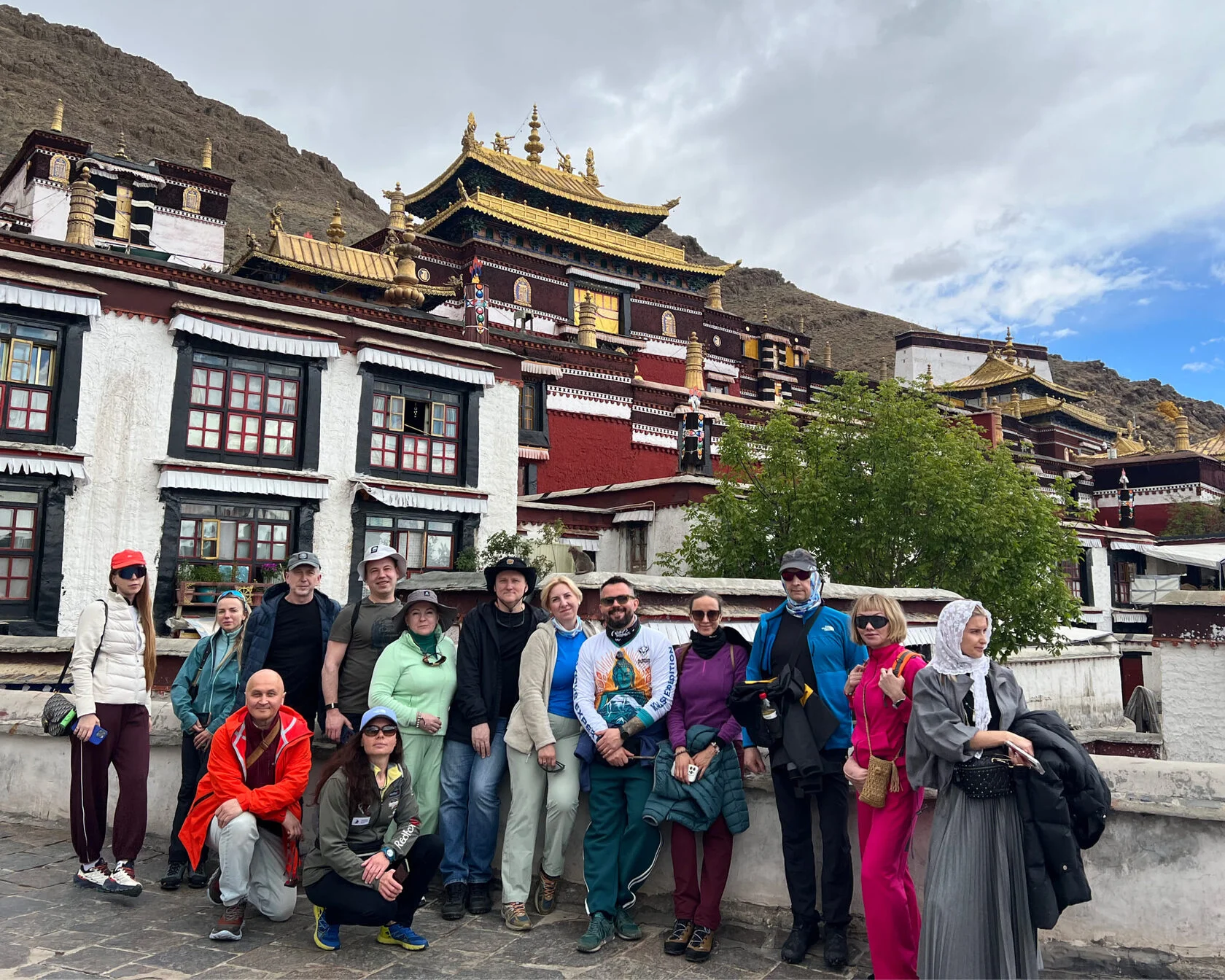
After arriving at the Shigatse station, we go to Tashilhunpo, the seat of the Panchen Lamas and one of the main monastic centers of Tibet. We allow 3 hours to explore the temples and courtyards of the complex. We will arrange the tour and lunch to fit the holiday visiting hours. If there is time left, we will stroll around the city before returning to the station. On arrival in Lhasa, we transfer to the hotel.
February 10 · End of the trip
Breakfast, check-out and a transfer to the airport, timed to your flight. Departure from Lhasa and onward flight to Russia by the chosen route. The arrival date depends on connections.

Program highlights
• Personal guidance from Sergey Sotnikov.
Throughout the route Sergey will be both guide and conversation partner: he will help connect the impressions from the places we visit with questions of culture, philosophy and human experience.
• Lectures and talks along the way.
The topics will relate to the places we visit: Buddhist education at Sera Monastery, pilgrimage around the Jokhang, the symbolism of the mandala at Samye. The format leaves room for lively conversation and for asking questions.
• Attention to personal perception.
The program leaves time to calmly take in the details, watch the life of the city and discuss your impressions. Participants choose for themselves how deeply to join the conversations.
• A comfortable base in Lhasa.
All five nights are at the Shangri-La Lhasa. Day trips let you see Lhasa, Samye and Shigatse without changing hotels or moving luggage.
• Flexibility on holiday days.
The order of visits may change depending on the monasteries' opening hours, access to the Potala and the Jokhang, road conditions and how the group feels.
Travel times are approximate. The train schedule for February 2027, tickets, permits and the availability of sites are confirmed by the host side. Attendance at festive ceremonies and monastic debates depends on the local schedule.
We will find a route for you
Tell us what interests you — and the destination expert will get in touch, answer your questions about altitude, timing and preparation, and suggest a suitable programme. The consultation is free and commits you to nothing.