

Weather in Tibet: When Is the Best Time to Visit
Should you visit Tibet in spring, summer, fall, or winter? Let’s take a closer look at the vagaries of the Tibetan weather.
Comfortable season (late April–June / September–October)
There is no “bad” time of year to travel to Tibet: in every season, this region has its own unique charm and reveals a new side of itself.
April, May, June, September, and October are generally considered the best months in terms of weather. July and August are the warmest months on the plateau, but they also see the highest number of tourists and may bring rain. Contrary to popular belief, traveling in winter also has its advantages: the days are dry and clear, the mountains are clearly visible, and the attractions aren’t crowded. In Lhasa and Shigatse, winters aren’t as harsh as many people think: it can even get warm in the sun during the day, although it gets cold in the morning and at night.
Comfortable season (late April–June / September–October)
Late spring, early summer, and early fall are ideal for all kinds of activities: sightseeing, trekking, trips to Everest Base Camp, and the Mount Kailash kora. The weather is at its best during this time—there’s almost no rain, the sky is clear, and that means a better chance of seeing Mount Kailash and the greatest eight-thousanders, including Mount Everest, without clouds.
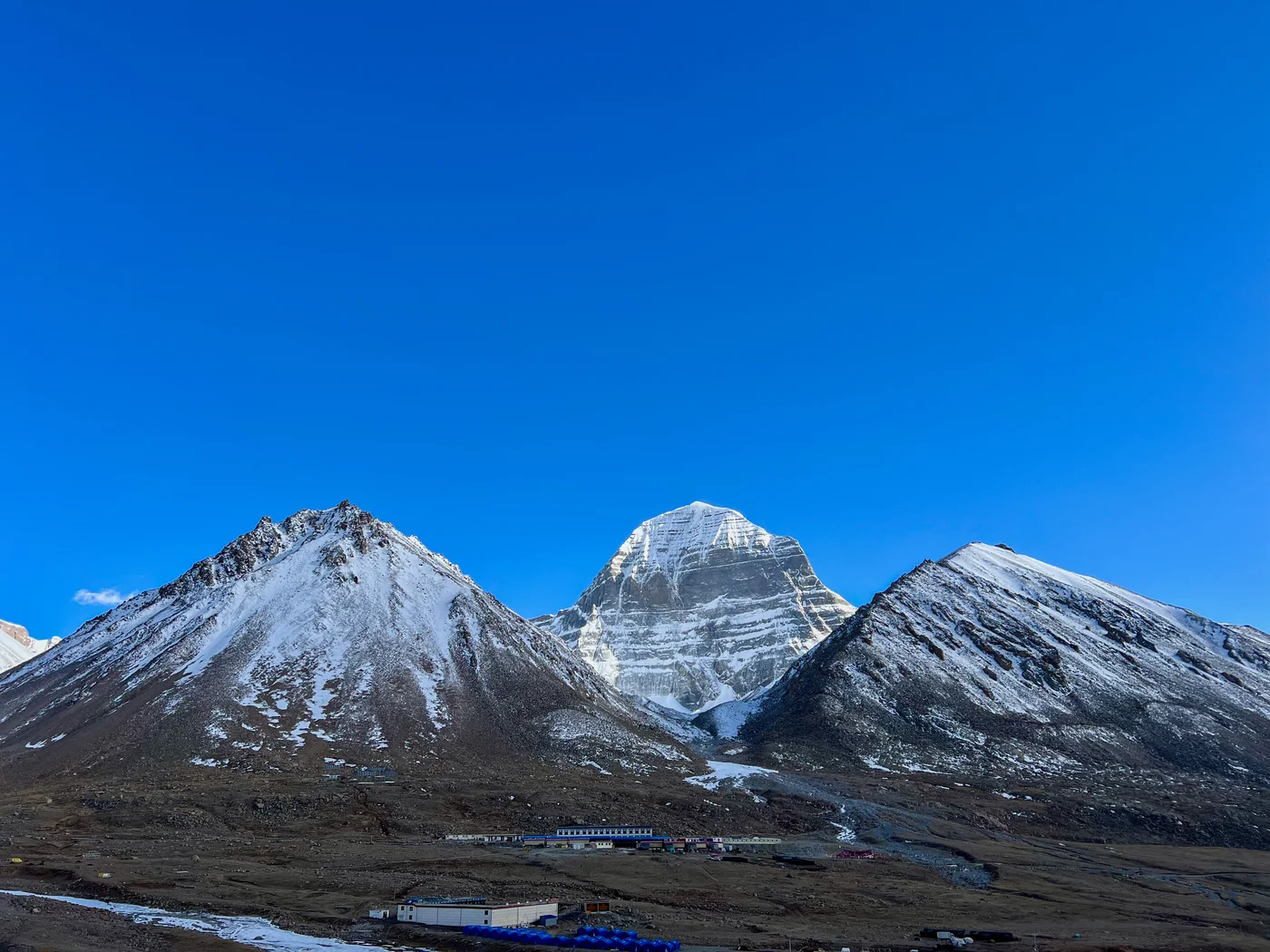
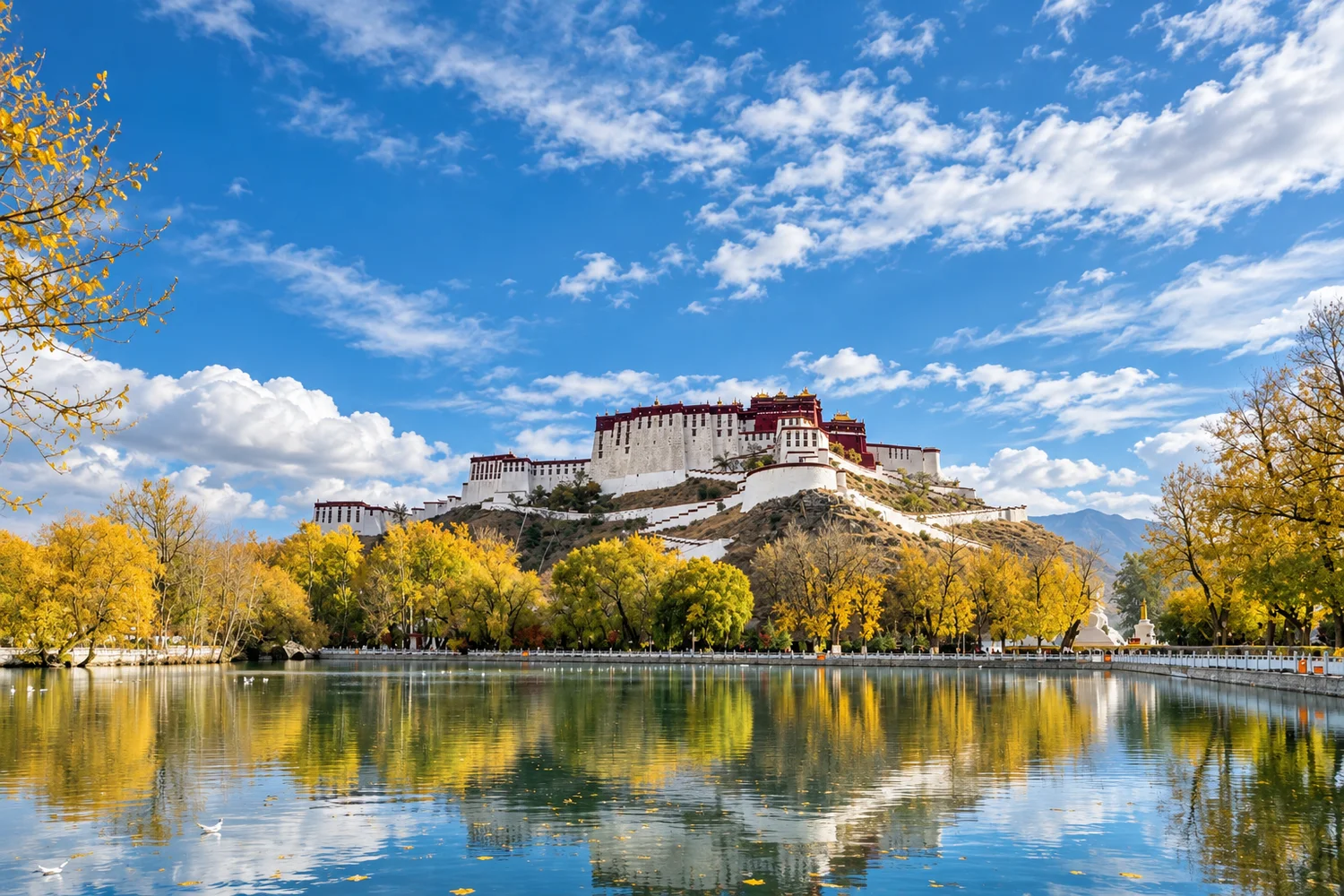
In the spring, the plateau gradually comes to life. In early April, you can see wild peach orchards in bloom in Tibet, and in May or June (depending on the Tibetan lunar calendar), the major Buddhist festival of Saga Dawa is celebrated at the foot of Mount Kailash, drawing thousands of pilgrims. In the fall, nature is bathed in golden hues. The weather is most stable in September: the summer rains stop, the air becomes clear, and it hasn’t gotten cold yet. You can set out on a trek until mid-October, after which the area around the sacred mountain is closed to hikers until the following year.
Month | Lhasa (3,650 m) — Day / Night / Precipitation | Shigatse (3,840 m) — Day / Night / Precipitation | Everest Base Camp (5,200 m) — Day / Night / Precipitation | Mount Kailash Region (4,600 m) — Day / Night / Precipitation |
April | +16 °C / 0 °C / 8 mm | +14 °C / -2 °C / 5 mm | +6 °C / -8 °C / 5 mm | +4 °C / -12 °C / 10 mm |
May | +20 °C / +4 °C / 15 mm | +18 °C / +3 °C / 12 mm | +10 °C / -3 °C / 10 mm | +8 °C / -7 °C / 15 mm |
June | +23 °C / +9 °C / 40 mm | +20 °C / +8 °C / 35 mm | +14 °C / +2 °C / 30 mm | +12 °C / 0 °C / 45 mm |
September | +21 °C / +7 °C / 50 mm | +19 °C / +6 °C / 45 mm | +12 °C / 0 °C / 40 mm | +10 °C / -3 °C / 50 mm |
October | +18 °C / +2 °C / 10 mm | +16 °C / 0 °C / 8 mm | +8 °C / -5 °C / 5 mm | +6 °C / -8 °C / 10 mm |
The tables show average data: daytime (maximum) and nighttime (minimum) temperatures, as well as precipitation in millimeters. These figures should not be taken as an exact forecast.
Summer in Tibet (July–August)
The summer months are a time of blooming and the highest temperatures. In July and August, the plateau turns green, and the air is easier to breathe than in winter. Acclimatization is gentler, which is why summer is often chosen for a first trip. But during this time, the monsoon brings rain to Tibet: up to 130–160 millimeters of precipitation falls per month. Prolonged downpours, however, are rare: they mostly occur in the evening or at night and hardly interfere with daytime plans. There are some downsides, though: high humidity can cause fog and thick clouds to “hide” Everest.
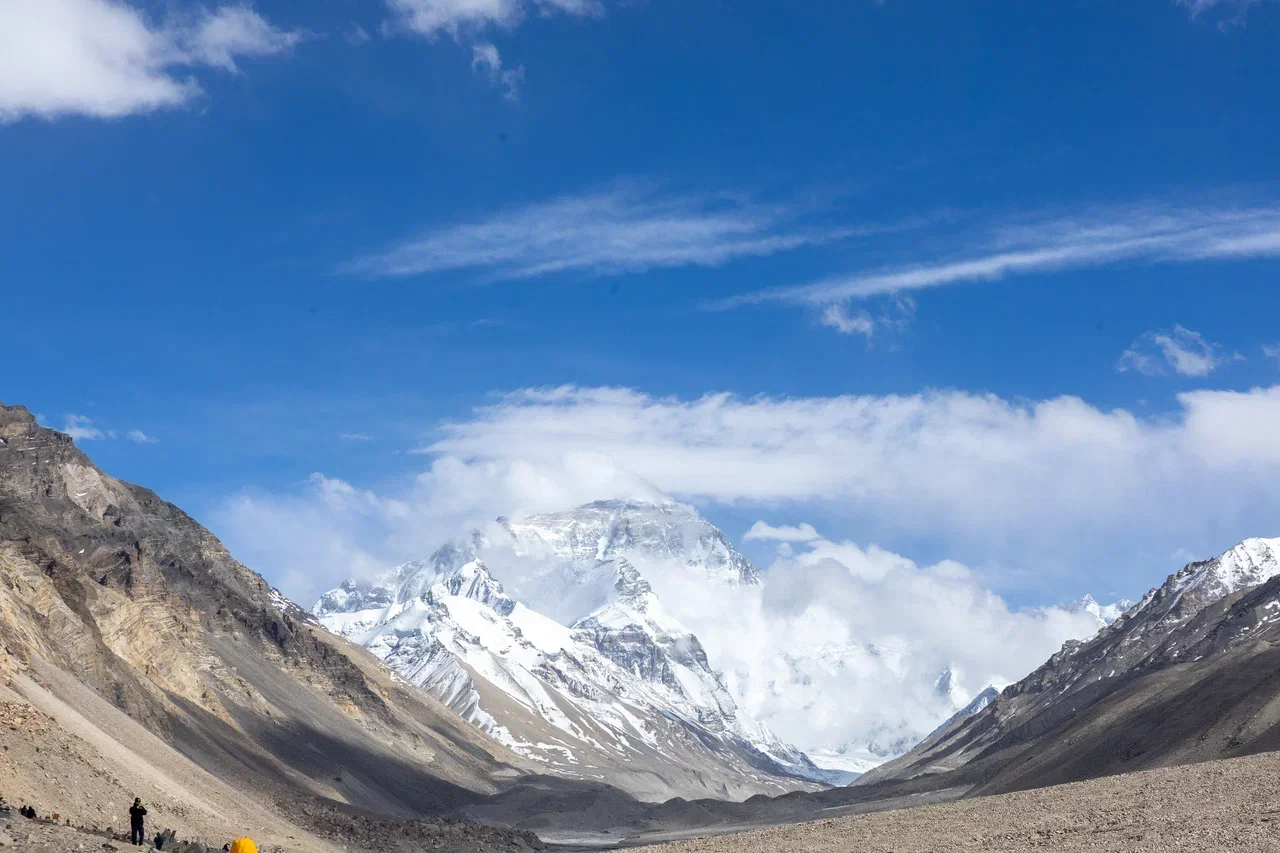
In addition, there are many tourists in the summer due to the vacation season, and hotels and tickets are more expensive.
Month | Lhasa (3,650 m) — Day / Night / Precipitation | Shigatse (3,840 m) — Day / Night / Precipitation | Everest Base Camp (5,200 m) — Day / Night / Precipitation | Mount Kailash Region (4,600 m) — Day / Night / Precipitation |
July | +22 °C / +10 °C / 120 mm | +21 °C / +9 °C / 130 mm | +15 °C / +6 °C / 80 mm | +14 °C / +7 °C / 140 mm |
August | +21 °C / +10 °C / 130 mm | +20 °C / +9 °C / 140 mm | +14 °C / +5 °C / 90 mm | +13 °C / +6 °C / 160 mm |
Winter in Tibet
Winter lasts quite a long time—usually from November through the end of March—but Tibetan cities rarely experience extreme cold. In Lhasa and Shigatse, daytime temperatures are often warmer than in Beijing, and there are more sunny days there than in the Chinese capital. The air becomes crystal clear, almost like glass: during this time, the chances of seeing Everest in all its glory are about three times higher than during the rainy months of July and August. That’s why the winter months are great for photography.
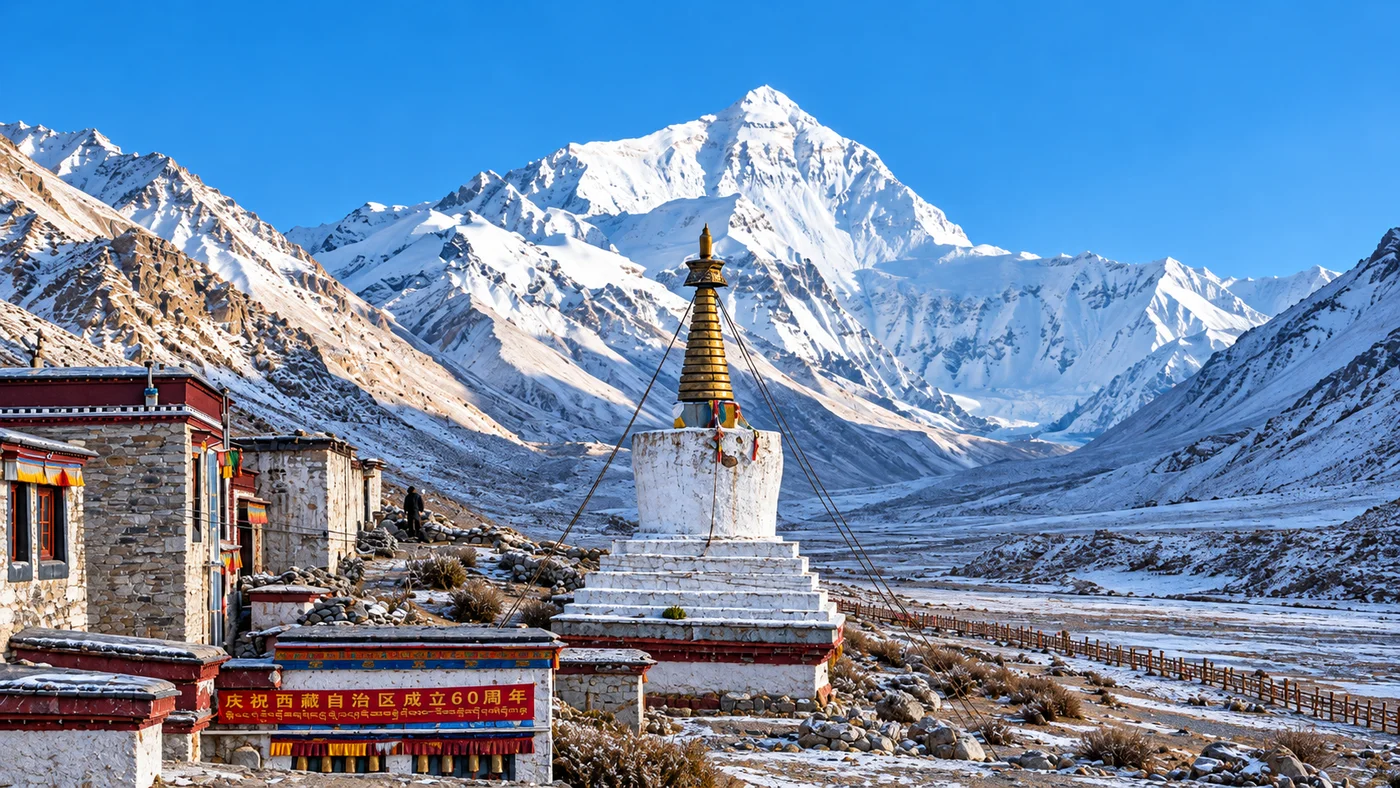
In addition, there are no large crowds, and prices for transportation, hotels, and guide services are falling. However, it’s important to remember that high-altitude passes and roads can be blocked by snow, and from late February through late March, the Tibet Autonomous Region is closed to foreigners. Entry permits for the Ngari Prefecture, home to the sacred Mount Kailash, are simply not issued in winter, and due to the cold, Tibetans close their guesthouses.
Month | Lhasa (3,650 m) — Day / Night / Precipitation | Shigatse (3,840 m) — Day / Night / Precipitation | Everest Base Camp (5,200 m) — Day / Night / Precipitation | Mount Kailash Region (4,600 m) — Day / Night / Precipitation |
November | +12 °C / -2 °C / 1 mm | +10 °C / -4 °C / 1 mm | +4 °C / -11 °C / 2 mm | +2 °C / -13 °C / 3 mm |
December | +8 °C / -6 °C / 0 mm | +6 °C / -8 °C / 0 mm | +1 °C / -15 °C / 1 mm | -2 °C / -17 °C / 2 mm |
January | +7 °C / -7 °C / 1 mm | +5 °C / -9 °C / 0 mm | 0 °C / -16 °C / 1 mm | -4 °C / -18 °C / 3 mm |
February | +9 °C / -4 °C / 2 mm | +8 °C / -6 °C / 1 mm | +2 °C / -13 °C / 2 mm | -2 °C / -15 °C / 4 mm |
March | +13 °C / 0 °C / 4 mm | +12 °C / -2 °C / 2 mm | +6 °C / -8 °C / 4 mm | +2 °C / -10 °C / 6 mm |
When planning a trip, it’s important to understand that good weather in the mountains is partly a matter of luck, and Tibet is no exception. At mountain passes above 5,000 meters, even on a sunny day, an icy wind can pick up and snow can fall, and clouds quickly roll in over Everest.
No one can guarantee with 100 percent certainty that you’ll see the summit of Mount Everest or Mount Kailash, and there’s always a risk that the mountains will be hidden by clouds. Sometimes, even during a rainy summer, Everest suddenly comes into full view, while during a dry winter, it remains hidden in the fog.
When planning a trip to the “Roof of the World,” be prepared for sudden temperature changes (the difference between night and day can reach 25 degrees) and other vagaries of nature. The “onion principle” works best: dress in several thin layers that you can easily remove or add depending on the weather. The main thing is to keep both sunscreen and a windproof jacket on hand.
We will find a route for you
Tell us what interests you — and the destination expert will get in touch, answer your questions about altitude, timing and preparation, and suggest a suitable programme. The consultation is free and commits you to nothing.