

Sacred Sites of Kailash: Top 10 Sacred Places Along the Kora Route
What you'll encounter on this three-day trek: ancient monasteries, the Shivatsal Sky Cemetery, the Drolma-La Pass, the Axe of Karma rock, and other points of interest. The legends and significance of each.
Day 1: Darchen — Dirapuk Monastery
Day 2: Dirapuk — Zutulpuk Monastery (via the Drolma-La Pass)
Day 3: Sacred Streams and the Barga River, Darchen
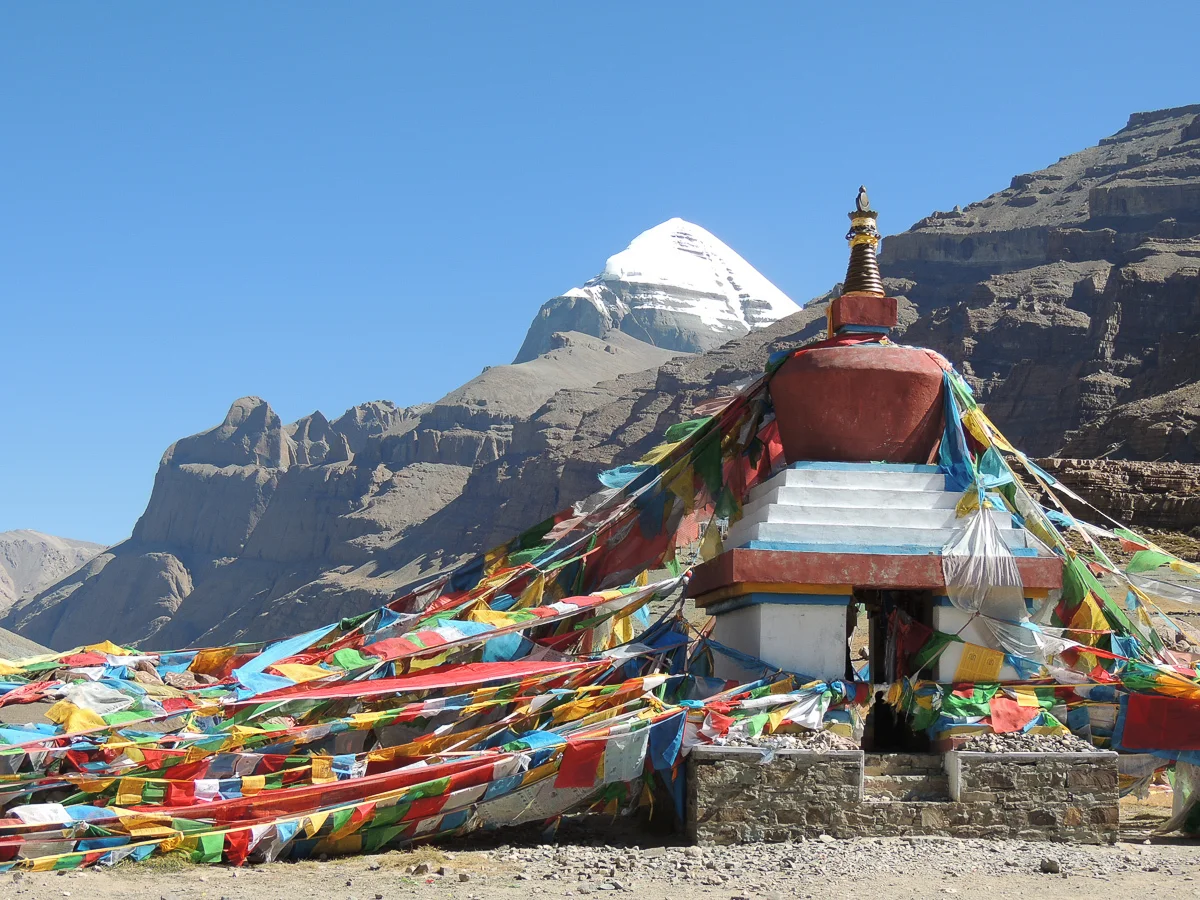
Mount Kailash stands apart among the peaks of Tibet. Buddhists, Hindus, followers of Jainism, and adherents of the ancient Tibetan religion of Bon consider it the center of the universe and the axis of the world. Pilgrims and tourists from all over the world flock here, not to climb Kailash (climbing is prohibited for religious reasons), but to perform the kora—a ritual circumambulation of the sacred mountain. It is believed that during this pilgrimage, inner purification takes place, a person accumulates good karma, and draws closer to enlightenment.
The classic route, approximately 52 kilometers long, begins and ends in the village of Darchen (4,670 meters above sea level). The route is usually completed in 3 days, traveling clockwise (counterclockwise is reserved for the Bon tradition). Along the way, there are many sacred sites and landmarks that attract both believers and casual travelers. Here are the ten most famous and most-visited of them.
Day 1: Darchen — Dirapuk Monastery
Tarboche Glade and the Prayer Flagpole
From Darchen, pilgrims head to the Lha-Chu Valley toward the starting point of the route—the Tarboche clearing. Every year during the main Buddhist festival, Saga Dawa, a 25-meter pole is erected here, adorned with thousands of multicolored lungta prayer flags. Based on how the flagpole stands, the lamas predict the future: if it stands perfectly straight, Tibet can expect prosperity, peace, and a bountiful harvest, while a tilt foreshadows difficulties.
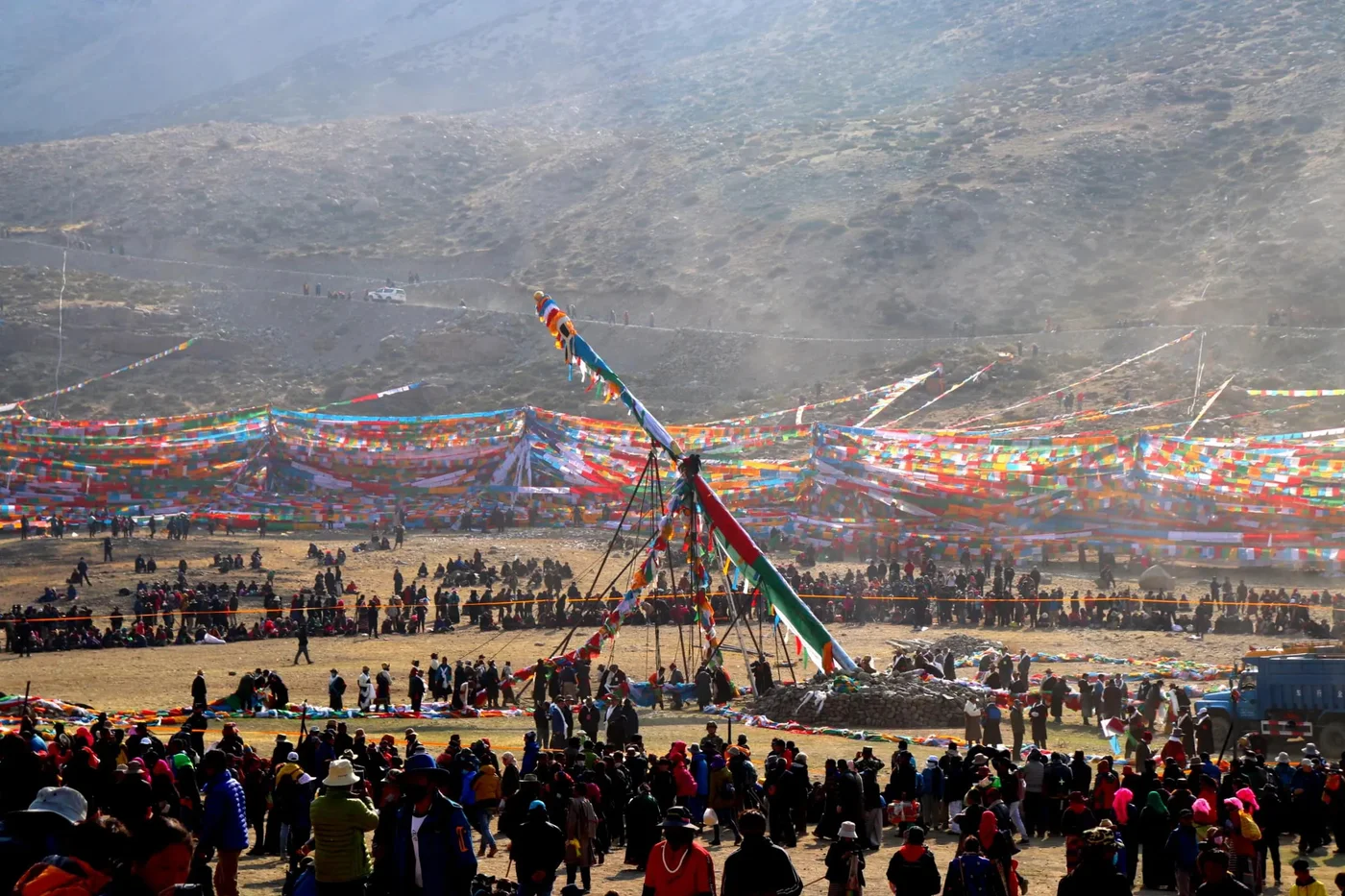
This festival is one of the most spectacular events in Asia: nomads and pilgrims from all over Tibet gather in a meadow dressed in their finest attire and adorned with elaborate jewelry made of turquoise and amber. Saga Dawa falls on the full moon, when, according to tradition, the power of any action or prayer here is multiplied by 100,000.
Chorten Kangni (Yamadwar Gate)
Beyond the Tarboche meadow lies Chorten Kangni—a sacred Buddhist stupa in the shape of a square arch, symbolizing the entrance to the mountain’s sacred territory. Hindus refer to this same place as Yamadvar—the “Gates of the God of Death.”
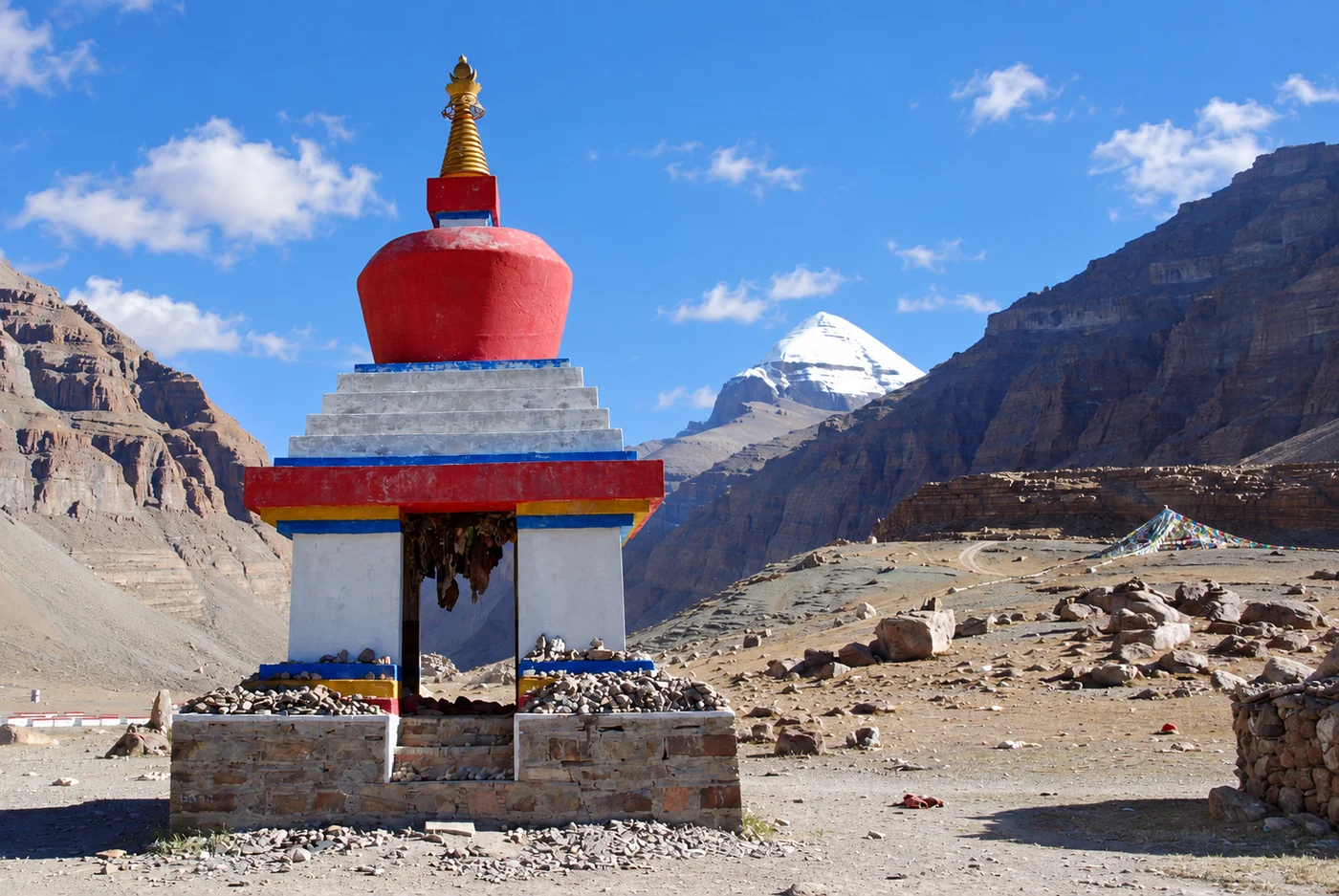
Before continuing on their way, travelers pass through the archway. Buddhists believe that this ritual purifies them and gives them strength for the journey, while according to Hindu beliefs, at that very moment the god of death completely erases a person’s past sins from the Book of Destiny.
The First Footprint of the Buddha
A little further along in the Lha-Chu Valley, the trail leads to the first of the four sacred footprints of Shakyamuni Buddha. According to legend, in ancient times Mount Kailash was alive; it could fly and move, which is why demons tried to drag it underground, while the gods sought to lift it up to the heavens. The Buddha miraculously transported himself through the air to the mountain and literally anchored Kailash to the Tibetan earth by stepping on its four corners. Under the influence of his enlightened energy, the solid granite at these points softened as if it were clay.
The imprints have remained intact for centuries, despite constant exposure to wind, frost, and precipitation. Pressing their foreheads against the sacred indentations, pilgrims ask for a blessing. Guides explain the secret to the marks’ durability simply: for hundreds of years, believers have touched the stones daily with their hands and foreheads, rubbed them with oil, and sprinkled them with barley flour (tsampa). This has created a protective glossy layer on the surface.
Chuku Monastery (Nyari Tshupo, Chuku Gompa)
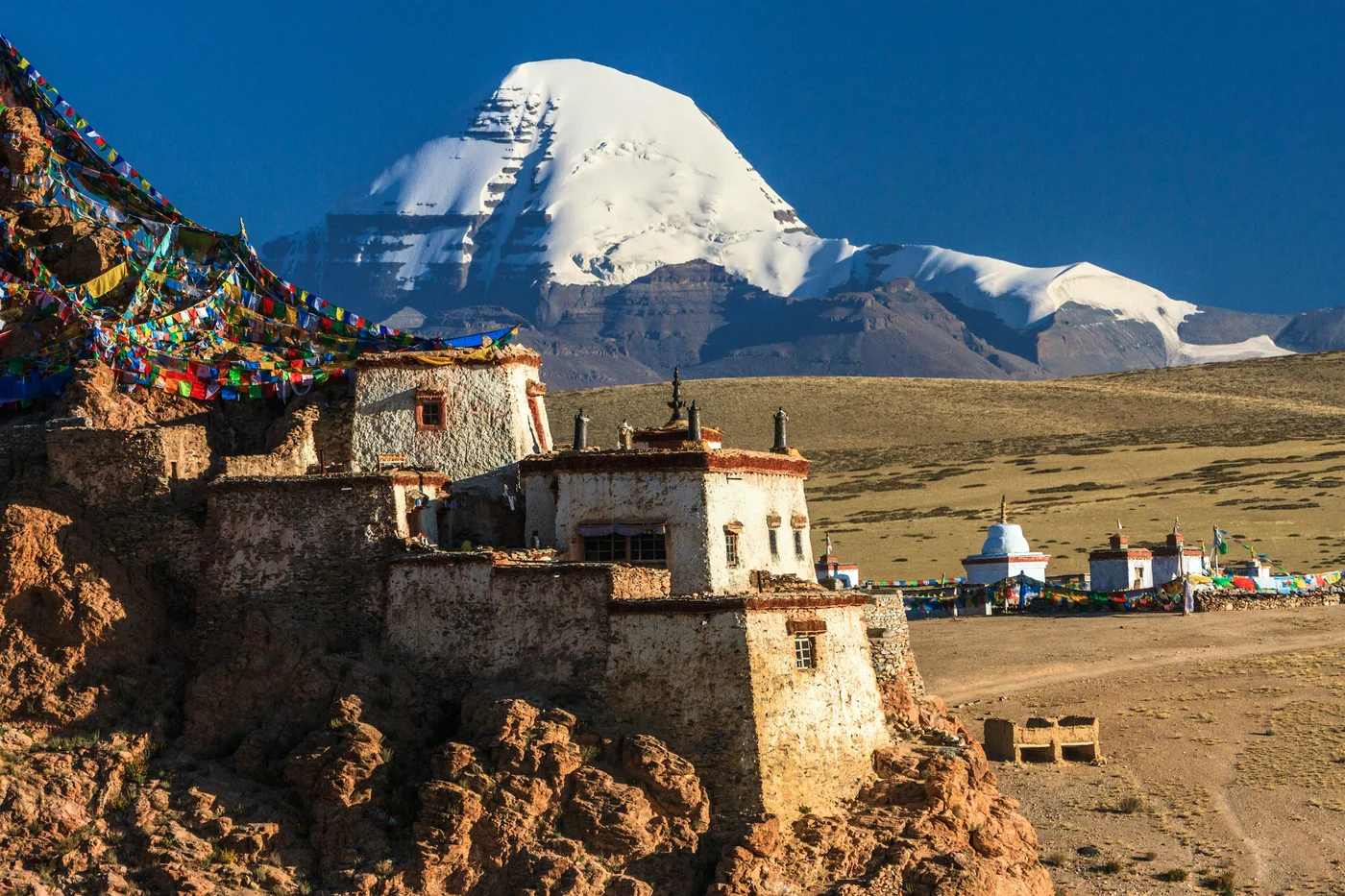
The first ancient monastery on the route is located on a rocky ledge (4,820 m) on the western side of the valley. People climb up there to rest and pay their respects to the relics. The monastery’s main sacred objects are a spontaneously formed marble statue of the Buddha of Infinite Light, an ancient copper cauldron, and a white shell. Pilgrims believe that a visit to Chuku grants them a blessing to continue their pilgrimage.
Dirapuk Monastery (Dirapuk Gompa)
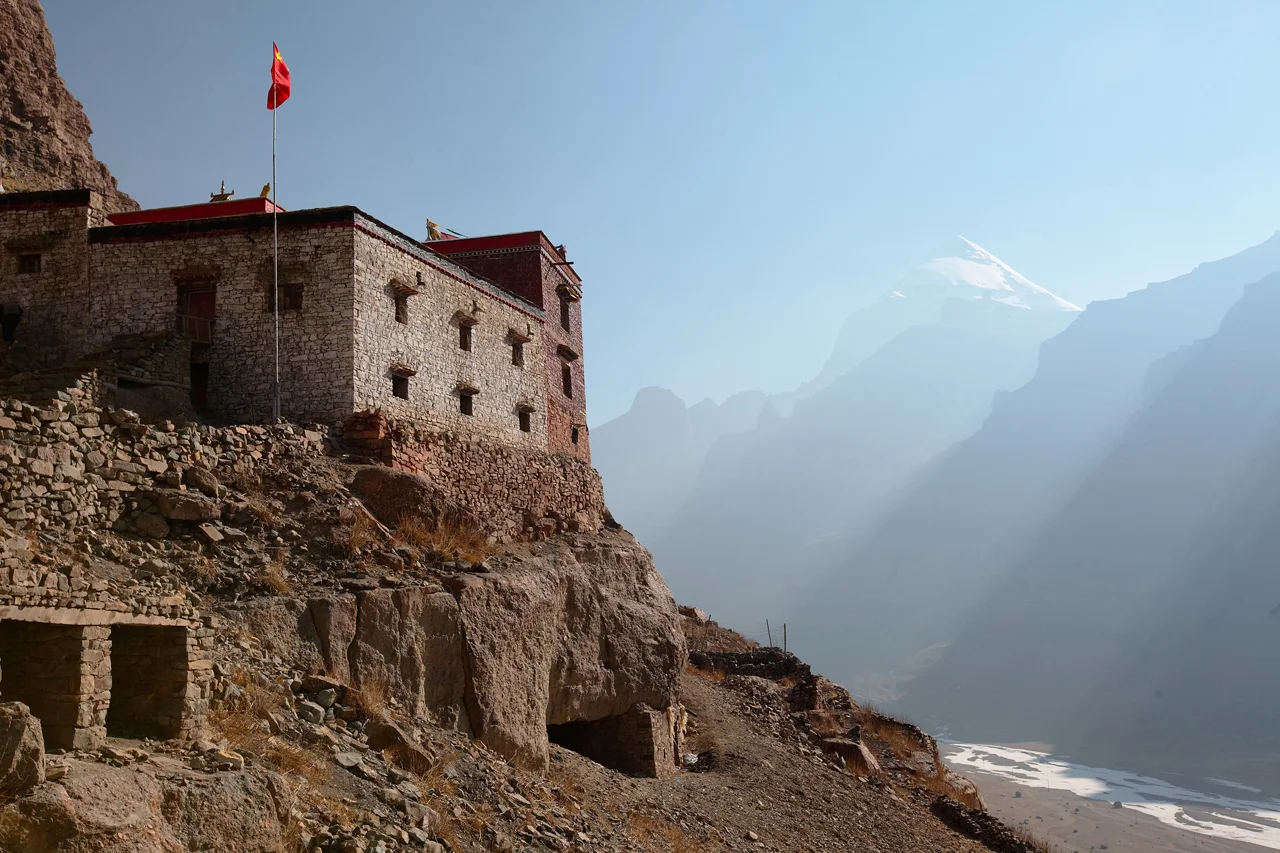
At the end of the Lha-Chu Valley, directly across from the sheer northern slope of Mount Kailash, at an elevation of about 5,100 meters, lies the Buddhist monastery of Dirapuk. The shrine is built around the meditation cave of the Tibetan yogi Gotzangpa (Gonpo Dorje), the discoverer of the sacred Kora.
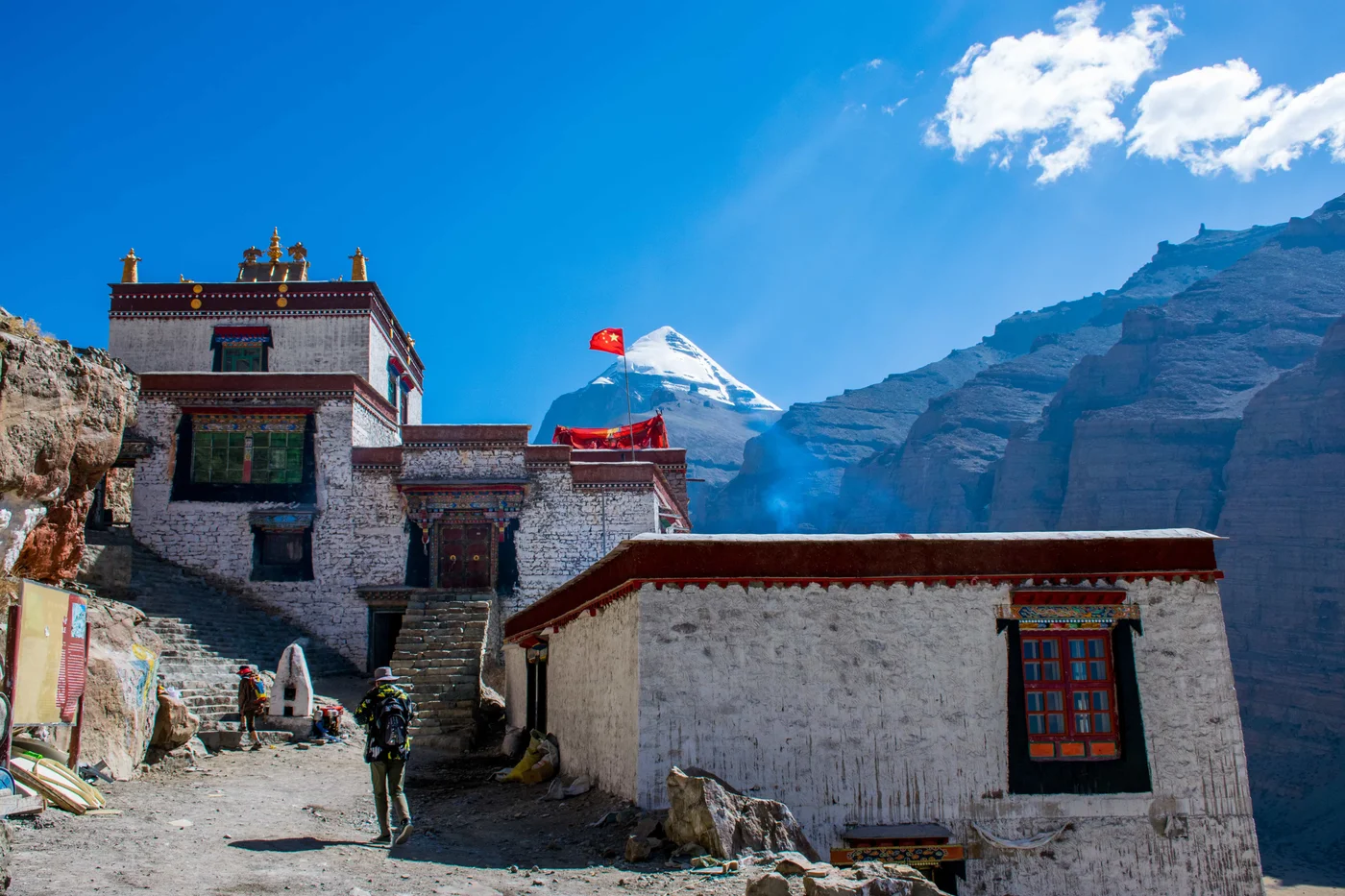
Dirapuk serves as an acclimatization camp: pilgrims stop here for the night to regain their strength before the most challenging leg of the journey the following morning. This is also the spot from which to take stunning photos of the mountain’s pristine north face: bathed in the rays of the rising or setting sun, it literally glows gold.
Day 2: Dirapuk — Zutulpuk Monastery (via the Drolma-La Pass)
The Shivatsal (Sivatin) Sky Cemetery
At the start of the steep ascent to the Drolma-La Pass at an elevation of 5,330 meters, travelers pass through Shivatsal—a sacred site that guidebooks and traveler accounts often refer to as the “heavenly cemetery”. This is one of the most mystical and psychologically challenging points along the route. It is said that sky burial rituals were once performed here—the bodies of the deceased were fed to vultures.
Pilgrims believe that at Shivatsal, a symbolic death takes place, along with the purification of karma and preparation for spiritual rebirth. Believers simulate a burial by lying down on a rocky area and then leaving behind a personal item—clothing, a lock of hair, or a piece of jewelry—as if parting ways with the past.
Drolma-La Pass
Immediately after Shivatsala, a grueling climb begins to the highest point of the ridge—the Drolma-La Pass (about 5,630 m). Due to the thin air and lower atmospheric pressure at this altitude, the lungs receive half as much oxygen as they do at sea level. Therefore, every step here becomes a challenge. For pilgrims, this milestone signifies complete karmic purification and a new spiritual birth.
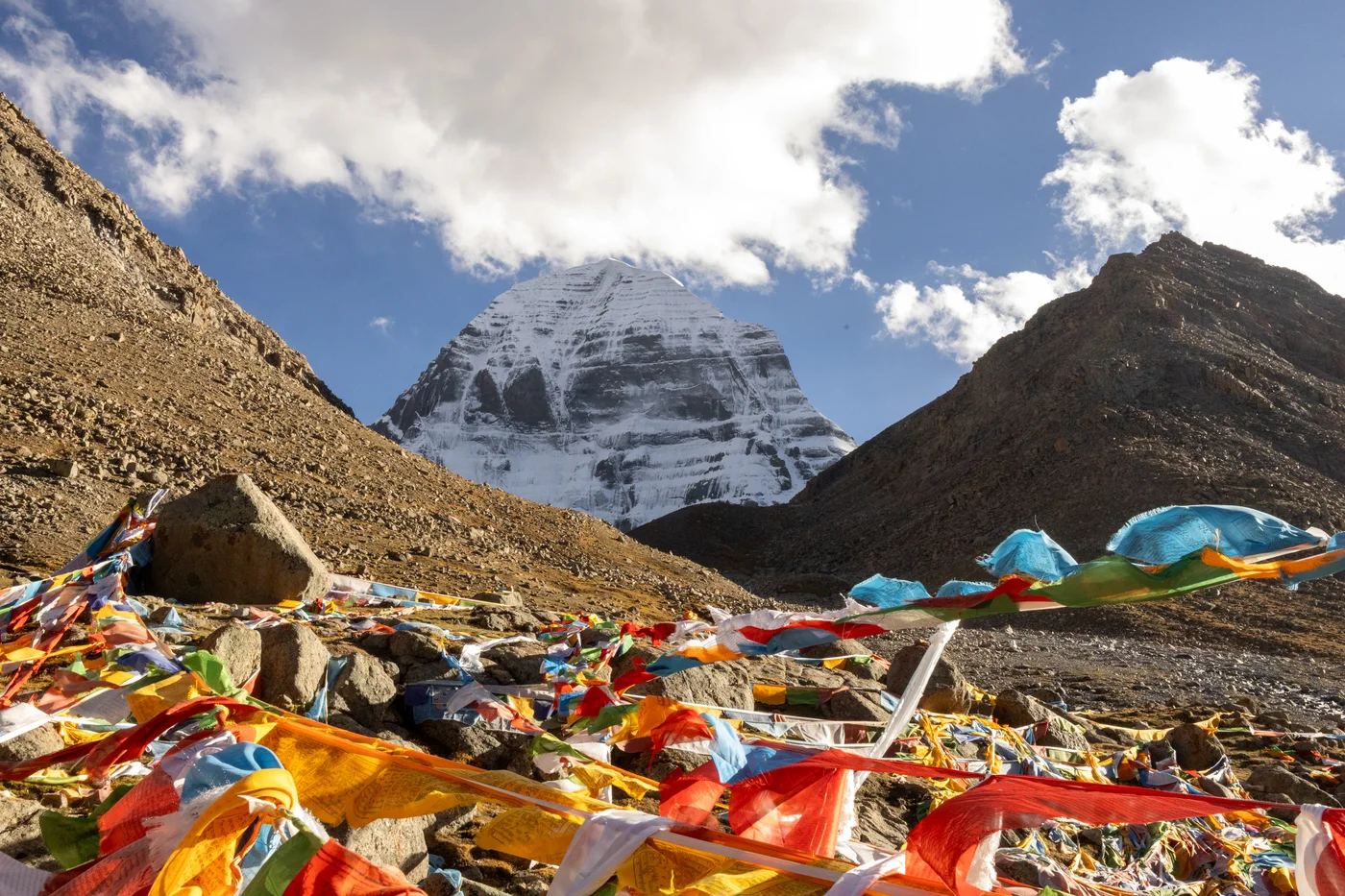
On the saddle, adorned with thousands of prayer flags, stands a sacred rock monolith. It is believed that the bodhisattva Drolma (Green Tara)—the principal female deity of compassion in Tibetan Buddhism—resides within it. Legend has it that she took the form of a pack of wolves to save the pioneer of the Gozangpu route and guide him to the summit.
Lake Gaurikund
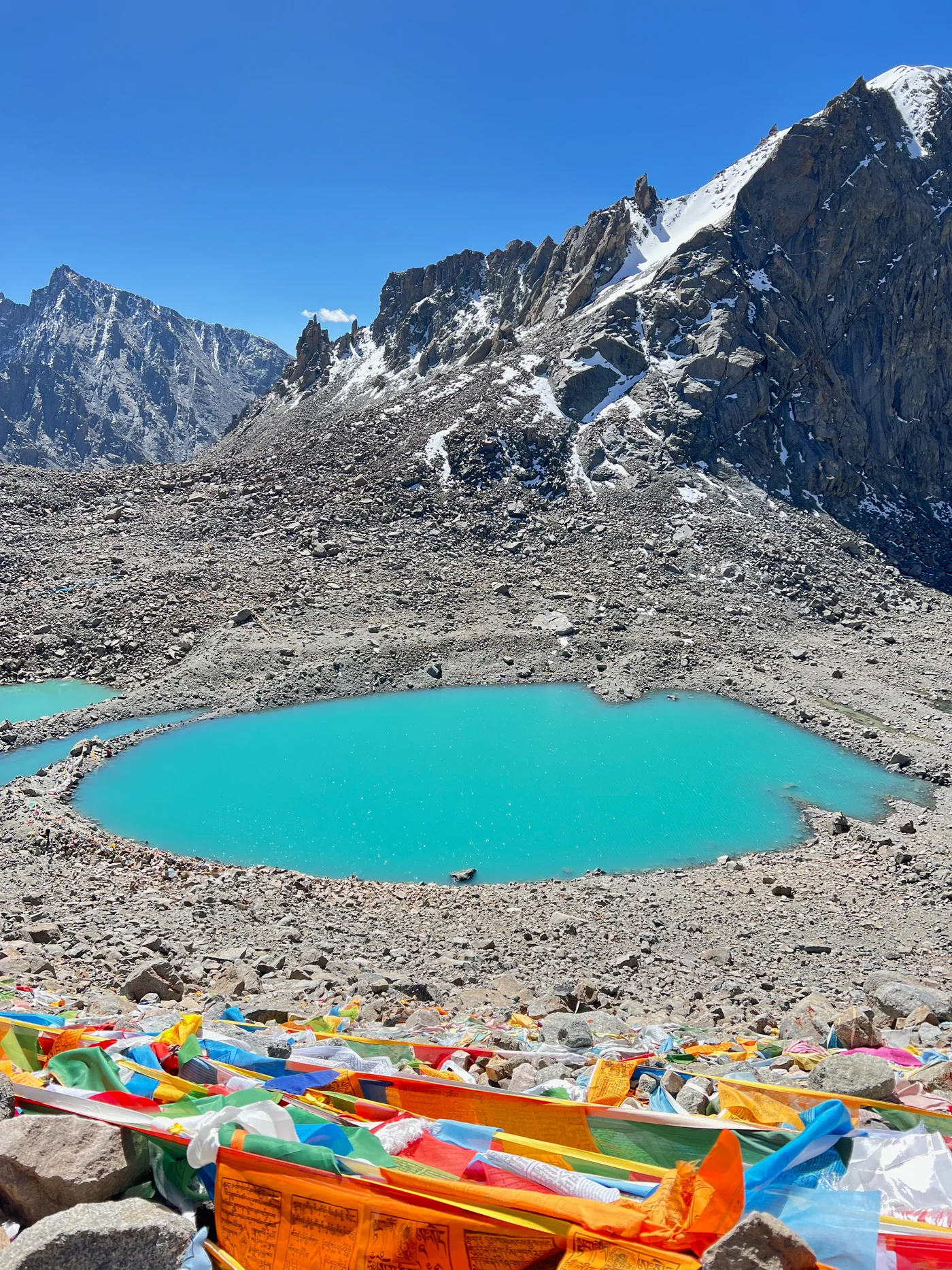
Nestled in a deep basin on the descent from the pass lies the emerald-green Gaurikund Lake, hidden beneath a layer of ice and snow almost year-round. It is one of the highest freshwater lakes in the world, and its water is considered sacred. In Hinduism, it is believed that the goddess Parvati, wife of the god Shiva, performed her ablutions at this site. The Tibetan name, Tukje Tso, translates as “Lake of Compassion.”
"Karma's Axe" Rock
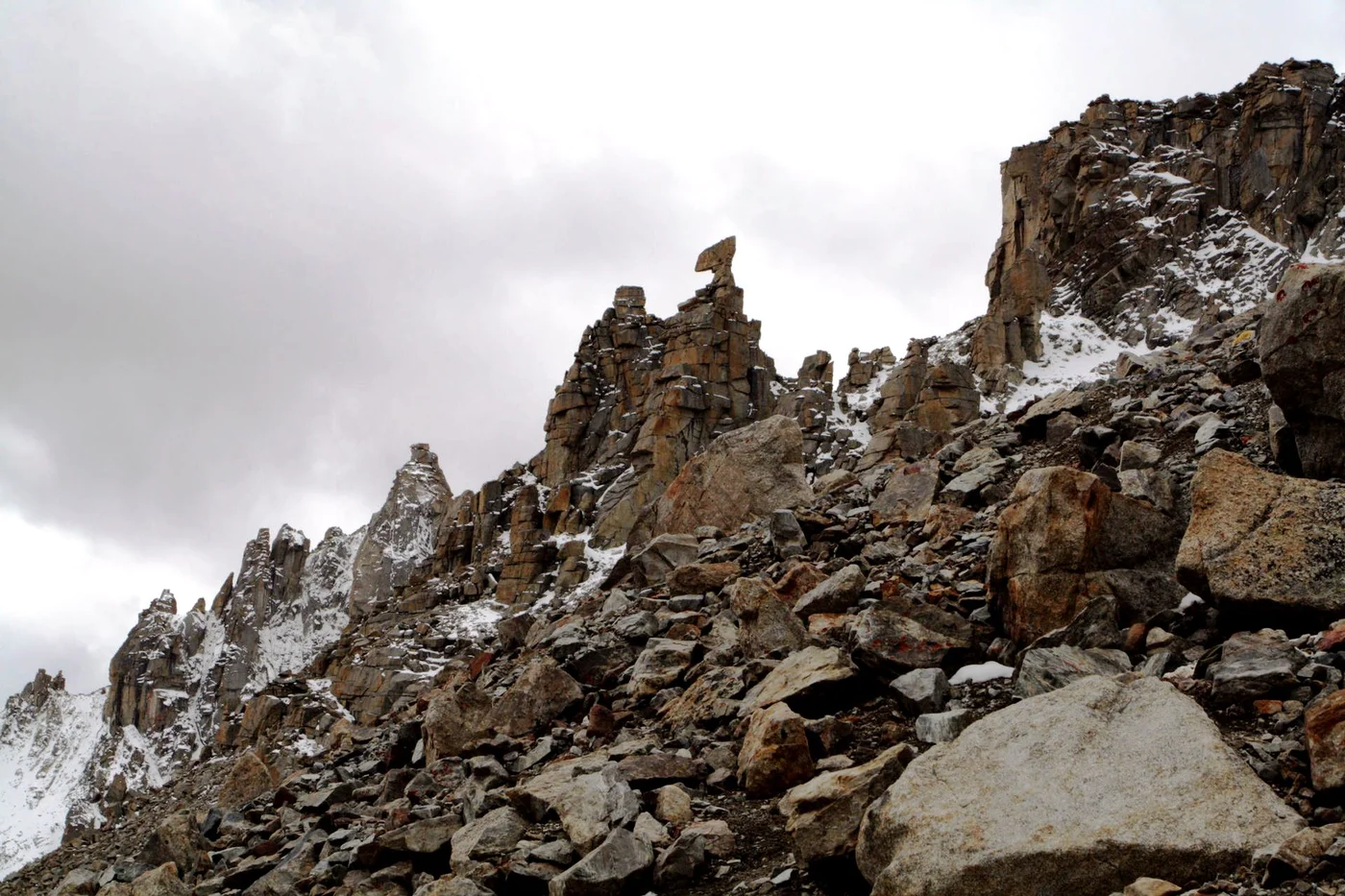
From the same spot on the trail, a view of the Karma Axe rock formation opens up. It is said that this rock formation, resembling the blade of a cleaver, definitively cuts away the burden of past deeds, freeing the soul for a new life. On this stretch of the trail, hikers experience a real sense of physical relief: the grueling climb is over, oxygen levels are rising, and fatigue gives way to euphoria.
Zutulpuk Monastery (Dzutrul Puk, 4,790 m)
This stop on the route welcomes travelers in the Jongchu Valley. The monastery is built around the “Cave of Wonders,” where, according to legend, the great Tibetan yogi Milarepa meditated. He lifted a stone slab with his bare hands, leaving deep indentations on the cave’s ceiling—the imprints of his palms and head. The monks of Zutulpuka welcome the weary but happy pilgrims with hot tea, and an atmosphere of camaraderie reigns in the local guesthouses that evening: people from different countries who have crossed the pass share their joy and relief.
Day 3: Sacred Streams and the Barga River, Darchen
The next morning, all that remains is to walk the final 11 kilometers of a gentle descent to Darchen. The trail runs alongside rushing mountain rivers and streams, whose water the Tibetans consider healing and carry with them. Along the way, you’ll encounter traditional Tibetan chortens (stupas), piles of flat stones engraved with sacred mantras (such as “Om mani padme hum”), and garlands of multicolored prayer flags. After this stretch, tourists usually return to civilization in Darchen. From there, they often head to the sacred high-altitude Lake Manasarovar and the ancient Chiu Monastery located on its shore, which is associated with Guru Rinpoche (Padmasambhava).
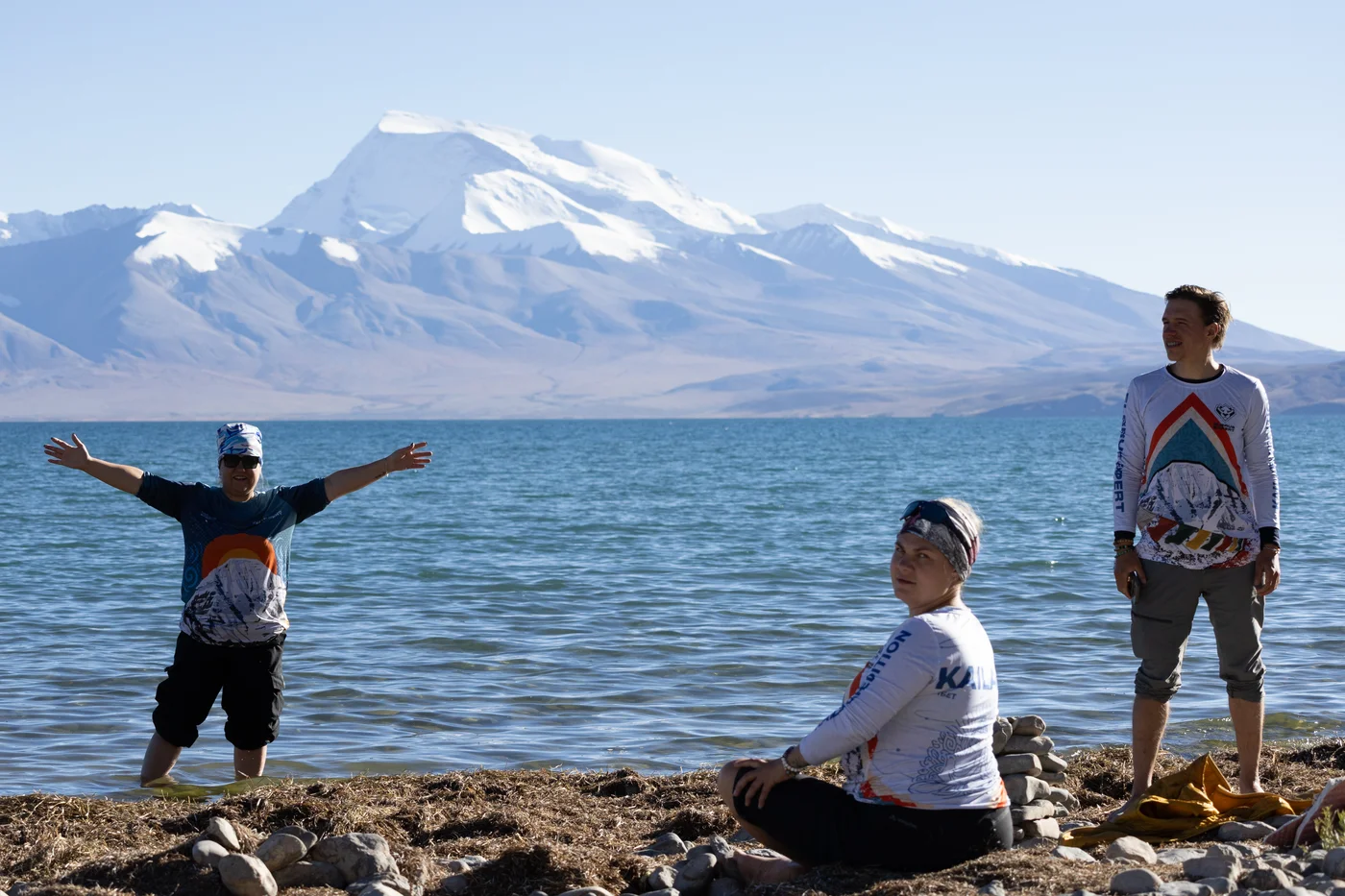
Officially, swimming in Lake Manasarovar is not allowed, but as part of our program, we offer the chance to take a dip in the lake’s hot springs. They are located right next to the Chu Monastery (Chiu Gompa). This is the best place to relax after the pilgrimage around Mount Kailash and to reunite your mind and body for new achievements.
The trail around Kailash isn’t just a beautiful three-day trek and a test of altitude. Everyone here also has their own inner journey. Some let go of old resentments, some make a decision they’ve been putting off for years, and some simply hear their own inner voice clearly for the first time in a long while. These unexpectedly revealed insights stay with a person, continuing to resonate long after they return home. Join Tibet Expert on our journey through Tibet and around Mount Kailash. Enjoy this magic within yourself.
We will find the right route for you
Tell us what interests you, and a destination expert will get in touch, answer your questions about altitude, dates and preparation, and suggest a suitable programme. The consultation is free and commits you to nothing.
Request received
A destination expert will get in touch within one business day.