

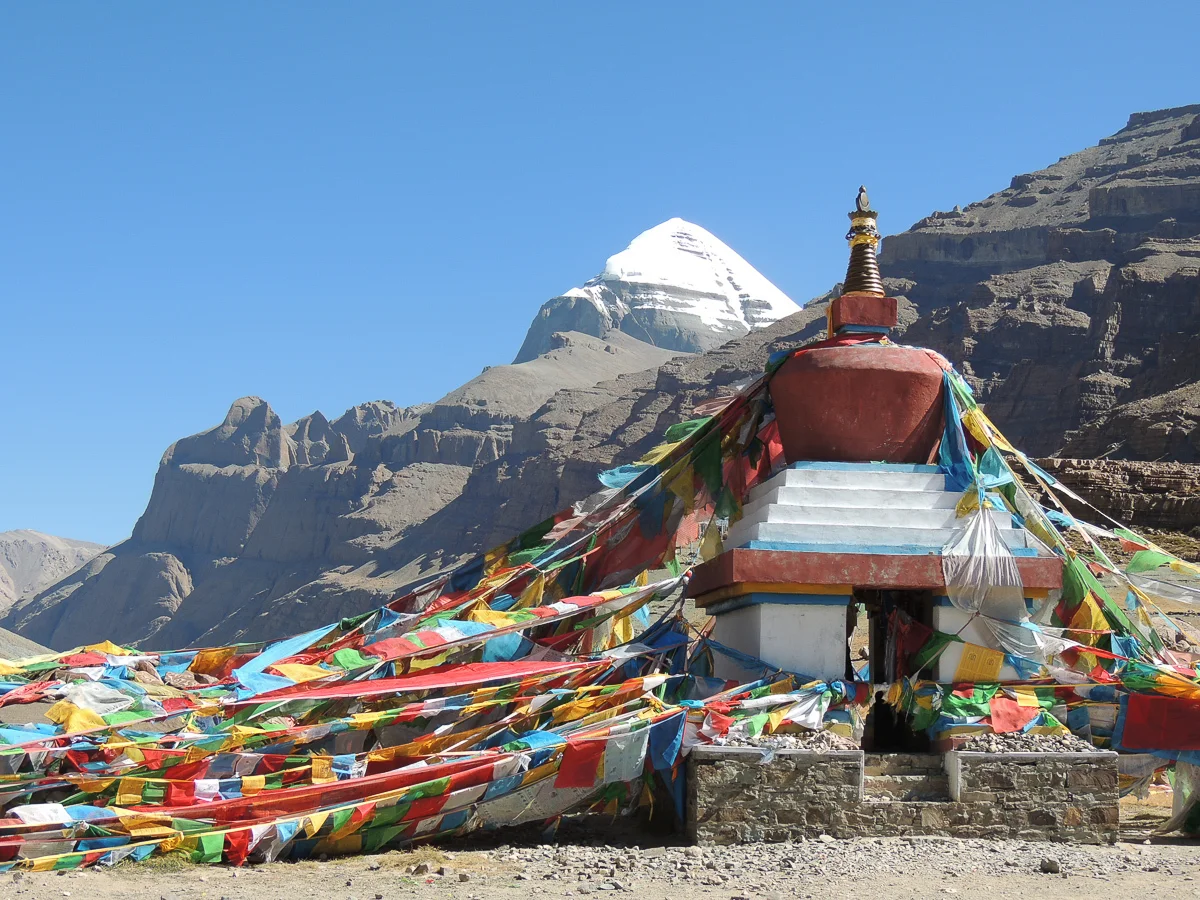
The shrines of Kailash: the top 10 sacred places on the kora
What you will meet on the three-day route: ancient monasteries, the Shivatsal sky burial ground, the Drolma La pass, the Axe of Karma rock and other points. The legends and meaning of each.
Day 1: Darchen — Dirapuk Monastery
Day 2: Dirapuk — Zutulpuk Monastery (over the Drolma La pass)
Day 3: The sacred streams and the Barga River, Darchen
Mount Kailash stands apart among the peaks of Tibet. Buddhists, Hindus, followers of Jainism and the ancient Tibetan religion of Bon regard it as the centre of the universe and the axis of the world. Pilgrims and tourists from all over the world are drawn here, not to climb Kailash (climbing is forbidden on religious grounds) but for the kora — the ritual circuit of the sacred mountain. It is believed that during this pilgrimage an inner cleansing takes place, a person accumulates good karma and comes closer to enlightenment.
The classic route, about 52 kilometres long, begins and ends in the village of Darchen (4670 metres above sea level). The distance is usually covered in 3 days, moving clockwise (anticlockwise only in the Bon tradition). Along the way you meet many shrines and landmarks that attract both believers and ordinary travellers. Here are the ten best known and most visited among them.
Day 1: Darchen — Dirapuk Monastery
The Tarboche meadow and the prayer flagpole
From Darchen, pilgrims head into the Lha Chu valley to the starting point of the route — the Tarboche meadow. Every year during Saga Dawa, the main Buddhist festival, a 25-metre pole hung with thousands of multicoloured lungta prayer flags is raised here. From how the flagpole stands, the lamas judge the future: if it is perfectly upright, Tibet can expect prosperity, peace and a good harvest, while a tilt foretells hardship.
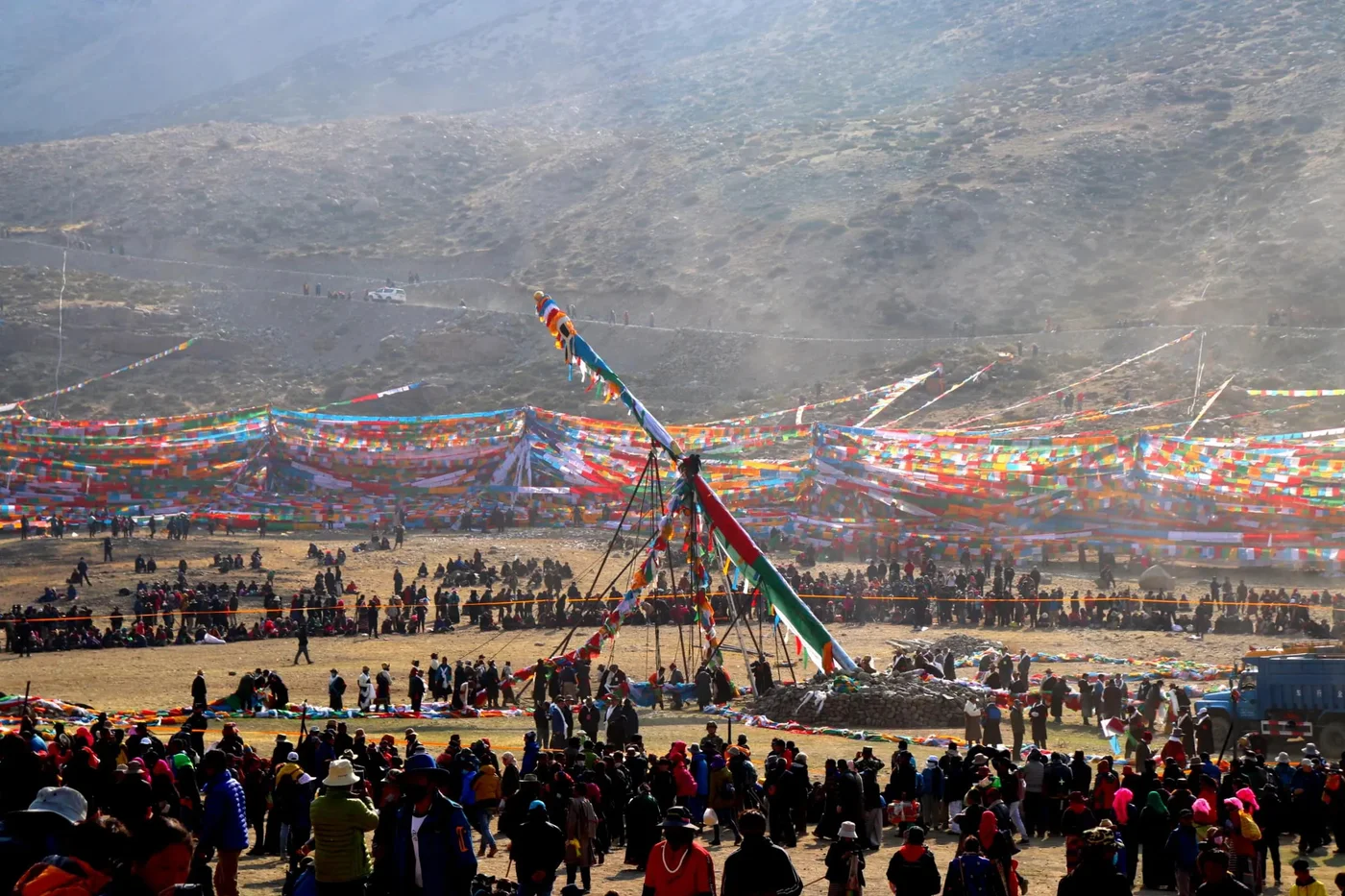
This celebration is one of the most spectacular events in Asia: nomads and pilgrims from all over Tibet gather on the meadow in their finest clothes and heavy turquoise and amber jewellery. Saga Dawa falls on the full moon, when, according to belief, the power of any action and prayer here is multiplied 100,000 times.
Chorten Kangnyi (the Yama Dwar gate)
Beyond the Tarboche meadow stands Chorten Kangnyi — a sacred Buddhist stupa in the form of a square arch, symbolising the entrance to the mountain's sacred territory. Hindus call the same place the Yama Dwar gate — the "Gate of the God of Death".
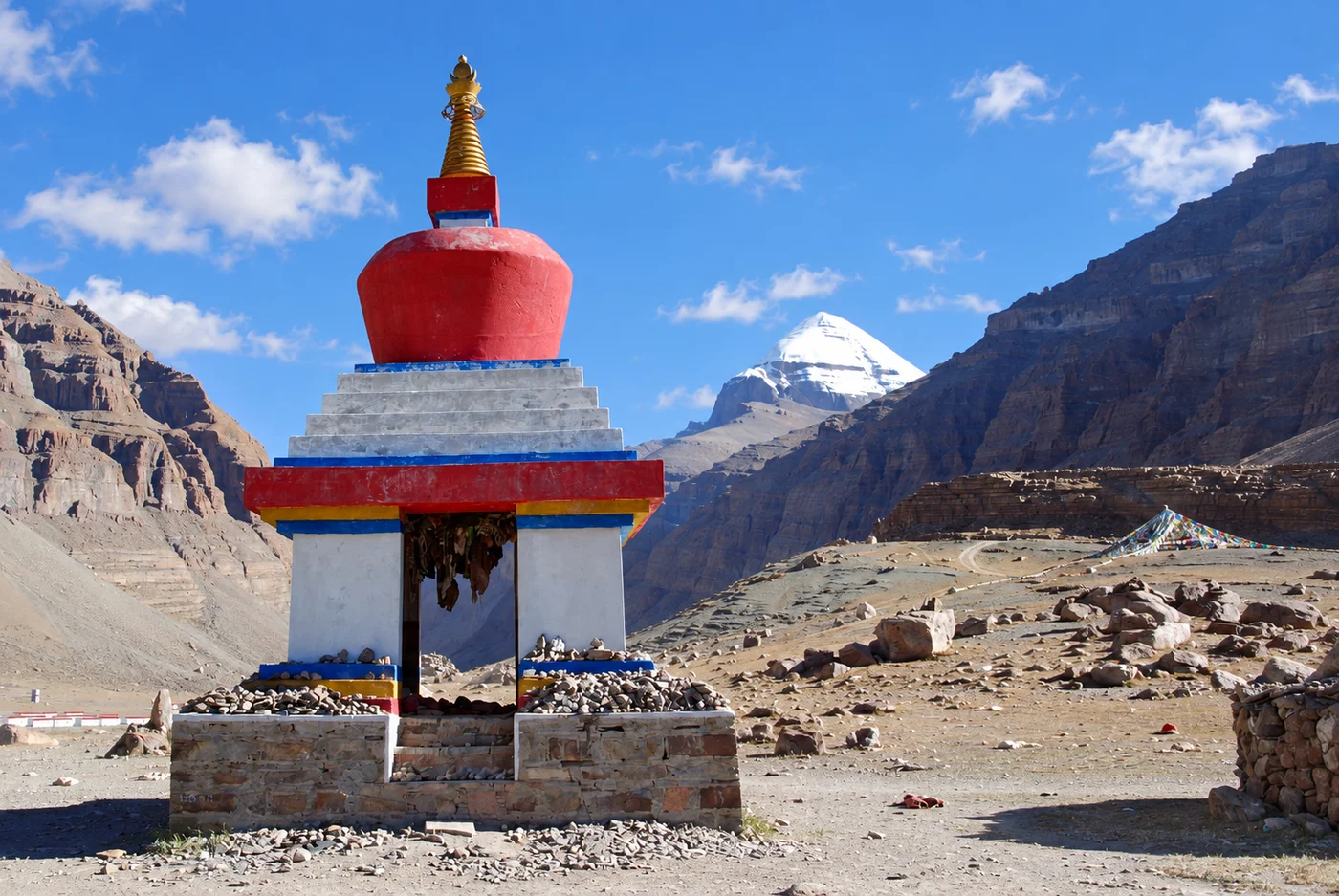
Before going further, travellers pass through the arch. Buddhists believe that the ritual purifies and gives strength for the path, while according to Hindu belief the god of death at that moment completely erases a person's past sins from the book of fate.
The first footprint of the Buddha
A little further along the Lha Chu valley, the trail leads to the first of the four sacred footprints of Shakyamuni Buddha. According to legend, in ancient times Mount Kailash was alive and could fly and move, because of which demons tried to drag it underground and the gods to lift it to the heavens. The Buddha miraculously flew to it through the air and literally pinned Kailash to the Tibetan earth by stepping on the four corners of the mountain. Under the action of his enlightened energy, the hard granite at these points softened like clay.
The imprints have not worn away for centuries, despite constant exposure to wind, frost and precipitation. Pressing their foreheads to the sacred hollows, pilgrims ask for a blessing. Tour guides explain the secret of the footprints' durability simply: for hundreds of years believers have touched the stones daily with their hands and foreheads, rubbed them with butter and sprinkled them with barley flour (tsampa). In this way a protective glossy layer formed on the surface.
Chuku Monastery (Nyari Tsepo, Chuku Gompa)
On a rocky ledge (4820 m) on the western side of the valley stands the first ancient monastery on the route. People climb up there to rest and pay homage to the relics. The monastery's main treasures are a self-arisen marble statue of the Buddha of Boundless Light, an old copper cauldron and a white conch shell. Those walking the kora believe that a visit to Chuku brings a blessing for continuing the pilgrimage.
Dirapuk Monastery (Dirapuk Gompa)
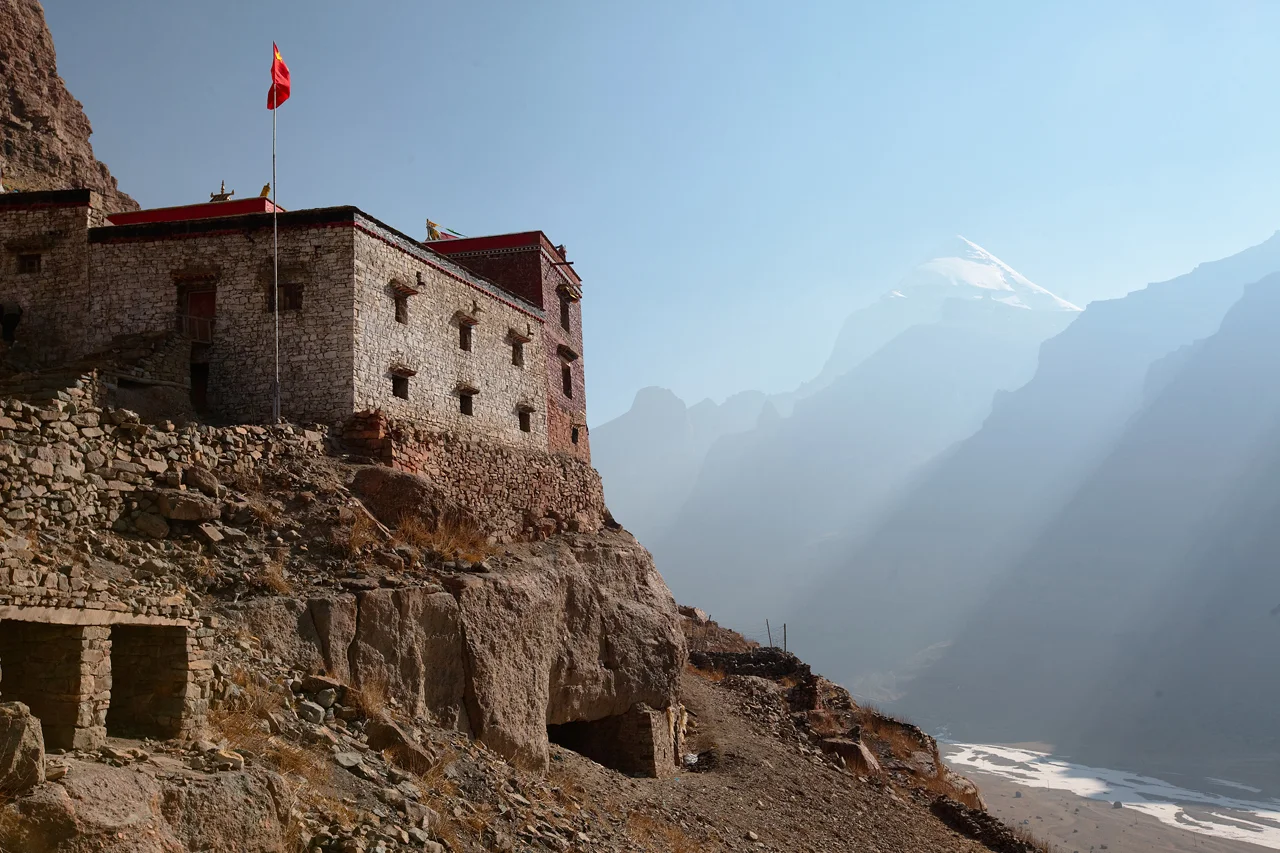
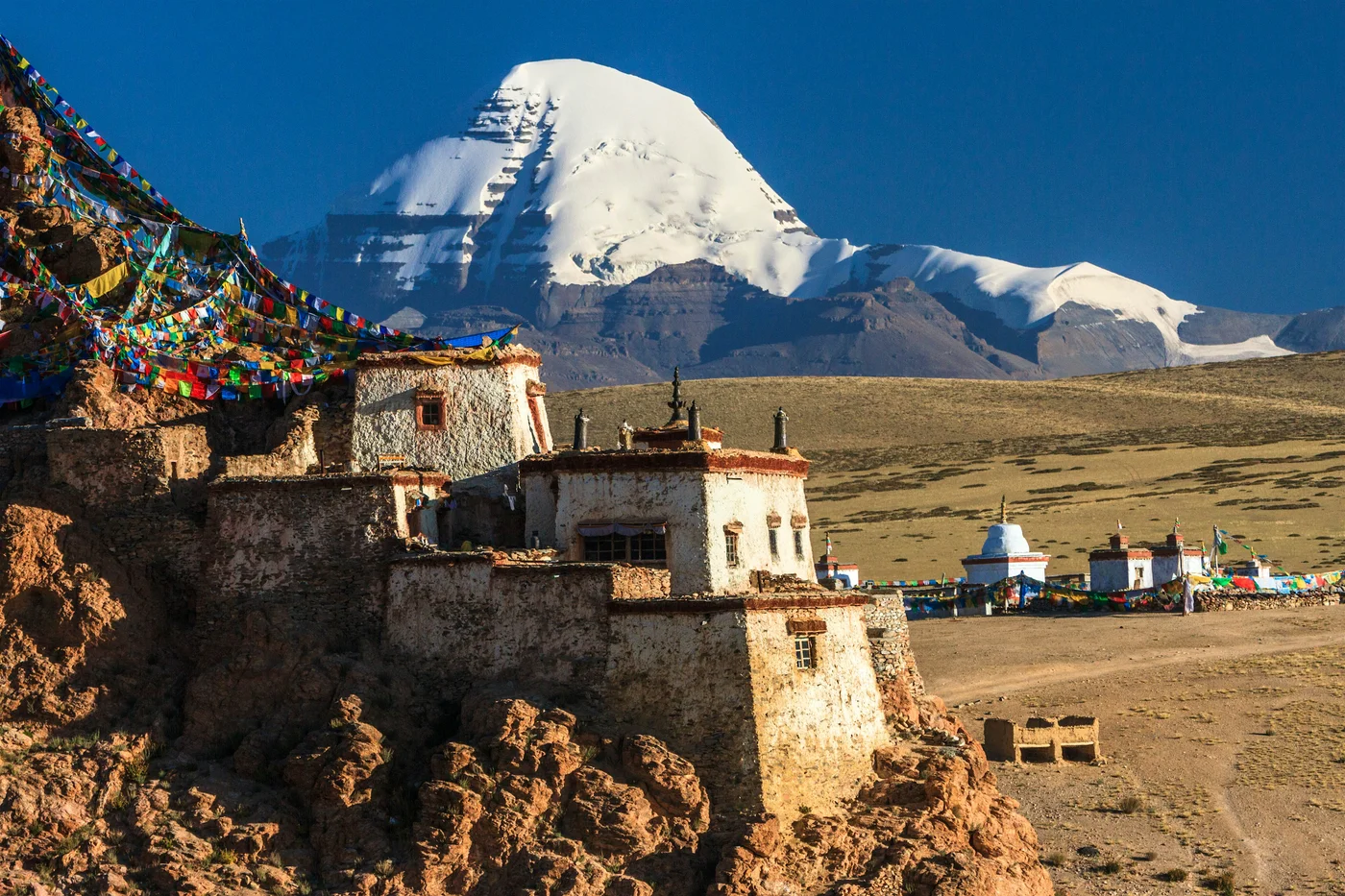
At the end of the Lha Chu valley, directly opposite the sheer north face of Kailash, at an altitude of about 5100 metres, stands the Buddhist monastery of Dirapuk. The shrine was built around the meditation cave of the Tibetan yogi Gotsangpa (Gonpo Dorje), the discoverer of the sacred kora.
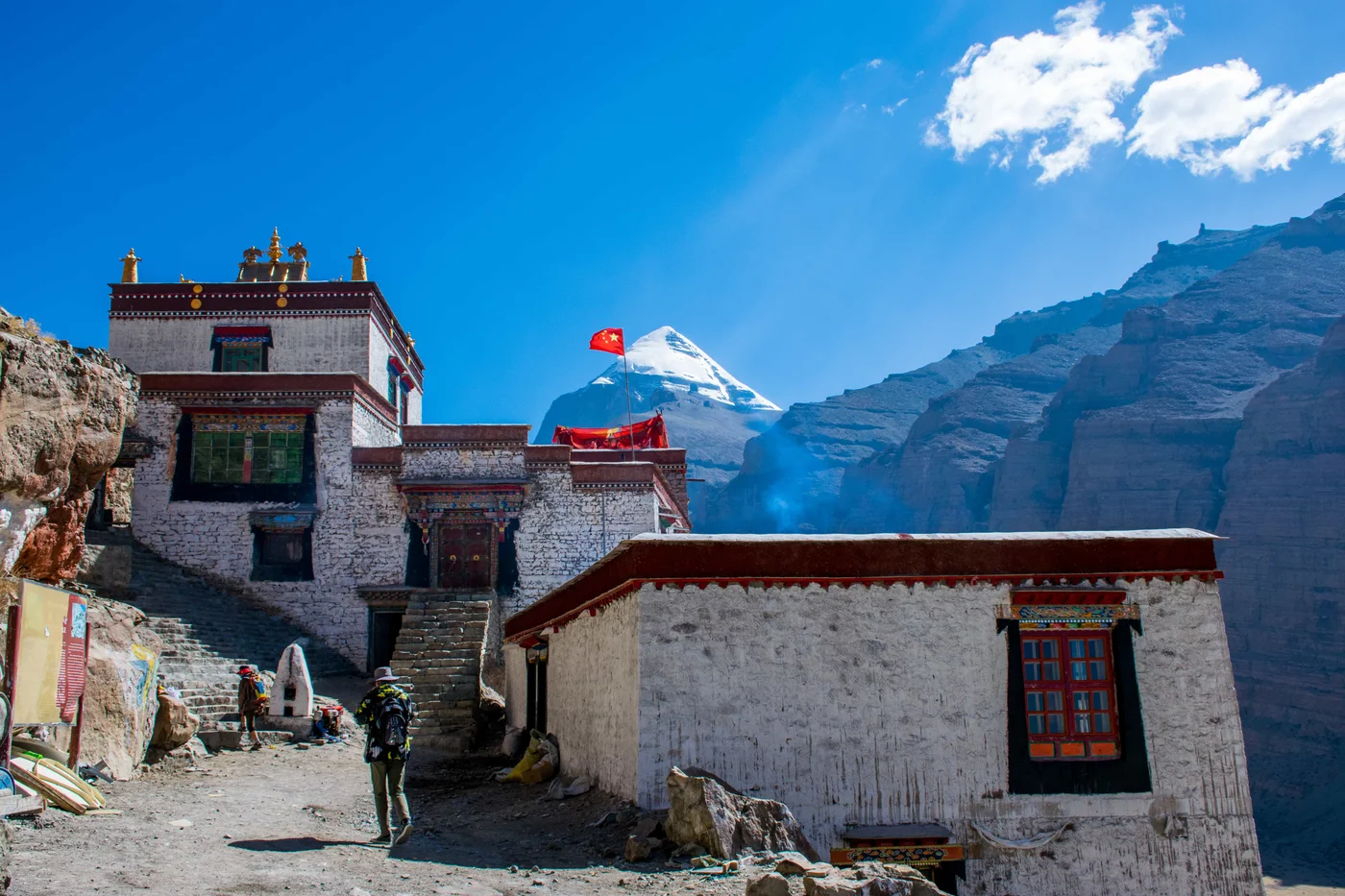
Dirapuk serves as an acclimatisation camp: pilgrims stop here for the night to gather strength before the hardest stage of the journey the next morning. This is also where impressive photographs are taken of the perfect north face of the mountain: in the rays of the rising or setting sun it literally glows gold.
Day 2: Dirapuk — Zutulpuk Monastery (over the Drolma La pass)
The Shivatsal sky burial ground (Shiva-tsal)
At the start of the steep climb to the Drolma La pass, at an altitude of 5330 metres, travellers cross Shivatsal — a sacred place often called the "sky burial ground" in guidebooks and travellers' accounts. It is one of the most mystical and psychologically heavy points of the route. They say that sky burial rites were once held here — the bodies of the dead were fed to scavenging vultures.
Pilgrims believe that at Shivatsal a symbolic death takes place, karma is cleansed and one prepares for spiritual rebirth. Believers imitate a burial by lying down on the stony ground, and then leave behind something personal — a piece of clothing, a lock of hair or a piece of jewellery — as if parting with the past.
The Drolma La pass
Right after Shivatsal begins the gruelling climb to the highest point of the kora — the Drolma La pass (about 5630 m). Because of the thin air and reduced atmospheric pressure, at this altitude half as much oxygen reaches the lungs as at sea level. So every step here becomes a trial. For pilgrims this threshold means complete karmic cleansing and a new spiritual birth.
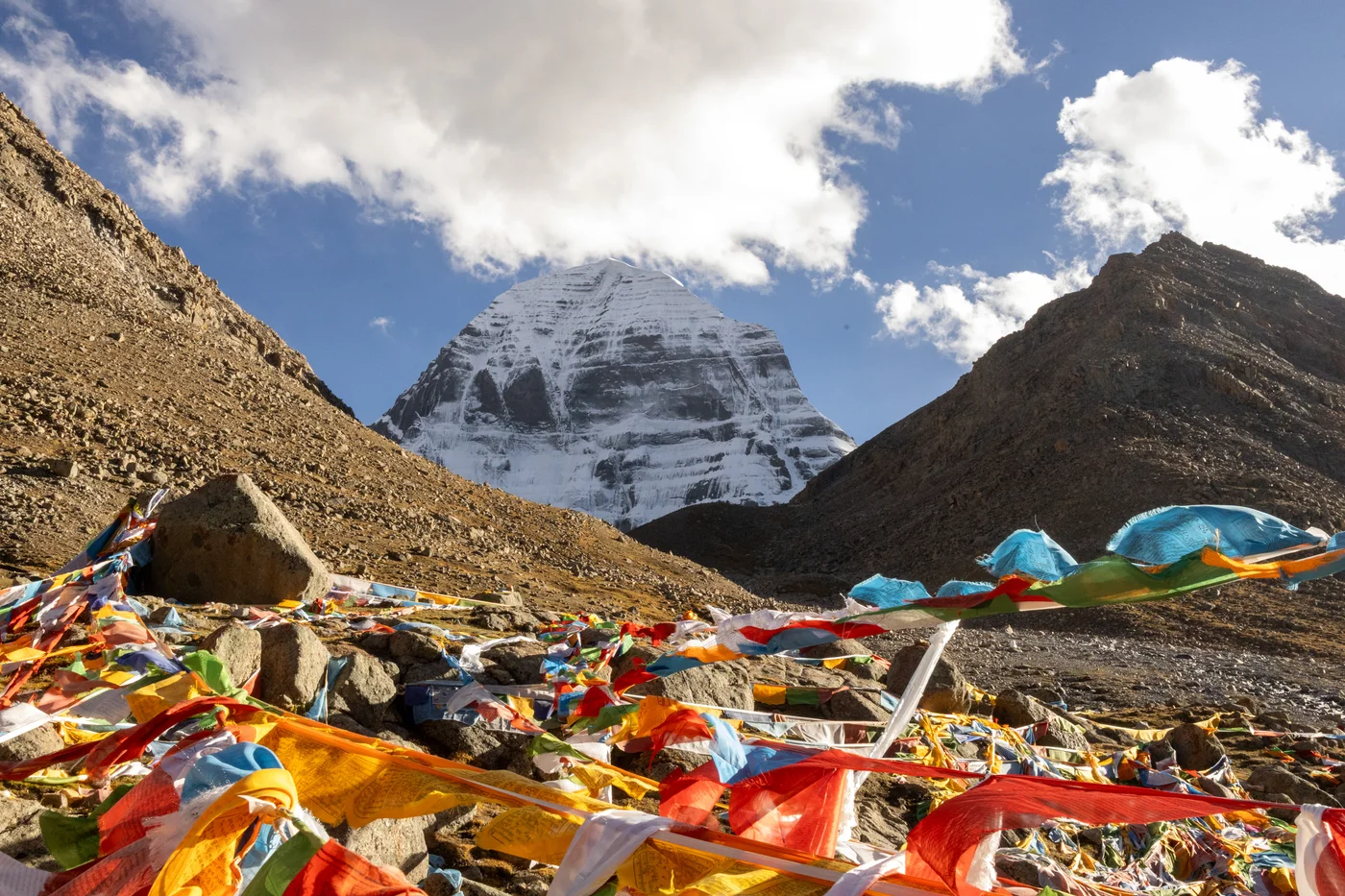
On the saddle, hung with thousands of prayer flags, stands a sacred rock monolith. It is believed that the bodhisattva Drolma (Green Tara), the main female deity of compassion in Tibetan Buddhism, dwells in it. Legend has it that she took the form of a pack of wolves to save Gotsangpa, the pioneer of the route, and lead him to the top.
Lake Gauri Kund
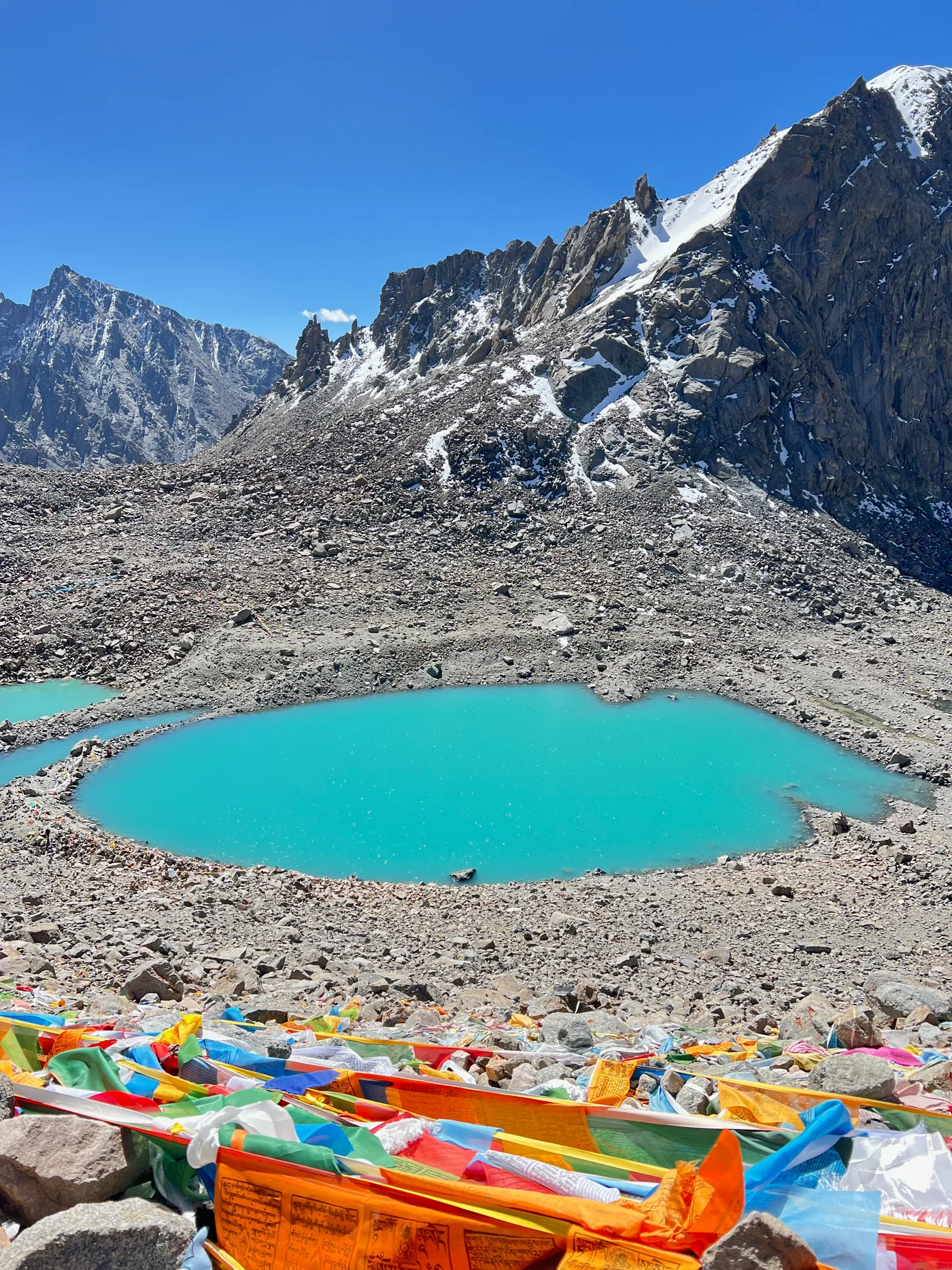
In a deep bowl on the descent from the pass lies the emerald-green body of water Gauri Kund, hidden under a layer of ice and snow almost all year round. It is one of the highest freshwater lakes in the world, and its water is considered holy. In Hinduism it is believed that the goddess Parvati, the wife of the god Shiva, bathed at this spot. The Tibetan name Thukje Tso translates as "lake of compassion".
The Axe of Karma rock
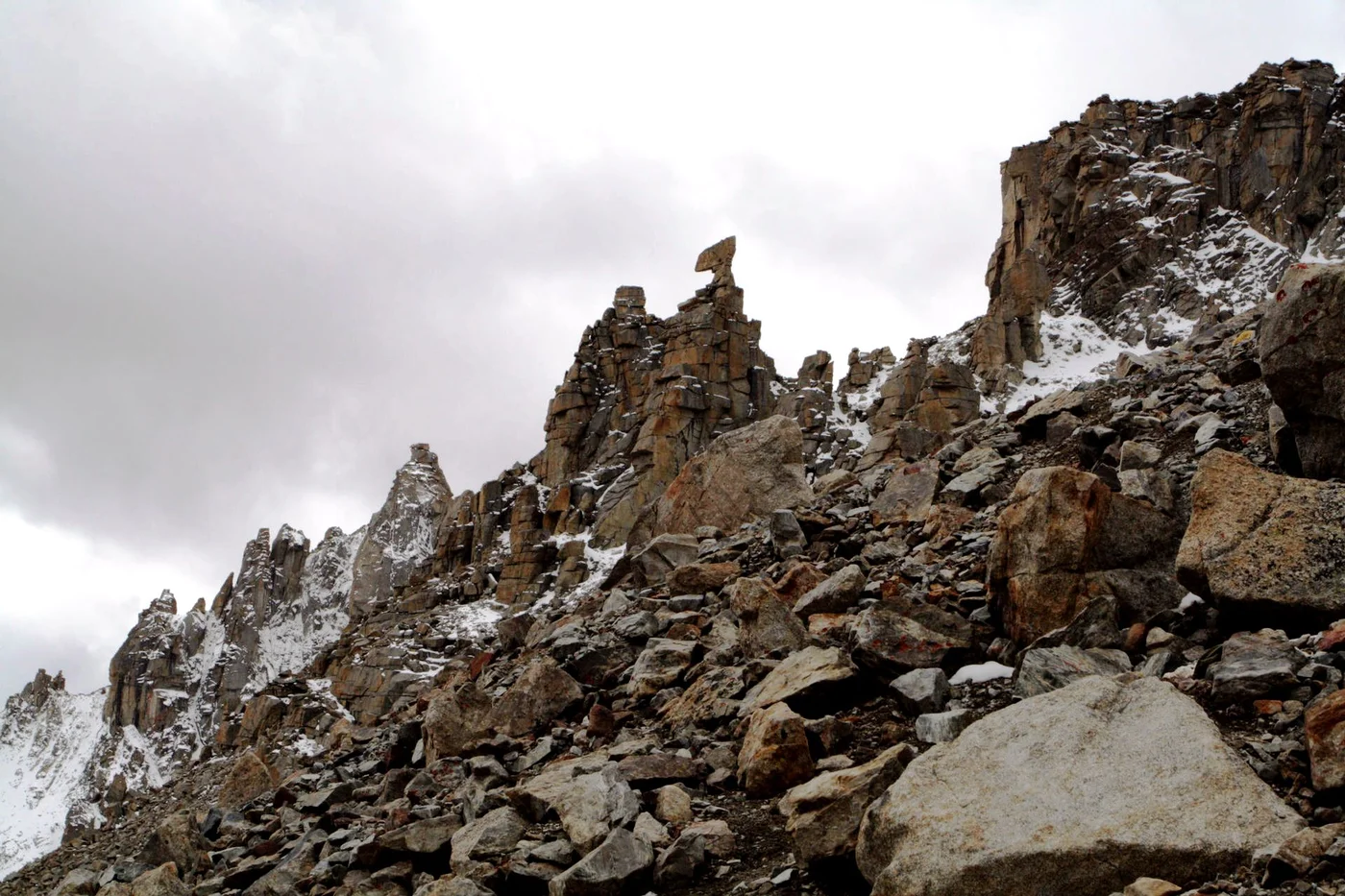
On the same trail, a view opens onto the Axe of Karma rock. They say that this rock formation, resembling the blade of a cleaver, finally cuts off the burden of past deeds, freeing the soul for a new life. On this stretch travellers feel real physical relief: the hard climb is over, the oxygen level is rising, and euphoria takes the place of fatigue.
Zutulpuk Monastery (Dzutrul Phuk, 4790 m)
This point on the route welcomes travellers in the Dzong Chu valley. The monastery was built around the "Cave of Miracles", where, according to tradition, the great Tibetan yogi Milarepa meditated. He lifted a stone slab with his hands, so that deep dents remained on the cave ceiling — the imprints of his palms and head. The monks of Zutulpuk greet tired but happy pilgrims with hot tea, and in the local guesthouses that evening there is an atmosphere of brotherhood: people from different countries who have crossed the pass share their joy and relief.
Day 3: The sacred streams and the Barga River, Darchen
The next morning, the last 11 kilometres of gentle descent to Darchen remain. The path runs along turbulent mountain rivers and streams, whose water Tibetans consider healing and take with them. Along the way you come across traditional Tibetan chortens (stupas), heaps of flat stones carved with sacred mantras (for example, "Om mani padme hum") and strings of multicoloured prayer flags. After this stretch tourists usually emerge back into civilisation in Darchen. Then they often go on to the sacred high-altitude Lake Manasarovar and, on its shore, the ancient Chiu Monastery, associated with the name of Guru Rinpoche (Padmasambhava).
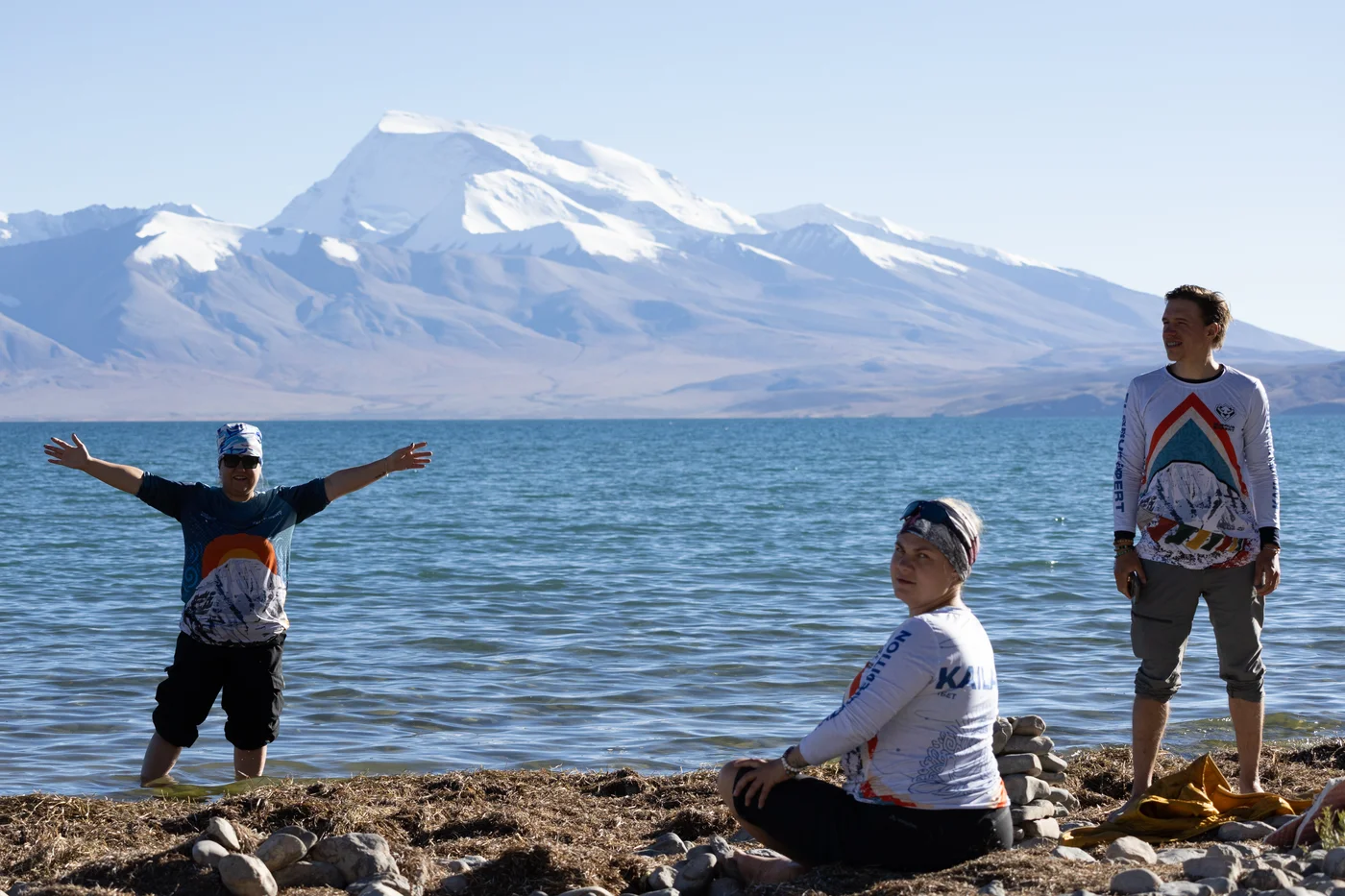
Officially, swimming in Lake Manasarovar is not allowed, but in our programme we offer a dip in the lake's hot springs. They are located right next to Chiu Monastery (Chiu Gompa). It is the best place to rest after the kora around Mount Kailash and to bring soul and body together for new accomplishments.
The kora around Kailash is not just a beautiful three-day trek and a test of altitude. Each person also has their own route within. Someone lets go of an old grievance, someone makes a decision they have put off for years, and someone simply hears themselves clearly for the first time in a long while. These unexpectedly revealed meanings stay with a person and keep working long after they return home. Join Tibet Expert on our journey in Tibet and the kora around Kailash. Enjoy this magic within yourself.
We will find a route for you
Tell us what interests you — and the destination expert will get in touch, answer your questions about altitude, timing and preparation, and suggest a suitable programme. The consultation is free and commits you to nothing.