

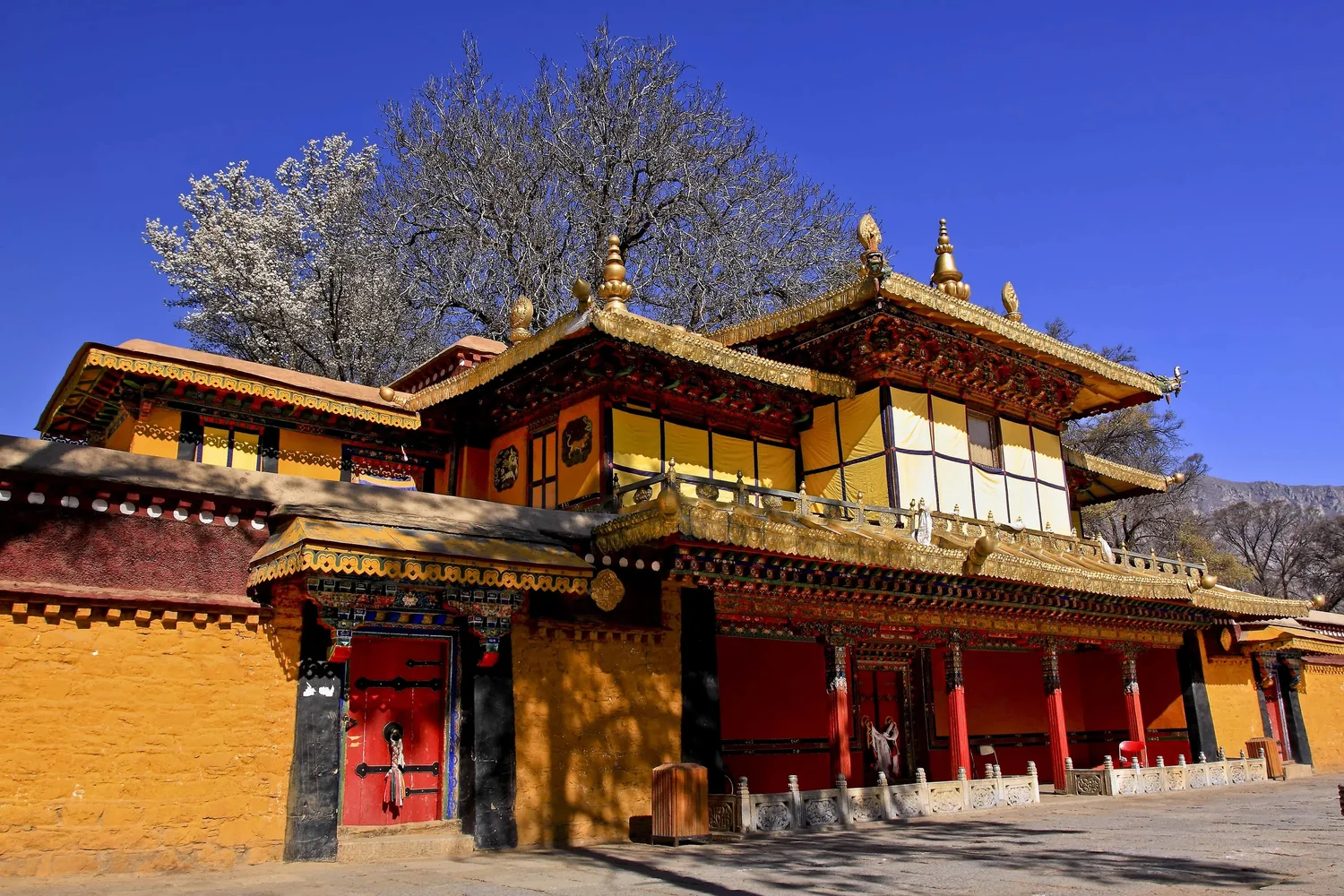
The Golden Triangle of Tibet
Lhasa, Gyantse, and Shigatse. The Potala Palace, ancient monasteries, and Lake Yamdrok. What to see, when to go, and what kind of weather to expect along the way.
Tibet That Will Surprise You: Roads, Trains, and a Mountain “Resort”
Geography and Weather: What You Need to Know Before Traveling to Tibet
For centuries, Tibet has captivated travelers with its seclusion, the world’s highest peaks, and an aura of mystery. In this place, time seems to flow more slowly; the air is filled with the scent of juniper incense and the sound of prayer drums. Today, people come here for a variety of reasons: to see the snow-capped peaks of the Himalayas, to experience the history of Tibetan Buddhism, to find inner renewal, to discover unique traditions, and to sample the local cuisine.
For a first visit without too much of a hassle, the Tibet Golden Triangle tour is a great choice. The name isn’t just a coincidence—the itinerary connects the region’s three main historical, cultural, and spiritual centers: the capital, Lhasa, and the cities of Gyantse and Shigatse. Each of these places represents a distinct aspect of Tibetan civilization, and to get the full picture, you need to see all three. The itinerary offers the opportunity to immerse yourself in the atmosphere and experience the spirit of Tibet—its culture, religion, and nature.
Highlights of the itinerary
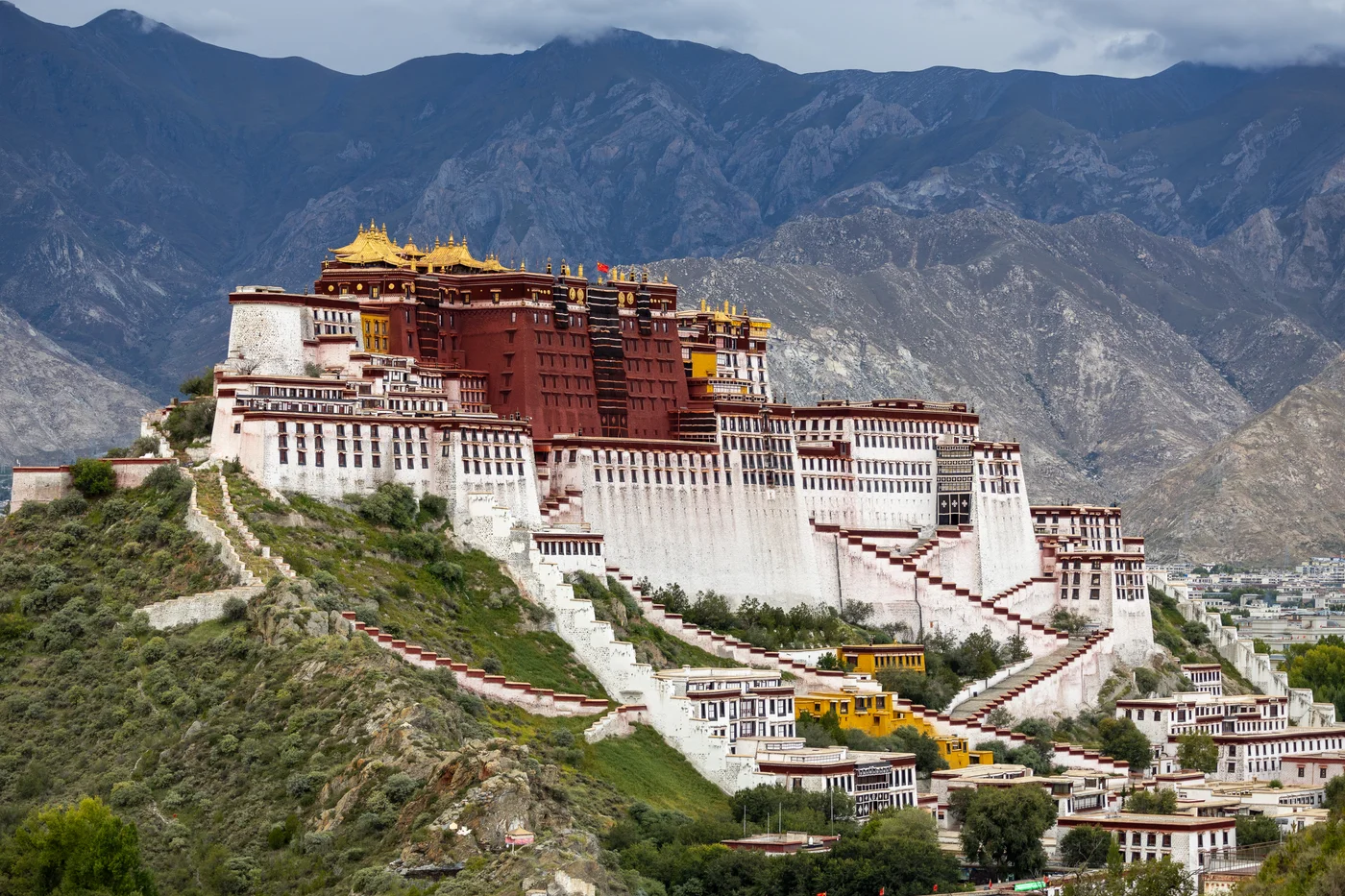
The journey begins in Lhasa—the administrative and spiritual center of Tibet. Situated at an altitude of 3,650 meters above sea level, the city offers a remarkable blend of the ancient and the modern. At its heart lies the Potala Palace, the former winter residence of the Dalai Lamas. It is the highest palace complex on the planet: its 13 stories rise 117 meters from the base. This magnificent white-and-red structure, built of stone and wood, was erected in the 17th century without a single steel nail. Inside lies a veritable hive of activity—a labyrinth of thousands of corridors and rooms housing priceless thangka scrolls, golden stupas containing the ashes of rulers, and rare relics.
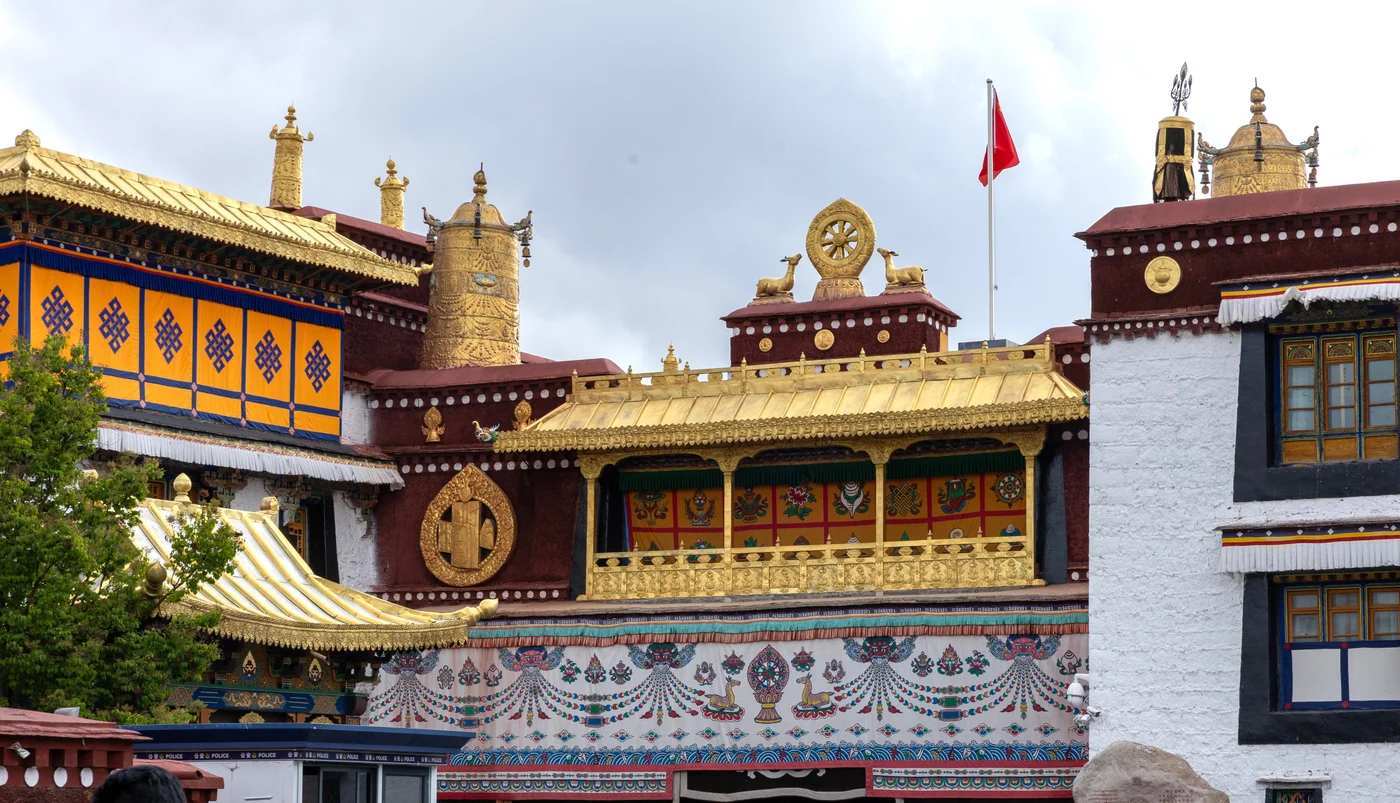
Not far from the Potala Palace is the Jokhang Temple, a major pilgrimage site. It houses a statue of Jowo Shakyamuni—one of the most revered depictions of the Buddha. According to legend, it was created in India during the Buddha’s lifetime and brought to Lhasa in the 7th century. Believers from all over Tibet circumambulate the shrine along a ritual circuit paved with stone slabs. Right there on Barkor Street, city life bustles with its noisy market, rows of shops, and tea houses.
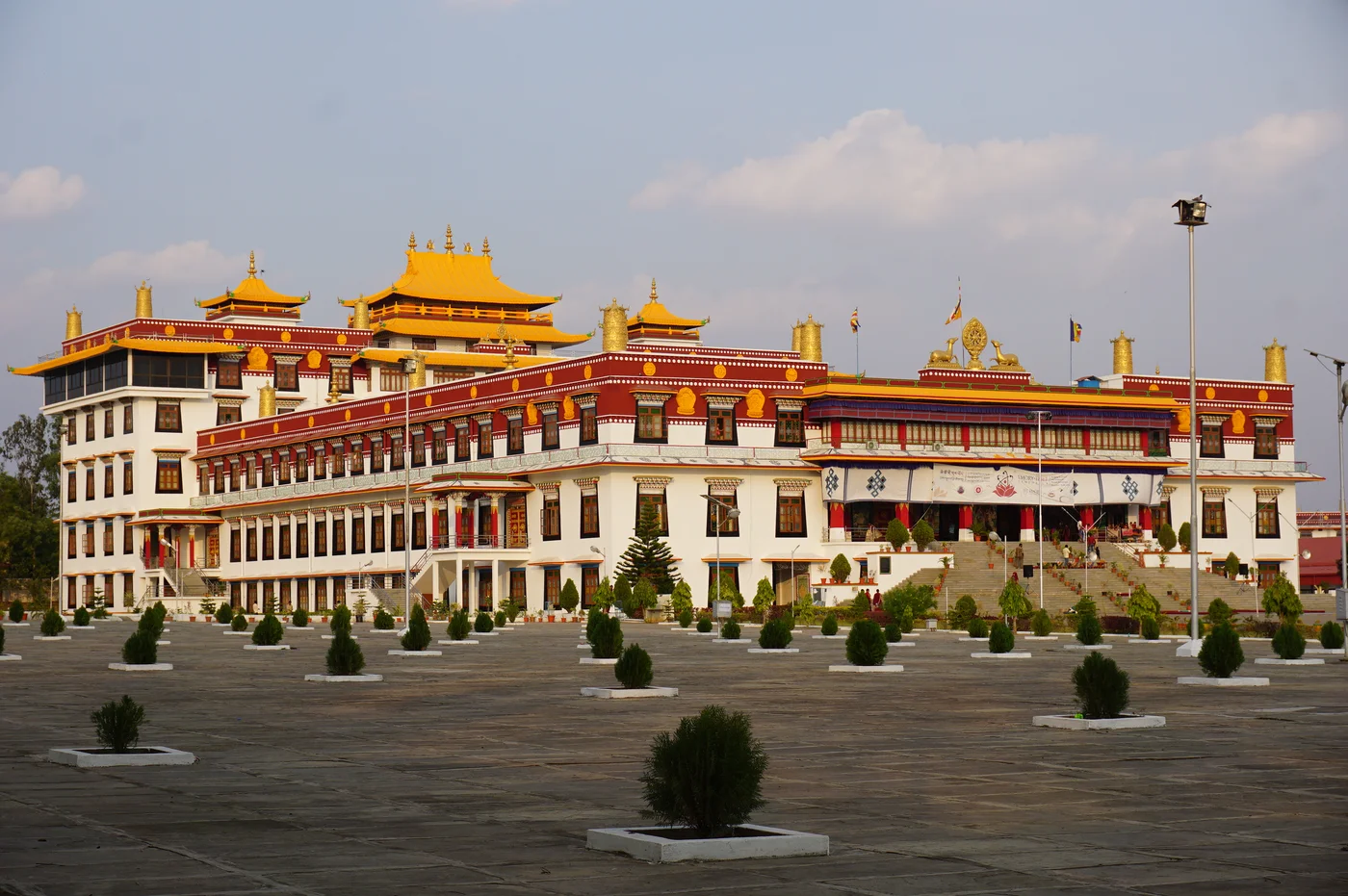
In the suburbs of Lhasa are the largest Buddhist monastic universities, Drepung and Sera. There, you can witness the famous philosophical debates among the monks, during which they gesticulate and clap their hands loudly. The clapping symbolizes the blow of truth, which is meant to awaken the opponent’s consciousness and dispel delusions. The debates are very lively, often accompanied by smiles, but the discussions cover extremely serious topics: logic, Buddhist philosophy, and the practice of mindfulness.
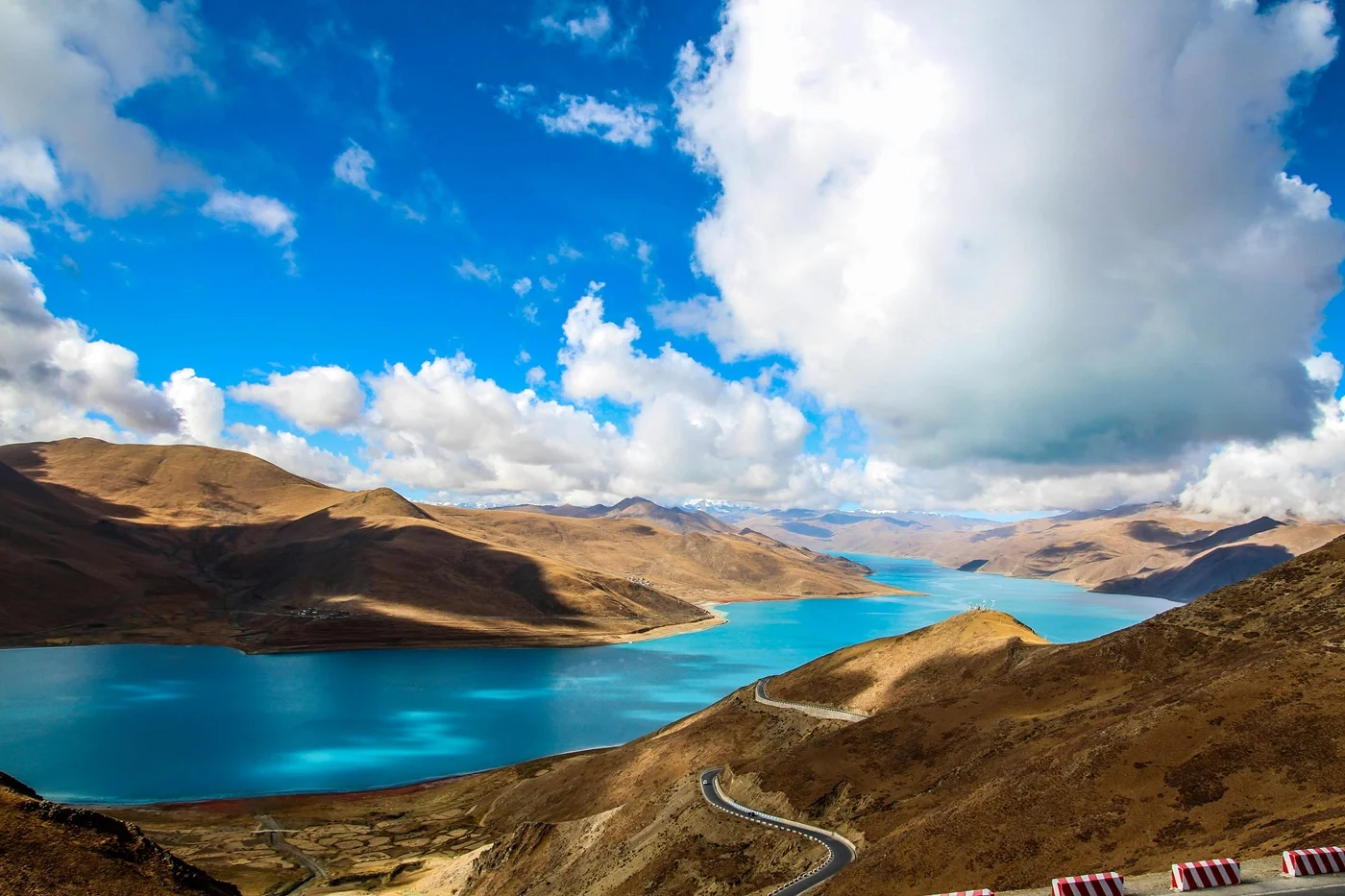
From the capital of Tibet, the route heads toward the Yangtze. Along the way, at an elevation of about 4,441 meters, lies Lake Yamdrok (Yamjoyum-Tso), which resembles a giant turquoise scorpion or dragon. Due to the unique play of light in the mountains, the water’s hue constantly shifts from a delicate blue to a deep sapphire. It is even said that it is impossible to see Yamdrok in the same color twice.
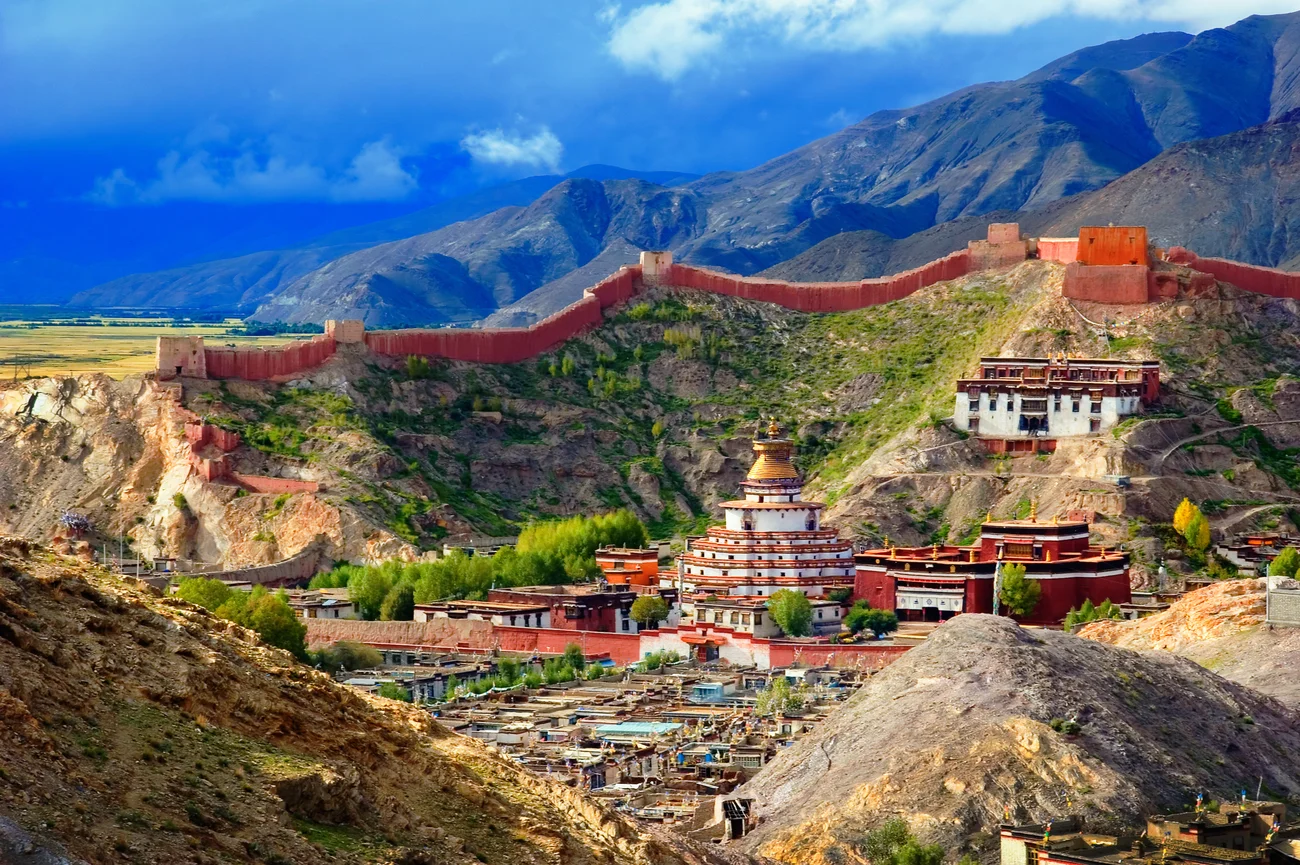
Gyantse is an ancient fortified city that once connected India, Bhutan, and Central Tibet via trade routes. Today, it is famous for the Pelkor Chöde Monastery and the multi-tiered Kumbum Stupa. The walls of its dozens of chapels and rooms are adorned with ancient frescoes. Among these images are approximately 100,000 depictions of Buddhas and deities.
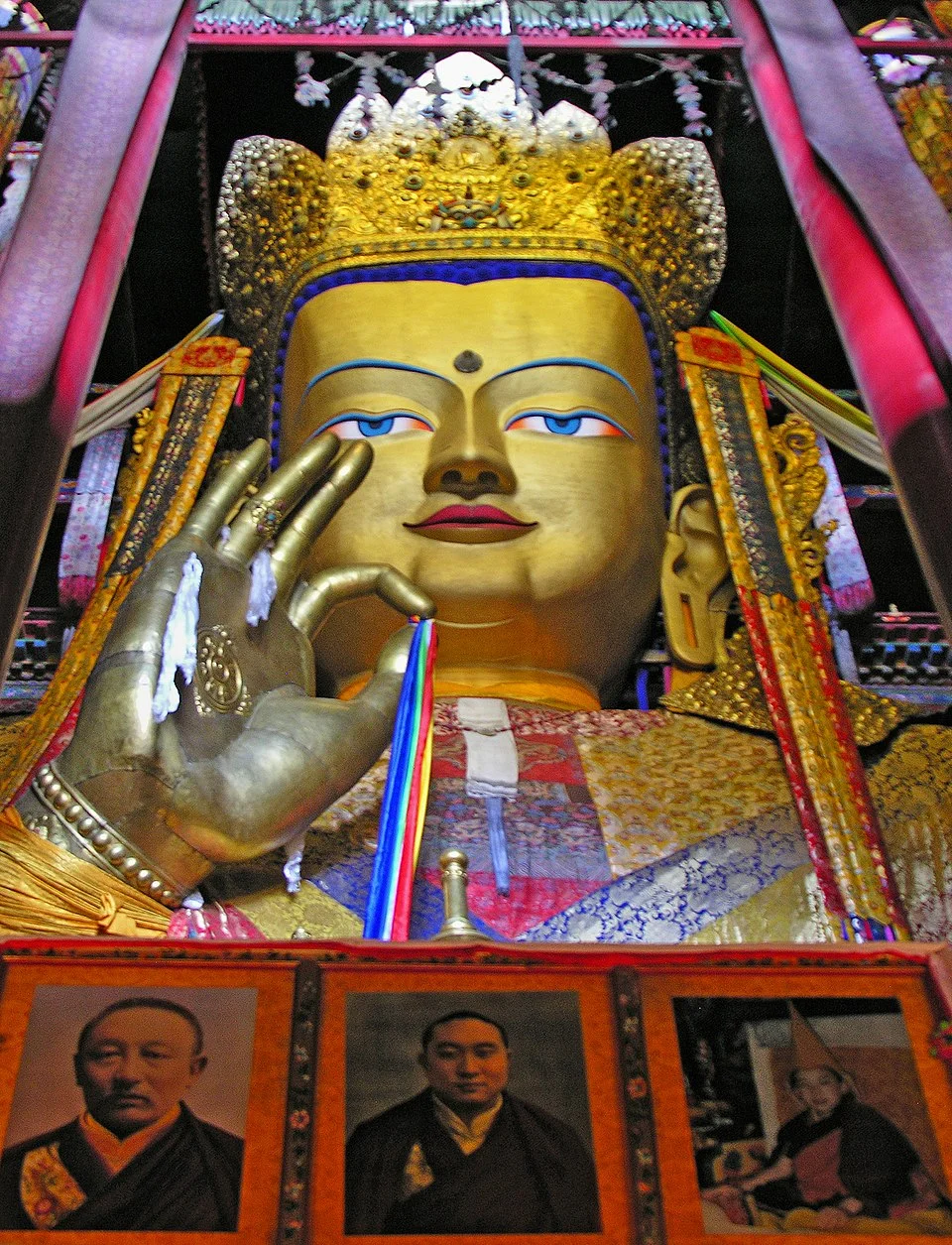
Shigatse is the second-largest city in Tibet. It is home to the Tashilhunpo Monastery—the historic seat of the Panchen Lama, a key figure in Tibetan Buddhism. Inside stands a 26-meter-tall statue of Maitreya Buddha, entirely covered in gold and studded with precious stones. This statue of the Buddha is considered one of the largest in the world. More than 900 artisans handcrafted it over the course of nine years. The statue required about 300 kilograms of pure gold and 150 metric tons of copper. Between the Buddha’s eyebrows is a diamond the size of a walnut, and his robe is adorned with more than 1,400 large pearls, corals, and turquoises.
Tibet That Will Surprise You: Roads, Trains, and a Mountain “Resort”
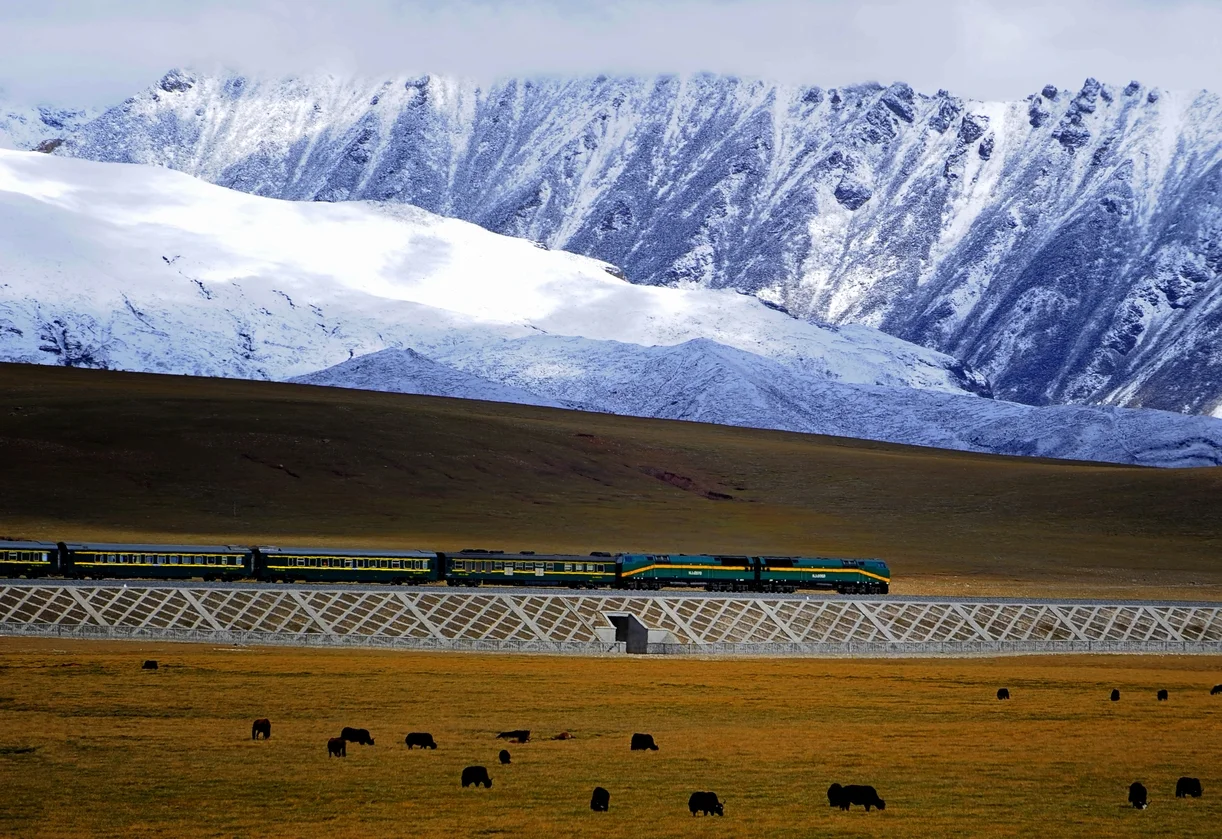
When traveling to Tibet, many expect to encounter a sense of the archaic, but in reality, the region is striking for its contrasts: contemplation and religiosity coexist alongside modern infrastructure and comfort. For example, the world’s highest-altitude railway, the Qinghai-Tibet Railway, runs through Lhasa, with trains equipped with a special oxygen supply system in the cars. China has also laid thousands of kilometers of excellent asphalt where, it would seem, nothing should work. Tourist buses speed along new highways at an altitude of 5,000 meters. The capital itself has many hotels and restaurants, including chain restaurants such as Burger King and KFC.
The gradual ascent along the route gives you time to adjust to the lack of oxygen, so crossing the mountain passes is no longer a challenge. Some even jokingly compare a trip through the “Golden Triangle” to a visit to a high-altitude health resort. There is some truth to this: the clean, thin air and plenty of sunshine make your heart and lungs work harder, tapping into your body’s hidden reserves.
Geography and Weather: What You Need to Know Before Traveling to Tibet
It is no coincidence that Tibet is called the “Roof of the World.” It is located on the highest plateau on the planet, with an average elevation of over 4,000 meters above sea level. This determines its climate: sharply continental, dry, and quite harsh. Its main characteristic is the temperature fluctuations between day and night: the difference can easily reach 15–20 degrees. Another factor to consider is the intense ultraviolet radiation caused by the thin air, so SPF 50+ sunscreen, sunglasses with good UV protection, and a hat are essential year-round.
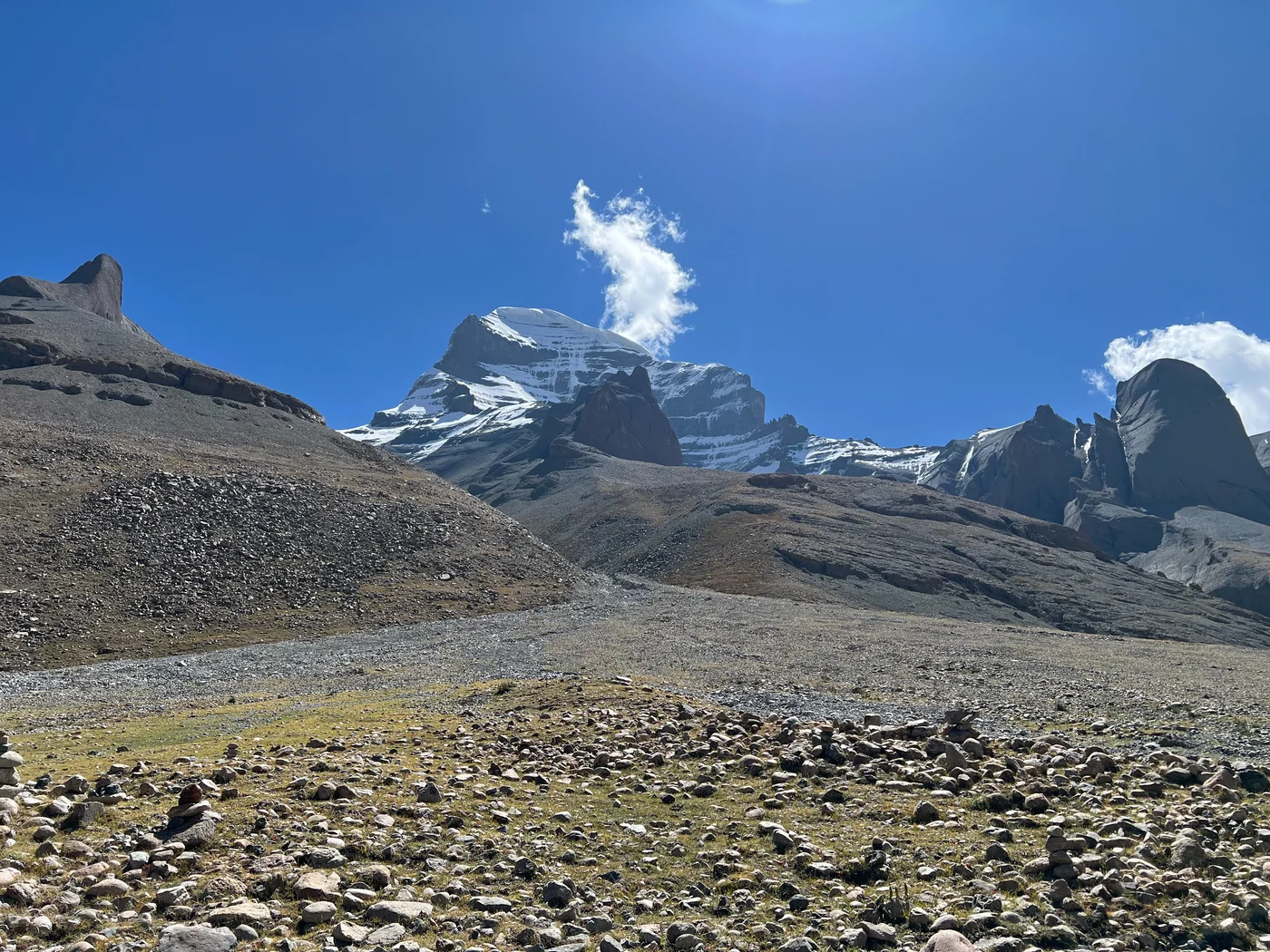
When is the best time to visit Tibet? The weather here depends on the altitude and the specific region. In Central Tibet and Lhasa, summers are quite comfortable, and in the winter, daytime temperatures in the cities rarely drop below -5 °C. However, at night, the cold intensifies to -10 °C, and it’s even colder in the mountains.
Summer in Tibet is the warmest time of the year. In Lhasa and Shigatse, daytime temperatures reach +20…+22 °C, while evenings are cool, with a chance of rain and cloudy skies. From October through March, the weather is dry and sunny. In winter, it’s less crowded, colder, and the mountain passes are covered with snow. On the other hand, the air is very clear, which photography enthusiasts will appreciate. So, while you can visit year-round, the best months for travel are May–June and September–October.
We will find the right route for you
Tell us what interests you, and a destination expert will get in touch, answer your questions about altitude, dates and preparation, and suggest a suitable programme. The consultation is free and commits you to nothing.
Request received
A destination expert will get in touch within one business day.