

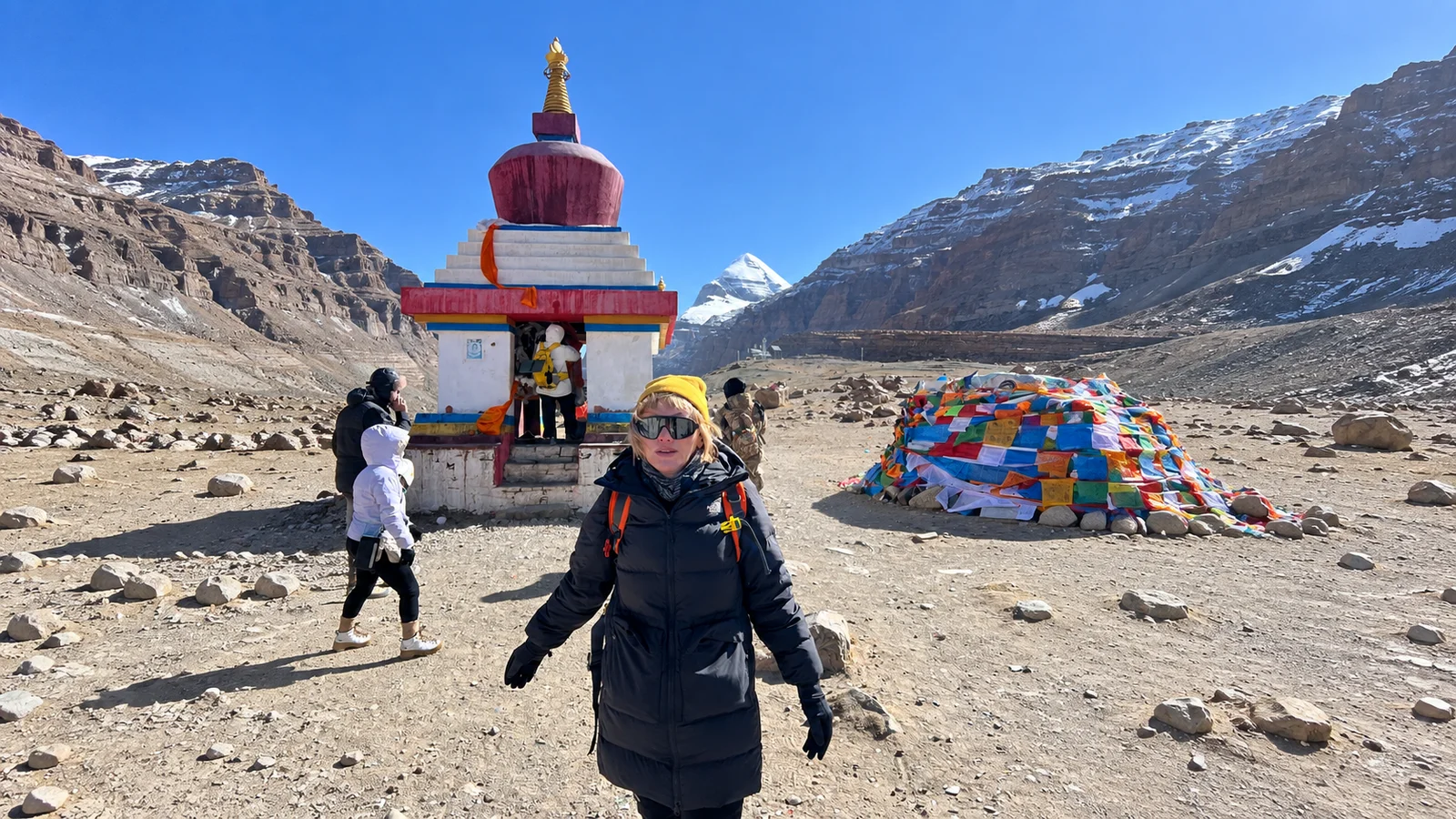
The Kailash kora: a day-by-day route and the inner meaning of the journey
Acclimatising in Lhasa, the loop from Darchen back to Darchen — how long it takes, how to pace yourself and where you spend the nights. And why the three days of the kora are compared to the past, the present and the future.
Kailash — the untouched summit
Three days on the trail: how the route around Kailash works
The kora is more than a trek: the inner side of the journey
In western Tibet, among snow-covered ranges, rises Kailash — the mountain that spiritual traditions call the "axis of the world". For centuries people have been drawn here, whatever their faith or path in life. For followers of Hinduism, Jainism, Buddhism and the Bon religion it is not just a mountain but a living symbol of eternity and the sacred centre of the universe.
Kailash — the untouched summit
Out of respect for believers, Kailash remains untouched and closed to climbers. That is probably why so many mysteries and legends surround it, and it is now hard to tell where fiction ends and reality begins.
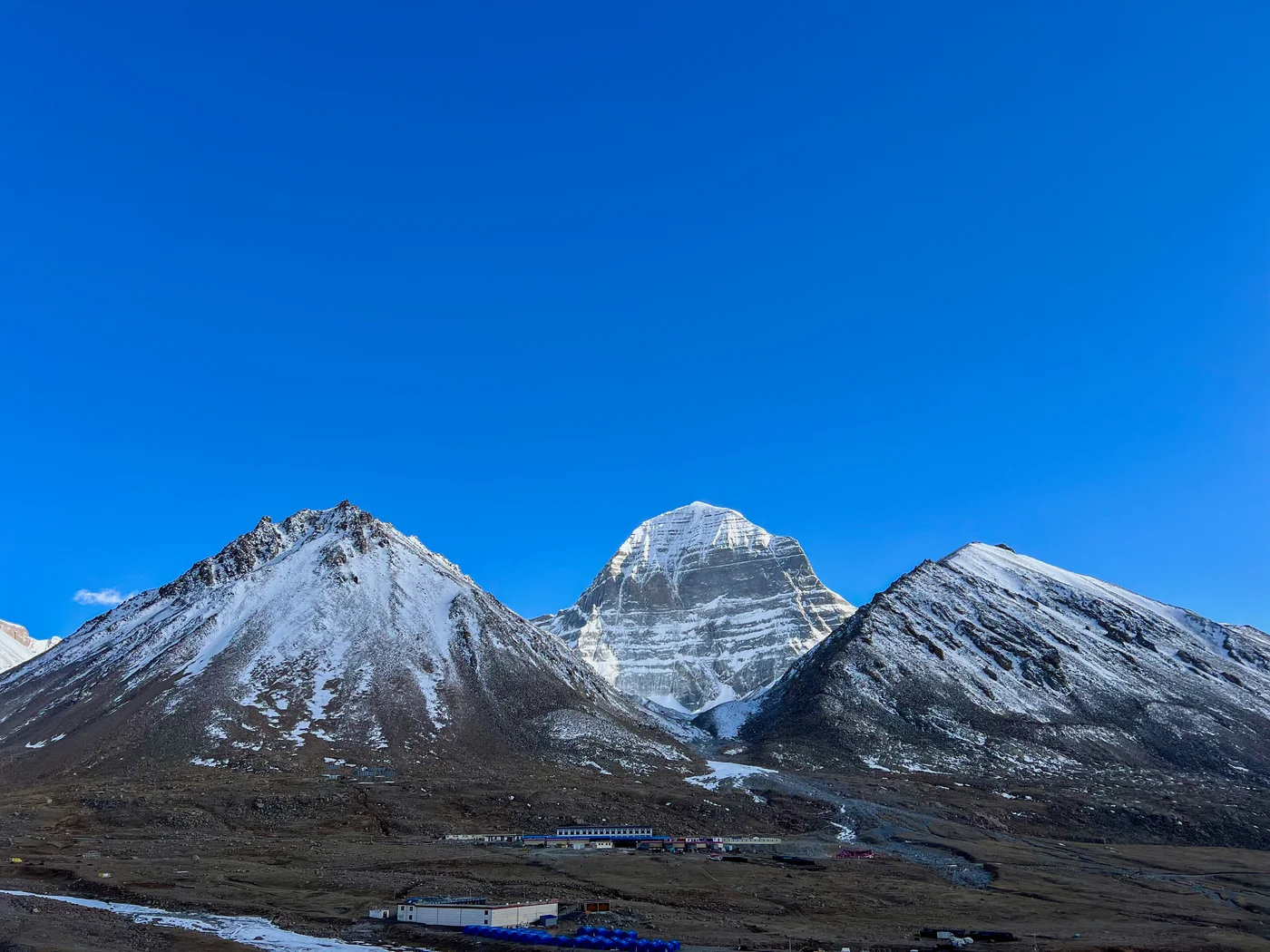
People do not head for this peak with sporting achievements or pretty views in mind. The main goal is to complete the kora, the pilgrimage circuit. For many, this sacred path, which reveals the grandeur of Tibet and the Himalayas, brings a powerful inner reset, helps to cleanse the spirit, to make sense of yourself and to find answers to the questions that trouble you.
The kora route runs at an altitude of 4500 to 5630 metres, so it is important that the body is prepared for the challenge. For gentle acclimatisation, the journey begins in Lhasa. In two or three days you can get to know the Tibetan capital at an unhurried pace, with its ancient palaces and monasteries, and get used to the thin air at the same time. Then you travel further and higher, visiting on the way Shigatse, the second-largest city in Tibet, Everest Base Camp and Lake Manasarovar.
Following this plan, you arrive at the starting point of the kora — the village of Darchen — already well prepared. Pilgrims and tourists gather here, in the "reception room" of the sacred mountain, to pack their rucksacks, steady their breathing and set off on the circuit.
Three days on the trail: how the route around Kailash works
For believers, the kora is one of the most powerful rites of purification. The path, a little over 50 kilometres long, is usually walked in three days, clockwise (anticlockwise only in the Bon tradition). Some pilgrims make the circuit with full prostrations, measuring the whole distance with their own bodies. Done this way, the kora takes 15–20 days and demands not only physical endurance but also enormous strength of spirit.
Along the whole route you pass picturesque valleys and gorges and many shrines and landmarks hung with strings of prayer flags. Nights are usually spent in guesthouses by the monasteries, and in the morning you set off again.
Day 1 Darchen → Dirapuk (13 km, about 5000 m)
On the first day of the kora the stretch is relatively easy: it runs over hills along a wide, well-trodden path with a gradual climb. The trail passes Chuku Monastery, follows the Lha Chu valley and ends at Dirapuk Monastery, opposite the north face of Kailash. From here you get one of the most impressive views of the mountain, especially at sunset.
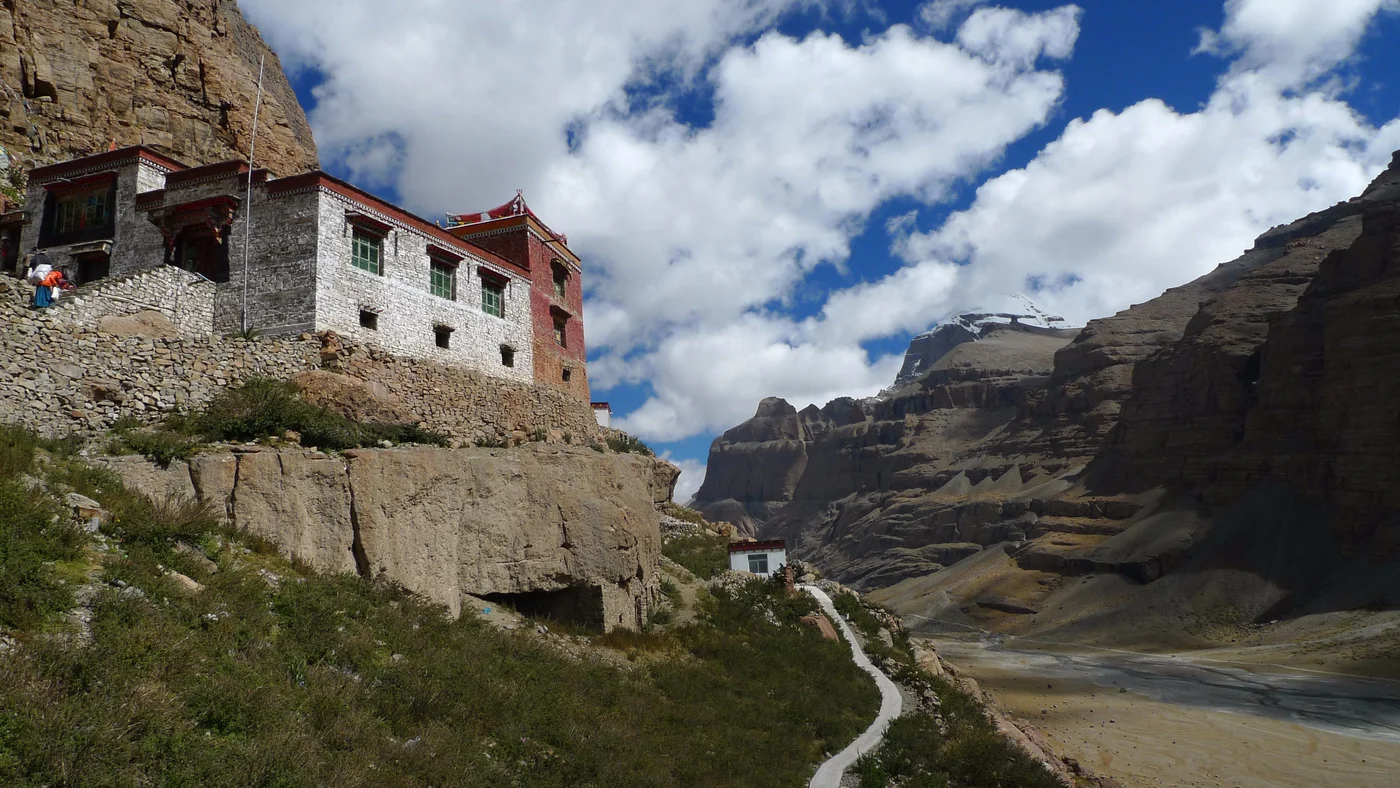
Day 2 Dirapuk → Zutulpuk (24 km)
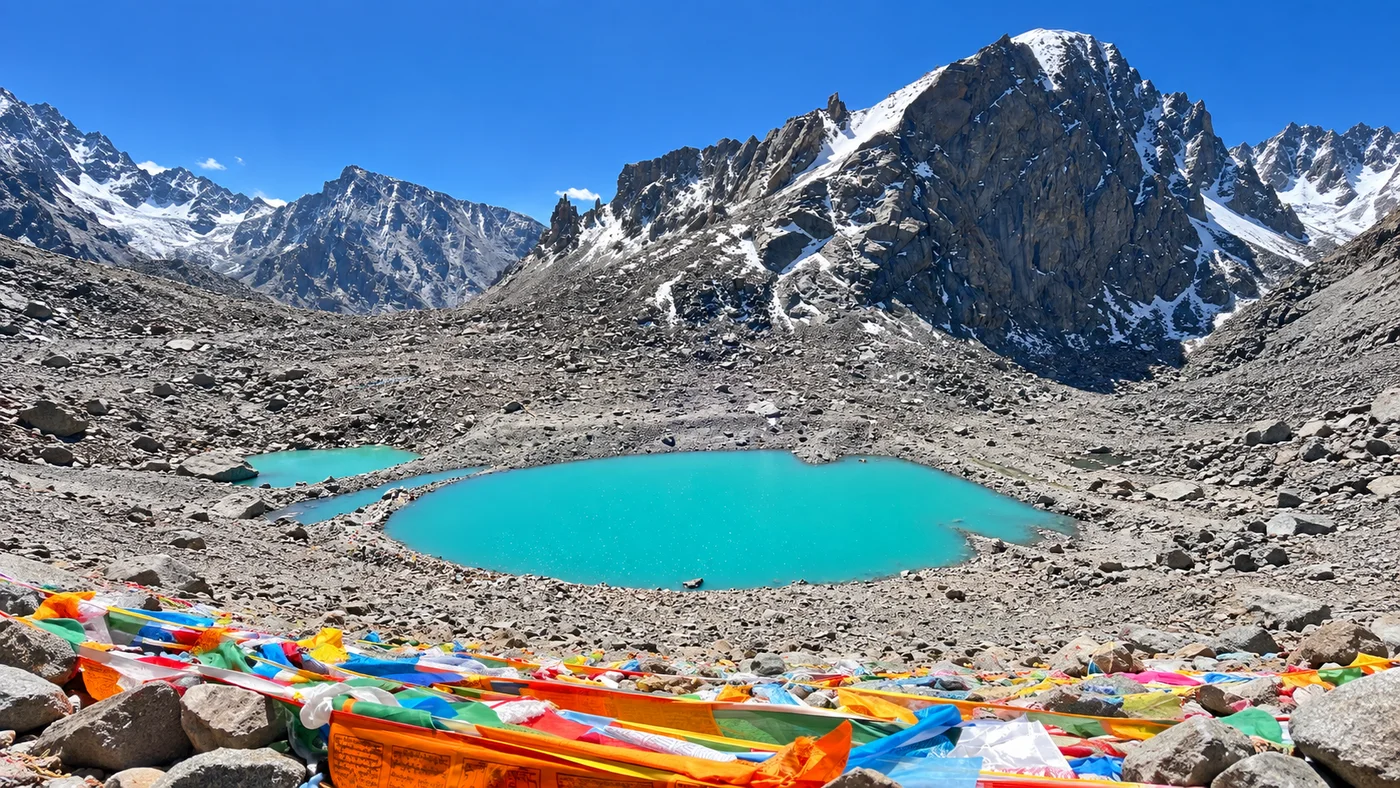
The second day is the key and hardest stage, because you have to climb to the highest point of the kora — the Drolma La pass. For believers this threshold means complete karmic cleansing, the passage from life to death and a new spiritual birth. The pass is hung with thousands of multicoloured prayer flags that flap loudly in the wind. The trail then leads to Gauri Kund, a lake sacred to pilgrims, and from there to Zutulpuk Monastery, the place of the second overnight stop.
Day 3 Zutulpuk → Darchen (12 km)
The third day is the final stretch and the return. Tourists and pilgrims descend into the valley, following the river past mountain streams and stone stupas, and then emerge back into civilisation at the village of Darchen.
The kora is more than a trek: the inner side of the journey
Mysticism aside, the kora around Kailash makes an ideal three-day trek. A few days in Lhasa and a gradual gain in altitude while crossing the passes allow you to prepare gently for the exertion. The circuit itself becomes a kind of test drive, a chance to climb above 5000 metres and see how your body feels up there.
But the kora is still not just a hike in the mountains and a test of altitude. Some compare the route to a metaphorical journey through life, in which each of the three days reflects a different state of the soul.
The first day is like a step into the past, when the time comes to let go of old grievances and free yourself from regrets.
The second day is the present, the hardest and most important test. On the Drolma La pass comes the realisation that, to reach a goal, what you sometimes need is not heroics and dashes to the point of exhaustion but slow, steady movement, as in the "Himalayan step" technique. Here a person learns to work with the body in a new way, turning struggle into creation.
The third day is the future. The kora does not end with loud fanfare but quietly and without fuss. Some are simply silent from fatigue, some smile thoughtfully, but in everyone's soul an important shift takes place — an awareness and a "grounding" of what has been lived.
In this quiet, almost intimate moment you understand that the kora is not about religion but about meeting yourself and being able to feel the magic not only all around you — in the majestic mountains and ancient monasteries — but also within.
We will find a route for you
Tell us what interests you — and the destination expert will get in touch, answer your questions about altitude, timing and preparation, and suggest a suitable programme. The consultation is free and commits you to nothing.