

On the “Sky Train” to Lhasa: The Highest and Most Beautiful Railroad Route on the Planet
What the trip from Xining to Lhasa on the Qinghai-Tibet Railway is like: mountain scenery, the Tangla Pass, oxygen supply in the train cars, and the history of its construction.
The Sky Railroad: How Steel Conquered the Permafrost
Tibet Beneath the Clouds: The Highest-Altitude Stations and Amazing Landscapes
20 Years of the Qinghai-Tibet Railway: How It Has Changed Tibet
The most common way to get to Tibet is by air: after a few hours, the plane lands at Gonggar Airport. It’s fast, but this option has two major drawbacks. First, upon arrival in Lhasa, the sudden ascent to an elevation of 3,650 meters carries the risk of being bedridden at the hotel right away. Second, you won’t be able to take in the impressive changing Tibetan landscapes from the flight. If you’re not pressed for time and have the opportunity to savor every kilometer of the journey, choose a slower, more deliberate way to reach Lhasa—via the Qinghai-Tibet Railway, on the “sky train.” It’s no wonder this journey is called the most beautiful route, and the gradual ascent over the course of the 21-hour trip allows your body to acclimate more gently.
The Sky Railroad: How Steel Conquered the Permafrost
“As long as the Kunlun Mountains exist, the railroad will never reach Lhasa,” wrote American novelist and traveler Paul Theroux in 1982. A little over two decades later, China proved him wrong and achieved what seemed impossible: it built the world’s highest-altitude railroad, stretching nearly 2,000 kilometers.
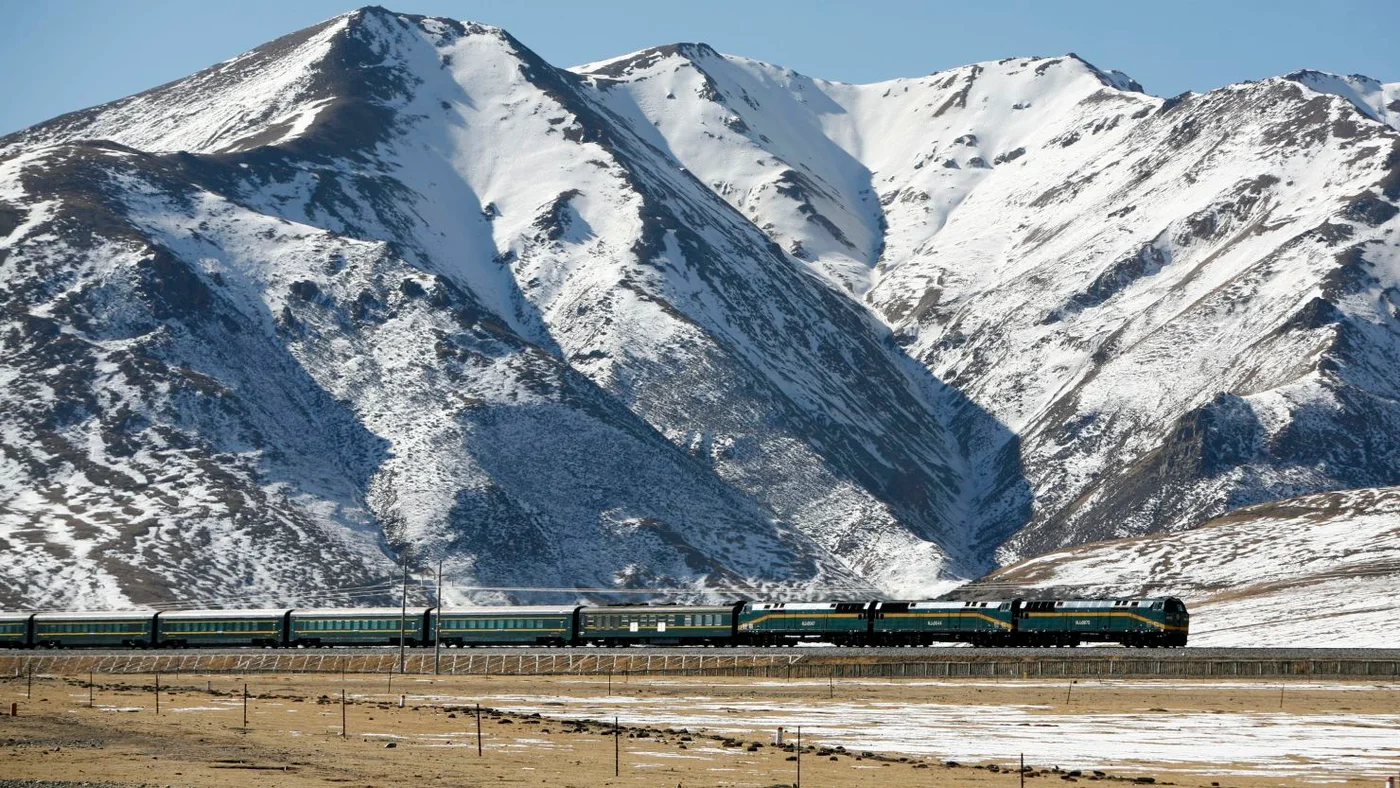
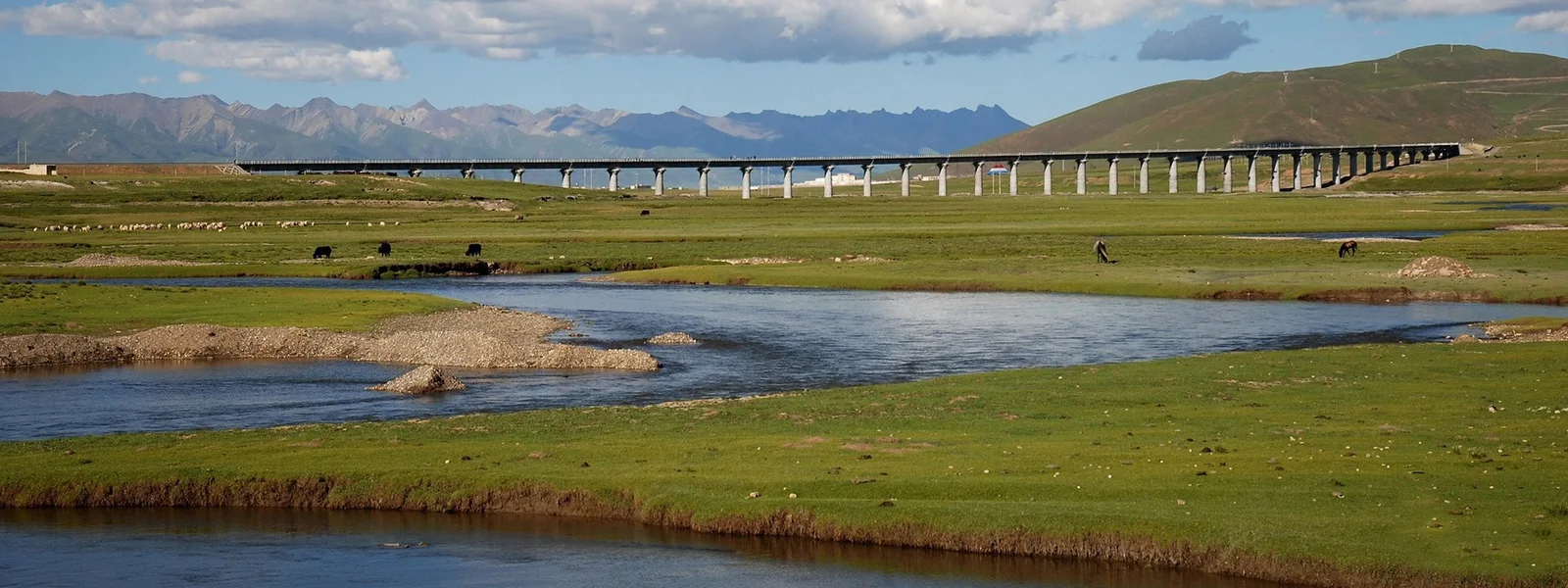
The harsh natural conditions of the Tibetan Plateau forced Chinese engineers to perform a true miracle: work was carried out in temperatures as low as −40°, in thin air and permafrost. About 550 kilometers of track were laid in an area where the ground turns into a quicksand-like swamp in the summer and freezes to the hardness of granite in the winter. To prevent the embankments from thawing and subsiding, significant sections of the track were elevated onto viaducts. Where the train runs on the ground, a cooling system was installed along the tracks to dissipate excess heat.
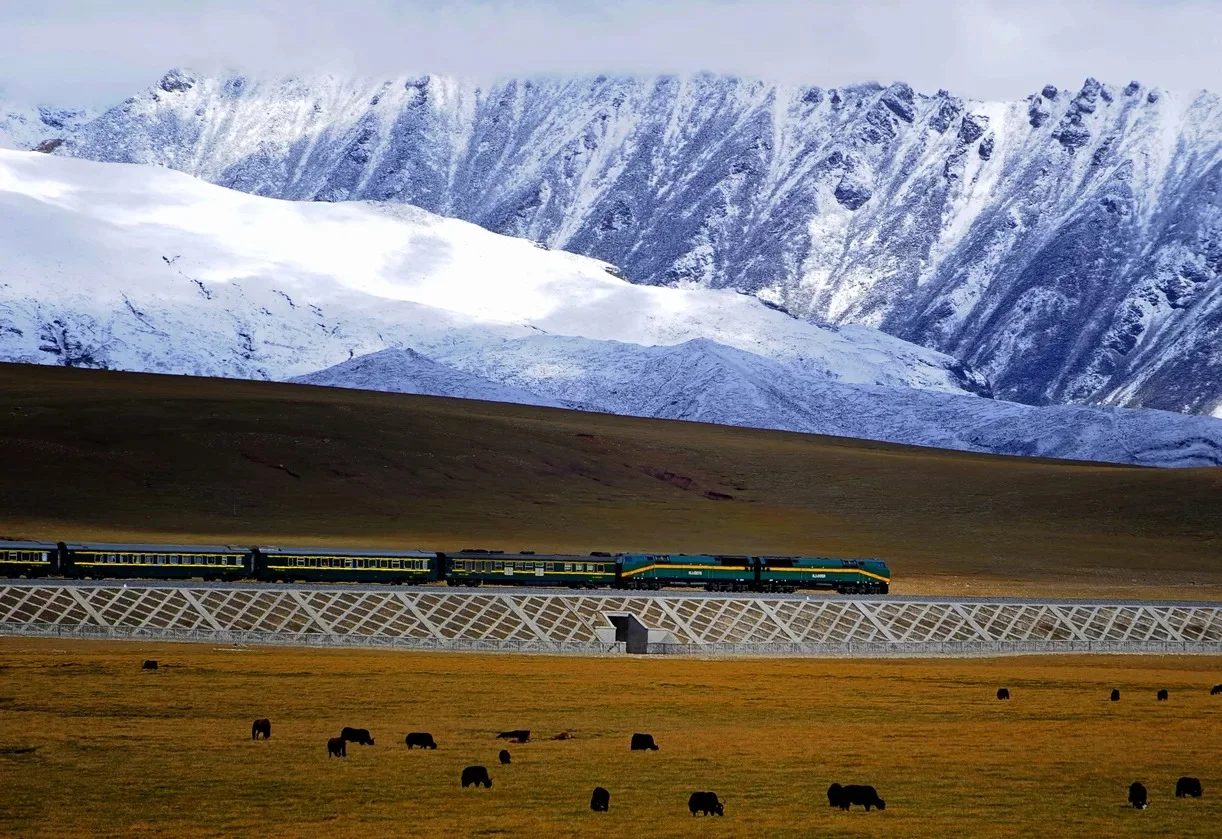
The terrain also dictates the speed: on standard sections, it can reach 100–120 kilometers per hour, while on more challenging sections, the automated system smoothly slows the train down to 80–100 kilometers per hour. For example, on the approach to bridges or the Fenghuoshan Tunnel, which was bored at an elevation of about 4,900 meters straight through permafrost. This is a record elevation for such structures.
Tibet Beneath the Clouds: The Highest-Altitude Stations and Amazing Landscapes
Nearly half of the entire route from Xining, the capital of Qinghai Province, to Lhasa runs at an altitude of more than 4,000 meters, so the word “heavenly” in the name is no exaggeration. At the Tangla Pass, the Qinghai-Tibet Railway climbs to 5,072 meters above sea level. For comparison: the summit of Kazbek is 5,033.8 meters. On this same stretch lies the world’s highest railway station (5,068 meters). Trains pass through Tangla without stopping for passengers. The train may slow down or make a brief service stop, but the doors do not open. Passengers board and disembark at the village of Yanshiping, located at an elevation of 4,721 meters, which is also considered a record for active passenger stations.
It’s no surprise that the train is practically a “budget” spaceship: the cars are pressurized and equipped with sensors, the air is conditioned, and oxygen is mixed into it through the ventilation system to help alleviate altitude sickness during the trip. Plus, every seat—even the berths in third-class cars—has special oxygen outlets. You can connect a cannula to them and breathe through it if you start to feel dizzy. The windows are also special—they’re double-paned, with a special filter to protect against the harsh high-altitude sun.
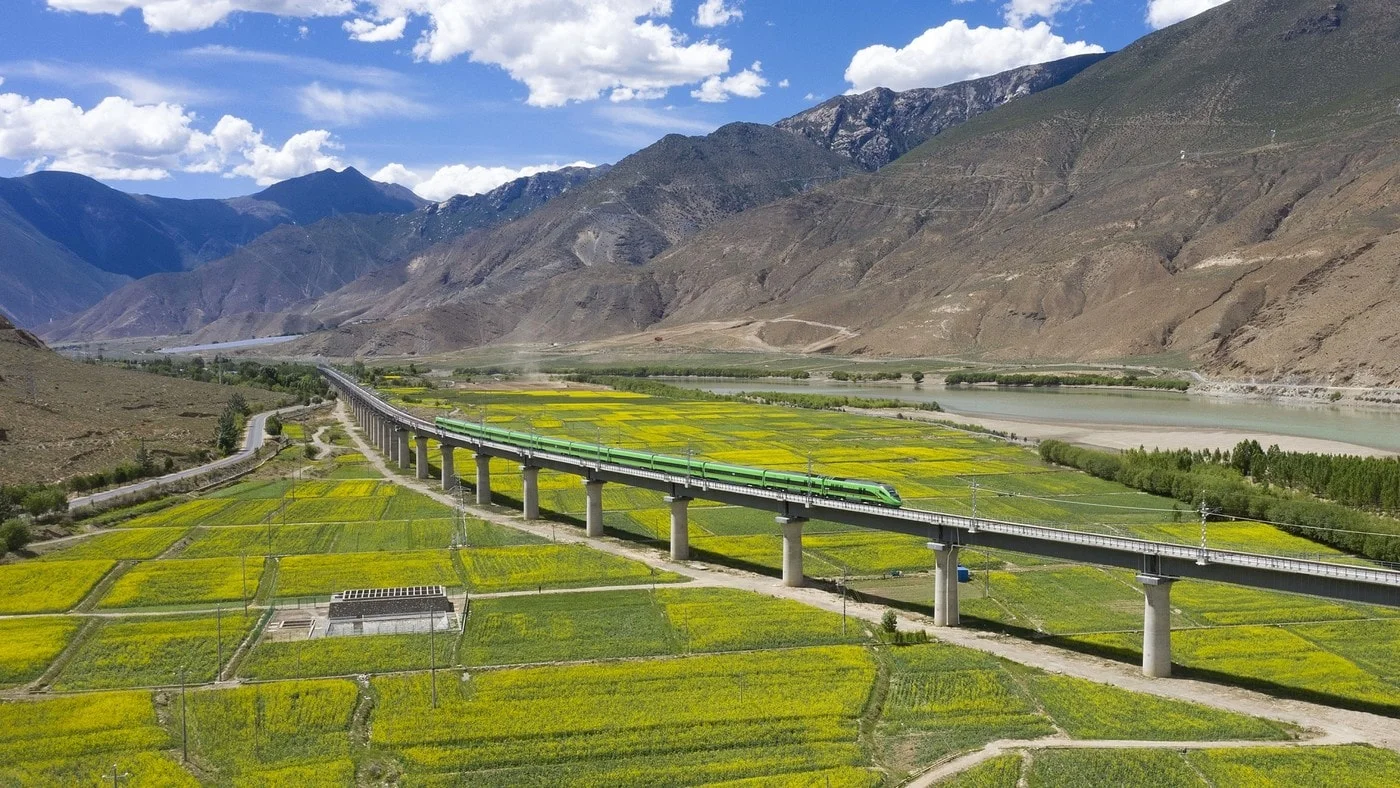
The main reason people take the train to Tibet is the amazing views out the window. The train seems to glide between the sky and the earth, almost touching the clouds. Before your eyes, the view shifts from endless, deserted steppes to frozen lakes, and then suddenly, icy mountain ranges rise up. The landscapes outside the window aren’t static—they’re alive: they seem to breathe and whisper along with the wind and the snow-capped mountains. On the pastures, glistening golden in the sun, herds of wild yaks and Tibetan antelopes can be seen here and there. The designers took this into account: to avoid disrupting their migration, they built about 93 kilometers of overpasses—the animals pass freely underneath them.
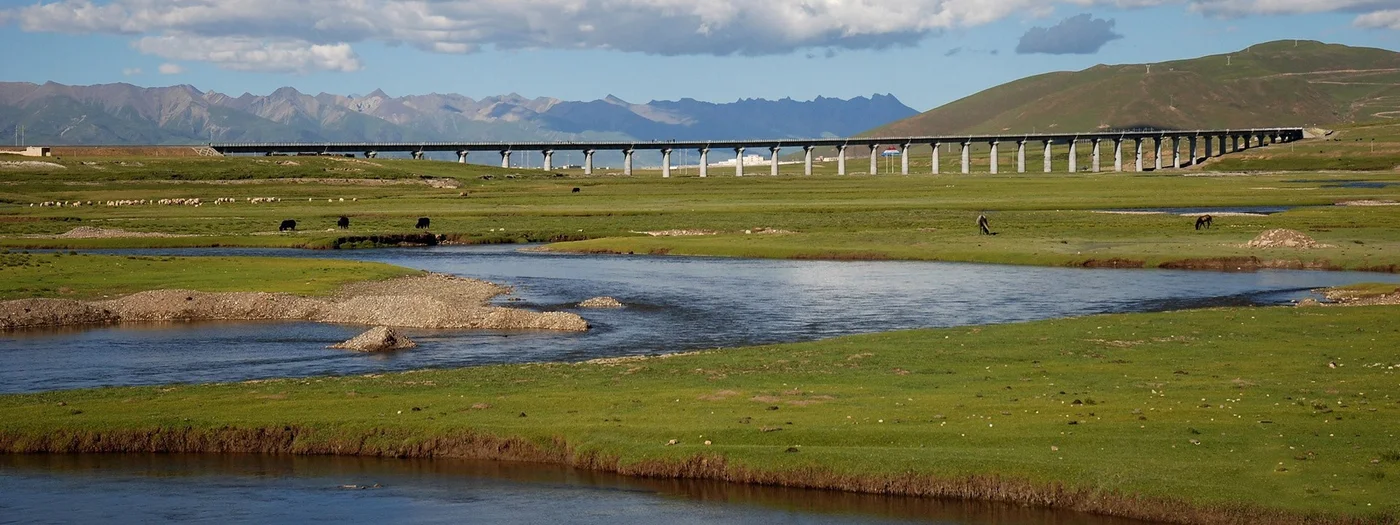
It’s not just about the magical landscapes—the entire trip feels like an adventure or even a rite of passage. During the trip, you see not only the surrounding nature but also the real, unpretentious way of life of ordinary Tibetans and Chinese, and you learn about their customs and traditions. In short, you experience a cultural immersion.
20 Years of the Qinghai-Tibet Railway: How It Has Changed Tibet
In 2026, the Sky Railway celebrated its anniversary. Over the past 20 years, more than 100 million people and 800 million metric tons of various cargo have been transported along the steel line. By connecting Tibet with the rest of China, it has completely transformed local life and the economy. Before the line was launched, it was nearly impossible to deliver fresh fruits, vegetables, or construction materials to Lhasa on time, and local artisans were unable to transport their goods to market. Now, trains run around the clock, bringing all the benefits of civilization to Tibetan cities and transporting the region’s unique products back to markets across the country. Whereas previously there were only five pairs of passenger trains running daily, today that number has reached 13–17 pairs. According to China Media Group (CMG), the number of freight trains has increased from 24 to 136 during the same period.
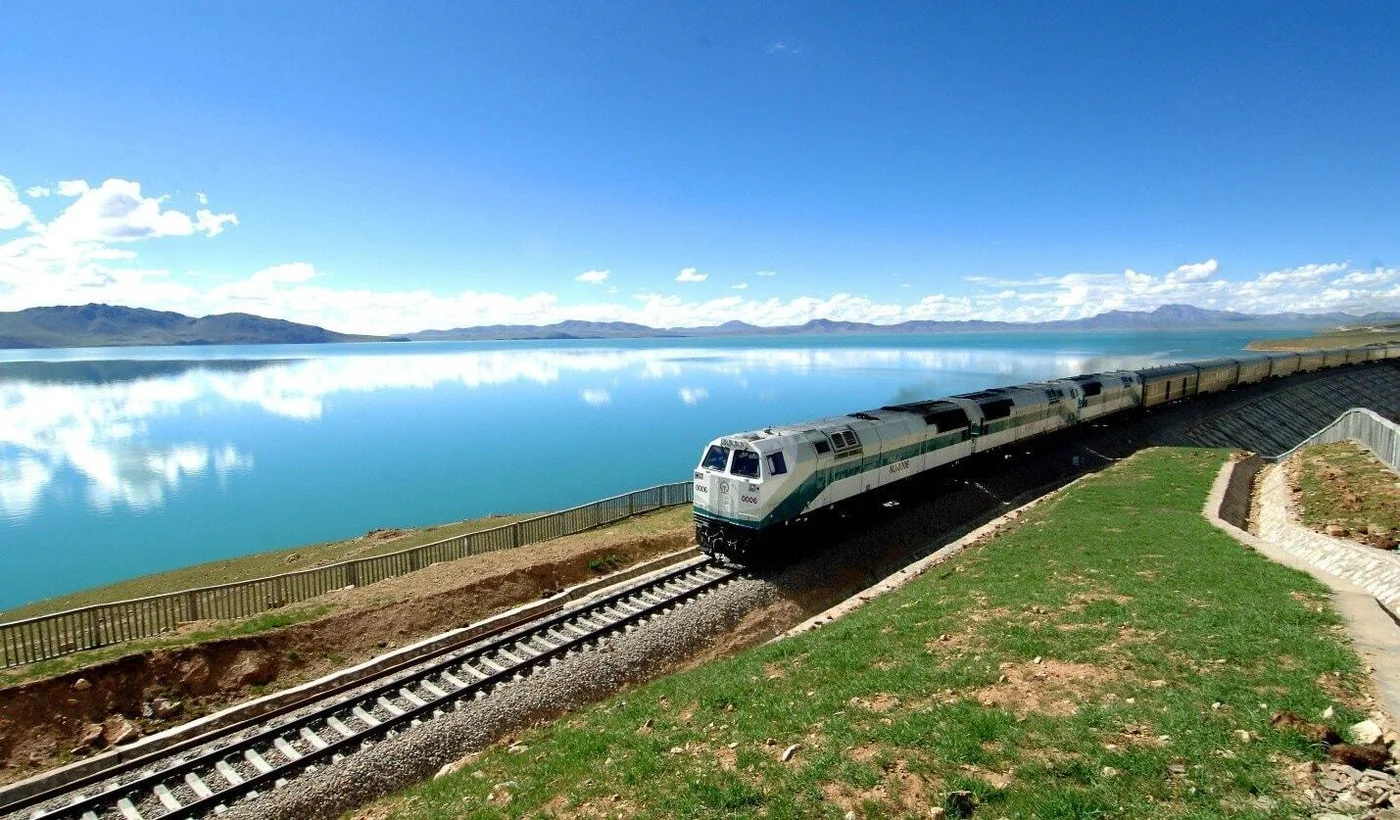
Railroad workers still remember the enthusiastic welcome given to the first “sky” train. At the time, nearly half the city turned out to greet it—joyful and excited residents dressed in traditional costumes. As a sign of respect and blessing, people tied silk hadak scarves to the locomotive. This was repeated time and time again in the early years.
When the Lhasa train station first opened, there were nothing but fields all around it. Now, modern neighborhoods and high-rise buildings have sprung up here. For those expecting to see archaic, frozen-in-time medieval scenes, the Tibetan capital will surprise them with a completely different atmosphere. In two or three days in the city, you can visit all of Lhasa’s top 10 attractions, where modern comforts coexist with centuries-old spiritual traditions. At the same time, your body will acclimate to the altitude and thin air, after which you can comfortably continue your journey through Tibet.
We will find the right route for you
Tell us what interests you, and a destination expert will get in touch, answer your questions about altitude, dates and preparation, and suggest a suitable programme. The consultation is free and commits you to nothing.
Request received
A destination expert will get in touch within one business day.