

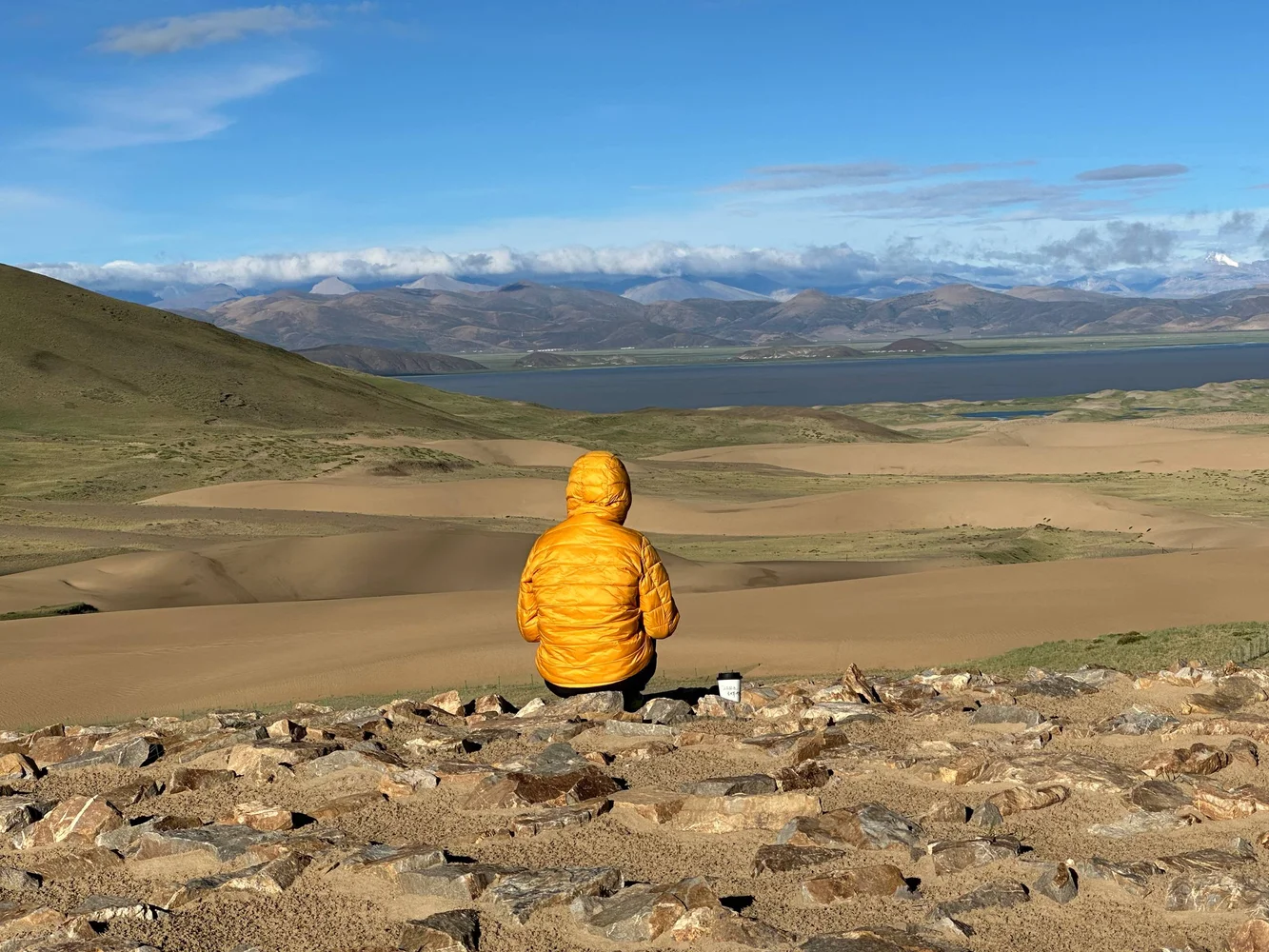
What to Pack for Tibet: A Basic Checklist and Additional Items for the Trek
The daily temperature range on the plateau can reach 25 degrees. Let's go over what to pack for the trip and what to add if you're planning a three-day trek around Mount Kailash.
Clothing and Footwear: The Layering Principle
In Tibet, the difference in temperature between day and night can be greater than that between winter and summer. At noon on a sunny day, it can feel like summer heat; by evening, it can feel like autumn coolness; and by midnight, there can be frost. There’s nothing unusual about these “temperature swings”: the average elevation of the highlands is over 4,000 meters, and the thin layer of atmosphere doesn’t retain heat as well. Moreover, the air here is clear and dry: under bright sunshine, the ground warms up quickly but also cools down just as fast as soon as it gets dark or clouds roll in. This is the most important thing to keep in mind when packing for your trip. And also that it’s best to spend your first few days in Lhasa acclimatizing at a leisurely pace, rather than rushing around to stores in search of items you forgot at home.
No special equipment is required for trips along Tibet’s Golden Triangle and to Everest Base Camp. A basic set of items suitable for any month and weather conditions will suffice. However, if you’re planning a trek around Mount Kailash, you’ll need to expand your list to make the three-day circuit more comfortable.
Clothing and Footwear: The Layering Principle
The main rule for Tibet is to dress in “layers.” Layers of clothing will allow you to quickly adapt to the plateau’s climate: in the morning at a mountain pass, you’ll need a hat and a jacket, but by noon, when the sun is out, you’ll want to strip down to just a T-shirt.
What to Bring to Tibet: The Basic Set
A windbreaker (with a membrane), a raincoat, or an umbrella. The weather can always take a turn for the worse, so you should have these items on hand.
A fleece jacket with a weight of 200 g/m² or more is the main insulating layer that will keep you warm on cool evenings.
Sun hat. A cap or wide-brimmed hat is required to protect your head during daytime excursions.
A buff. It serves as a scarf, face mask, and headscarf. It protects your neck from drafts and your face from dust while traveling.
Lightweight gloves. They'll come in handy on cool mornings and at windy observation decks.
Comfortable shoes. It’s best to wear sneakers with a waterproof membrane so your feet don’t get wet in the rain. The key is to break them in well at home first; otherwise, you’re bound to get blisters.
Lightweight footwear. Sneakers or sandals will come in handy on vacations at hotels or during long car trips.
Add-ons for the kora
For trekking at altitudes up to 5,630 meters, you'll need to dress more warmly:
You need two types of thermal underwear. The first (thin, made of synthetic fabric) is worn during daytime hikes to wick away moisture. The second (thick, with added wool or fleece) is for cold nights and early morning hikes.
Hiking pants. To protect against the elements, choose pants made of a membrane or softshell fabric. On hot days, in the lower, warmer sections of the route, lightweight pants or even shorts will come in handy.
A hooded windbreaker (water resistance: 10,000 mm) serves as the primary outer layer against rain and wind. In case of heavy rain, it’s a good idea to bring a raincoat or poncho.
A thick down jacket with a hood (suitable for temperatures down to –15…–20 °C). Even in summer, temperatures on the kora drop below freezing at night. The best choice is a jacket with a Fill Power rating of 700–800 (with 80–90% down and the rest feathers) and a durable, windproof outer fabric.
Long-sleeved T-shirts (2) for protection from the sun and wind.
A thick fleece hat and warm gloves (or mittens) for the coldest high-altitude areas.
Hiking boots with ankle support. Unlike regular sneakers, they provide a secure fit for your foot. This will help prevent sprains when walking on uneven trails and over rocks.
Hiking socks. You’ll need two pairs of high, warm knee-highs for cold weather or sleeping, as well as three pairs of thin socks for warm weather and leisure time. Regular cotton won’t work; you’ll need wool or high-tech synthetic materials to avoid blisters.
Other Important Things
Category 2 sunglasses with side shields. Because of the high altitude, the sun in Tibet is very bright, so regular city sunglasses won't work.
A waterproof document case will protect your passport, permit, and other valuables from moisture.
A power bank with a capacity of up to 20,000 mAh. It must have clear factory markings and the CCC (China Compulsory Certification) mark. Without these, the power banks will be confiscated during security checks at Chinese airports.
If the trip includes a three-day trek around Mount Kailash with overnight stays in lodges, the following specialized gear is added to the basic kit:
Goggles with a protection rating of at least Category 3. You'll need professional mountaineering goggles with a snug fit to protect your eyes from intense UV rays and wind.
A sleeping bag rated for temperatures of –5…–10 °C (comfort rating, not limit or extreme). Bringing your own sleeping bag ensures a comfortable night’s sleep at local guesthouses. A compression sack will come in handy for it.
Telescopic trekking poles. They help take the strain off your knees during long ascents and descents, and help you maintain your balance on rocky terrain.
Headlamp. You'll need this for camp and early nighttime outings. It's a good idea to bring 3–4 spare sets of batteries.
A 1-liter flask and a thermos of the same capacity—for hot tea or water.
A 35–40-liter assault backpack with a rain cover (if you don't have a poncho). It's useful for light day hikes, but you can get by with your main backpack if you prefer.
Life hack: Put a sturdy 240–290-liter trash bag inside your main backpack, and pack your belongings inside it. This will keep the contents from getting wet during a downpour.
Hygiene and Health Care
Sunscreen (SPF 50+) and lip balm. The sun is especially treacherous in the mountains, and without protection, it’s easy to get sunburned even on cloudy days.
Moisturizers. The air on the plateau is very dry, and your skin quickly starts to flake, while the mucous membranes in your nose become dry. A rich cream containing panthenol, as well as moisturizing drops for the nose and eyes, will come in handy.
Travel hygiene kit: toothbrush, small tube of toothpaste, wet wipes, toilet paper, and other items.
Earplugs. They'll help you get a good night's sleep in hotels and guesthouses if you end up with noisy neighbors.
Important health information: The group will bring oxygen, pulse oximeters, and a general high-altitude first-aid kit, but everyone should also bring their own personal kit. We’ll send you a detailed list tailored to your chosen tour to Tibet during your free consultation.
On the trek around Mount Kailash, it’s a good idea to bring an extra pack of wet wipes, a small bar of soap, and a microfiber towel. There won’t be any opportunity to take a proper shower along the way, but after the trek, we plan to visit Lake Manasarovar with a stop at the hot springs.
Documents and Money
Always carry your passport and entry permit—or a copy of them—with you. Without an entry permit for Tibet, you will not be allowed to board a train or plane bound for Lhasa. It’s a good idea to make several paper copies in advance. Police may ask to see your documents for inspection on the streets and at checkpoints—this is standard practice.
Cash yuan. Payment cards from Russian banks are accepted almost nowhere in China. If you have a Russian UnionPay card, it will only be useful when transferring flights at airports. In Tibet, cards from foreign banks are rarely accepted. In Lhasa, you can use the Alipay app with a linked foreign card, but outside of cities, it’s safer to rely on cash. In the Mount Kailash area, all purchases and donations at monasteries are paid for in cash. It’s more cost-effective to buy yuan in Russia, and you should get some in small denominations right away.
What to Leave at Home
Drone. Filming with drones is prohibited in Tibet. They will be confiscated at the border.
A supply of clothes “just in case.” During the kora, you’ll have to carry every extra kilogram yourself or pay a porter to do it.
We will find a route for you
Tell us what interests you — and the destination expert will get in touch, answer your questions about altitude, timing and preparation, and suggest a suitable programme. The consultation is free and commits you to nothing.